
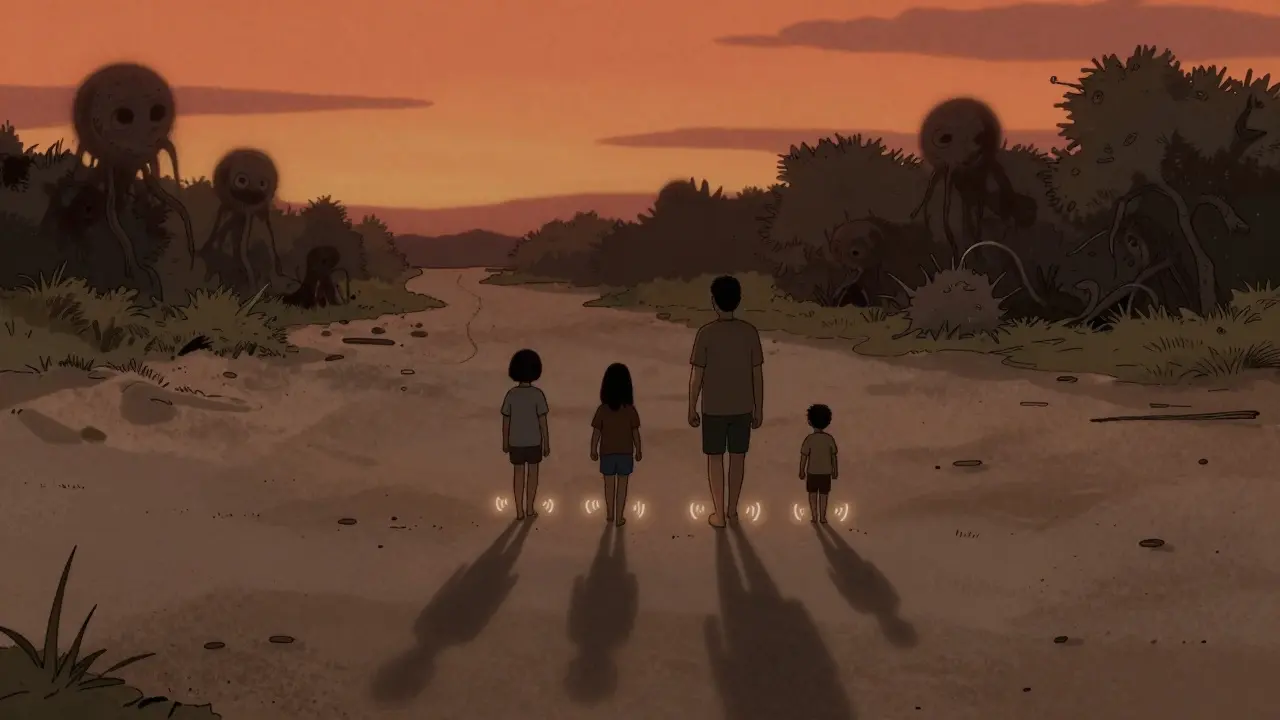
The silence isn’t empty-it’s loaded
Most horror movies scream to scare you. A Quiet Place makes you hold your breath. The first film, released in 2018, didn’t rely on jump scares or gore. Instead, it weaponized silence. Every footstep, every cough, every rustle of clothing became a potential death sentence. The monsters didn’t need to be seen to be terrifying-they were felt through sound. This wasn’t just atmosphere. It was mechanics. Sound design wasn’t background noise. It was the plot.
How silence became the antagonist
In traditional horror, the monster is the threat. In A Quiet Place, the monster is the sound you make. The creatures hunt by sound. Their hearing is hyper-sensitive-so sensitive that a dropped screwdriver or a sneeze can trigger a lethal response. The characters don’t just avoid noise. They live in a world where every action must be calculated. Walking barefoot on sand. Signing instead of speaking. Using Morse code tapped on metal pipes. These aren’t quirks. They’re survival protocols.
The film’s sound design team, led by Erik Aadahl and Ethan Van der Ryn, built a sonic language out of restraint. They removed 80% of the dialogue in the first 30 minutes. What’s left? The crunch of gravel underfoot. The scrape of a wooden spoon in a metal bowl. The quiet hum of a hearing aid. These sounds aren’t just heard-they’re felt in your chest. The audience doesn’t just watch the characters. They become them, tensing with every small noise.
The science behind the fear
Psychologists have long known that sudden sounds trigger the startle reflex. But A Quiet Place flips the script. It doesn’t rely on loud noises. It uses the absence of sound to build dread. The brain fills the silence with imagined threats. That’s why the quiet moments are more terrifying than any scream. Studies from the University of California, Berkeley show that prolonged silence before a sudden sound increases amygdala activity-the part of the brain that processes fear-by up to 40% compared to constant noise.
The filmmakers didn’t just guess this. They tested it. Screenings were held with audiences wearing noise-canceling headphones during quiet scenes. The reaction? Higher heart rates. More sweating. More people jumping at the smallest sounds. The team realized: silence doesn’t calm. It amplifies anticipation. And anticipation is the most effective horror tool.
Sound as narrative
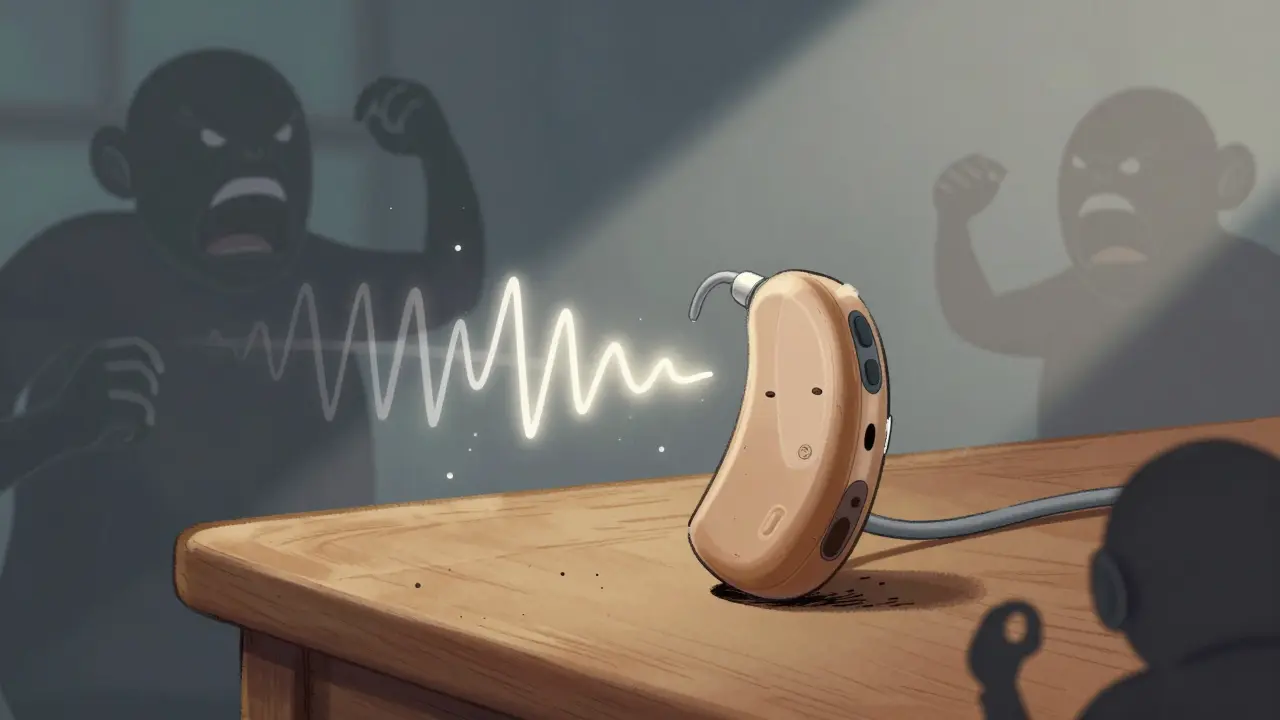
Every sound in the film carries meaning. The hearing aid isn’t just a prop-it’s a symbol of vulnerability. When Regan (Millicent Simmonds), the deaf daughter, turns it off, the world goes silent for the audience too. We experience her reality. The film doesn’t explain her deafness. It shows it. The sound design becomes a bridge between her world and ours.
When the family plays music to mask their movements, it’s not just a distraction. It’s a ritual. The choice of music-classic rock, like “Come On Eileen”-isn’t random. It’s a memory. A connection. The sound becomes emotional armor. Later, when Regan uses feedback from her hearing aid to kill the creature, the sound design isn’t just clever-it’s cathartic. The very thing that made her feel isolated becomes the weapon that saves her family.
What makes this different from other horror films?
Most horror films use sound to punch you. A Quiet Place uses sound to trap you. In The Conjuring, a creaking floorboard makes you jump. In A Quiet Place, the creaking floorboard makes you question whether you just breathed too loudly. The fear isn’t external. It’s internal. You start watching your own breathing.
Compare it to Hereditary or The Witch. Those films rely on slow dread, visual symbolism, and psychological unraveling. A Quiet Place works on a physical level. It’s not about what you see. It’s about what you hear-and what you almost hear. The sound design doesn’t support the story. It *is* the story.
The sequel doubled down
A Quiet Place Part II (2020) didn’t just expand the world. It expanded the rules. New locations. New sounds. New ways to die. The abandoned town with its echoing metal stairs. The radio station broadcasting music as a lure. The train that shakes the ground before it arrives. Each new environment introduced fresh sonic threats.
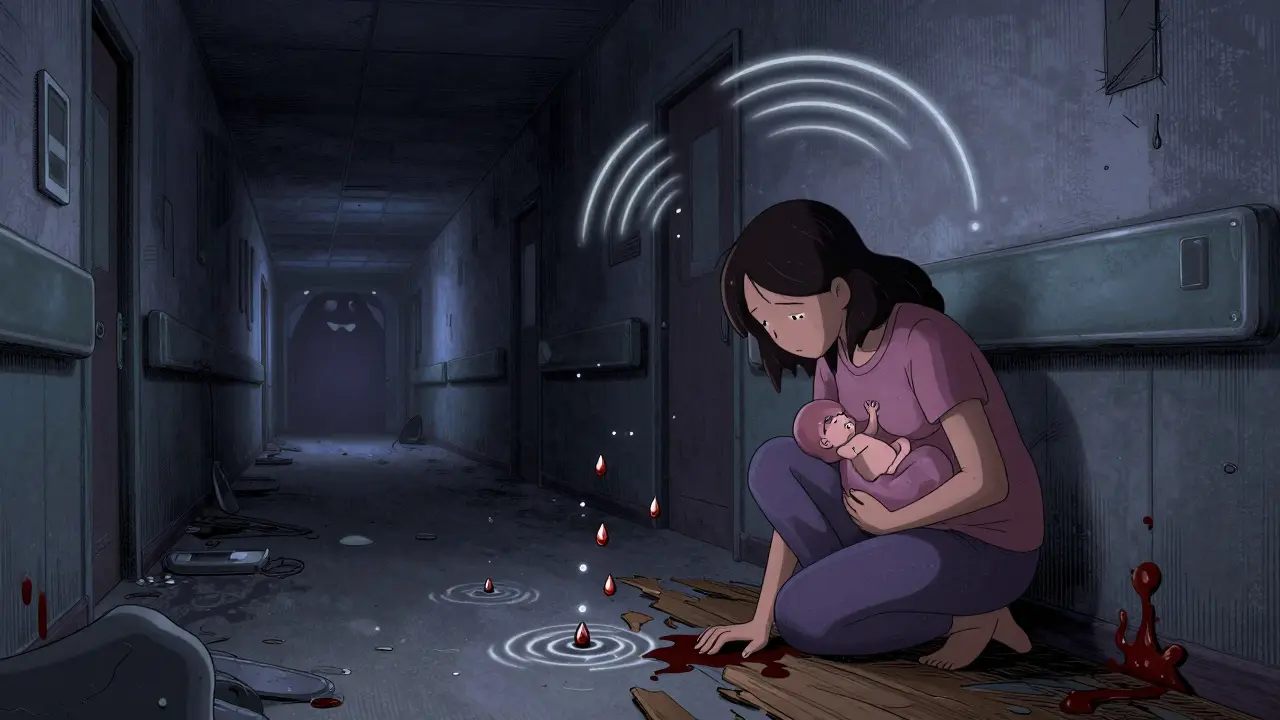
The film’s most powerful moment? When the protagonist, Evelyn (Emily Blunt), gives birth in silence. No screams. No crying. Just the sound of her nails digging into wood, the drip of blood onto concrete, the faintest whimper muffled by a cloth. The audience doesn’t hear the baby. They feel the terror of what could happen if she did. The sound design turns childbirth-a moment of life-into a moment of near-certain death.
Real-world impact
The franchise changed how studios think about sound. After its success, major films started hiring sound designers earlier in production-not as an afterthought, but as a core creative force. The Batman (2022) used similar techniques, letting silence stretch between dialogue to build tension. Even comedies like Barbie (2023) borrowed the technique, using sudden cuts to silence to punctuate jokes.
Sound designers now cite A Quiet Place as a turning point. It proved that silence isn’t the opposite of sound. It’s its most powerful form. The film won the Academy Award for Best Sound in 2019-the first horror film to win in that category in over 40 years. It wasn’t just a technical win. It was a cultural one.
Why this works so well for audiences
People don’t just watch horror. They want to feel it. A Quiet Place doesn’t let you off the hook. You’re not a spectator. You’re a participant. You learn the rules. You memorize the sounds. You start to dread the quiet. And when the sound finally comes-when the creature crashes through the wall-you don’t scream. You gasp. Because you were holding your breath the whole time.
That’s the genius of it. The horror isn’t in the monster. It’s in the responsibility. Every time you hear a character make a noise, you feel guilty. You think: Why didn’t they wait? Why didn’t they be quieter? You become complicit. And that’s the most unsettling horror of all.
What other films learned from it
Since A Quiet Place, we’ve seen echoes of its design in films like It Follows (where ambient noise builds unease), The Lighthouse (where wind and fog replace dialogue), and even Nope (where the absence of sound before the alien attack is just as terrifying as the attack itself).
But none have matched its purity. No other film has made silence its central character. No other film has turned the audience’s own breath into a threat. That’s why it’s not just a horror movie. It’s a masterclass in sensory storytelling.
Final thought: Sound isn’t a tool. It’s the trap.
The A Quiet Place franchise didn’t invent horror. It reinvented how horror feels. It proved that the scariest thing isn’t what’s coming. It’s what you might do before it arrives. In a world of loud, flashy, overproduced films, it whispered-and the world leaned in.
Why is silence more frightening than loud noises in horror?
Silence creates anticipation. The brain fills empty space with imagined threats, making the mind race ahead of what’s actually happening. Studies show that prolonged silence before a sudden sound increases fear responses by up to 40%. In A Quiet Place, the silence isn’t empty-it’s full of possibility. Every quiet moment makes you wonder: Is that a footstep? Did I just breathe too loud? That uncertainty is what keeps you on edge.
How did the sound team design the creatures’ hearing?
The sound designers didn’t just make the creatures sensitive to sound-they made them react to *every* frequency. They layered high-pitched whines, low rumbles, and subtle harmonics to simulate how the creatures might perceive the world. A human whisper might sound like a shout. A rustling leaf could be a roar. They tested sounds on volunteers using binaural recording, then adjusted based on heart rate spikes. The goal wasn’t realism-it was psychological impact.
Why did they use a hearing aid as a weapon?
The hearing aid wasn’t just a prop-it was a narrative device. Regan’s deafness made her an outsider in a world built for hearing people. But by using feedback from her hearing aid to kill the creature, the film flips her vulnerability into strength. The sound that once isolated her becomes the tool that saves her. It’s a powerful metaphor: what makes you different can make you unstoppable. The sound design turns her disability into the key to survival.
Did the actors really have to be silent during filming?
Yes. The cast didn’t speak on set at all during most scenes. Emily Blunt and John Krasinski communicated through sign language and written notes. Even when they were supposed to be yelling, they didn’t make a sound. All dialogue was added later in post-production. This wasn’t just for realism-it was to preserve the film’s sonic integrity. If an actor breathed too hard during a quiet scene, the whole take was ruined.
Is this style of horror scalable for other genres?
Absolutely. The technique works wherever tension is built through restraint. Thrillers like Prisoners and Wind River use silence to amplify isolation. Even comedies like The Grand Budapest Hotel use sudden quiet to punctuate punchlines. The key is control: silence isn’t the absence of sound-it’s the deliberate choice of what to leave out. Any genre can use it to deepen emotion, not just scare.