
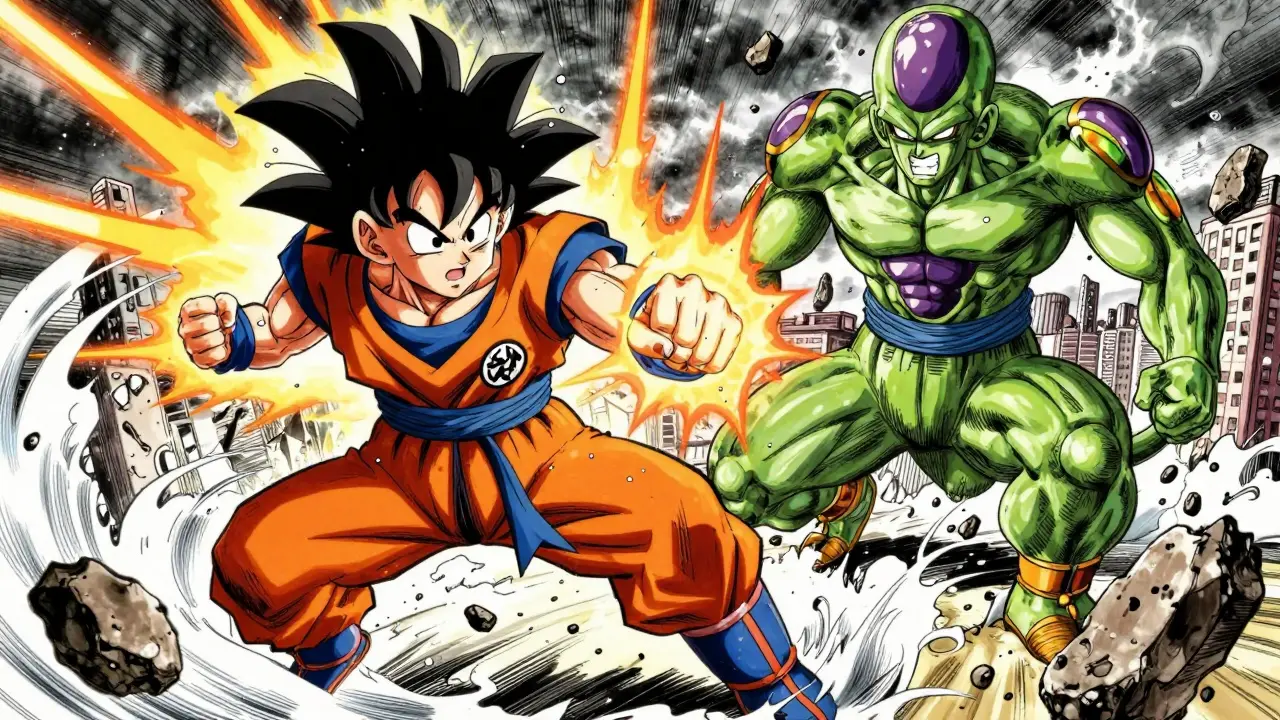
When you think of anime films, you might picture a boy with spiky hair punching through a mountain, or a sword-wielding teen fighting demons in a world of smoke and blood. These aren’t just cartoons. They’re cinematic events that move millions, break box office records, and stick with you long after the credits roll. From the 1980s to today, anime films have carved out a space in global cinema that’s raw, emotional, and visually unmatched.
Dragon Ball Z: The Blueprint of Anime Action
Before Demon Slayer shattered records, Dragon Ball Z: Broly - The Legendary Super Saiyan (1993) was the movie that made anime feel like a blockbuster. It wasn’t the first Dragon Ball film, but it was the one that proved anime could deliver spectacle on a scale no one expected. The fight scenes weren’t just fast-they had weight. Every punch echoed. Every energy blast lit up the screen like a lightning strike. And Broly? He wasn’t just a villain. He was a force of nature, a walking disaster with a tragic past that made you feel sorry for him even as he crushed cities.
By the time Dragon Ball Z: Battle of Gods came out in 2013, the formula had matured. The animation was smoother. The stakes were higher. The movie made over $22 million globally, mostly from theaters in Japan and Southeast Asia. But more than money, it showed that anime films could be faithful to their source material while still feeling fresh. It didn’t just retell the story-it expanded it, giving fans a new chapter that felt earned, not recycled.
What made these films work? They didn’t rely on CGI to save bad animation. They used hand-drawn motion, fluid and deliberate. You could see the sweat on Goku’s brow. You could feel the strain in his muscles. That attention to physical detail made the impossible feel real. And that’s why, even today, old Dragon Ball Z films still hold up.
The Rise of Studio Ufotable: Demon Slayer’s Cinematic Revolution
Fast forward to 2020, and Demon Slayer: Mugen Train changed everything. It wasn’t just the highest-grossing anime film of all time-it became the highest-grossing Japanese film ever, pulling in over $500 million worldwide. That’s more than Avengers: Endgame made in Japan. And it did it without Hollywood backing, without celebrity voice actors in the original version, and without a single live-action actor.
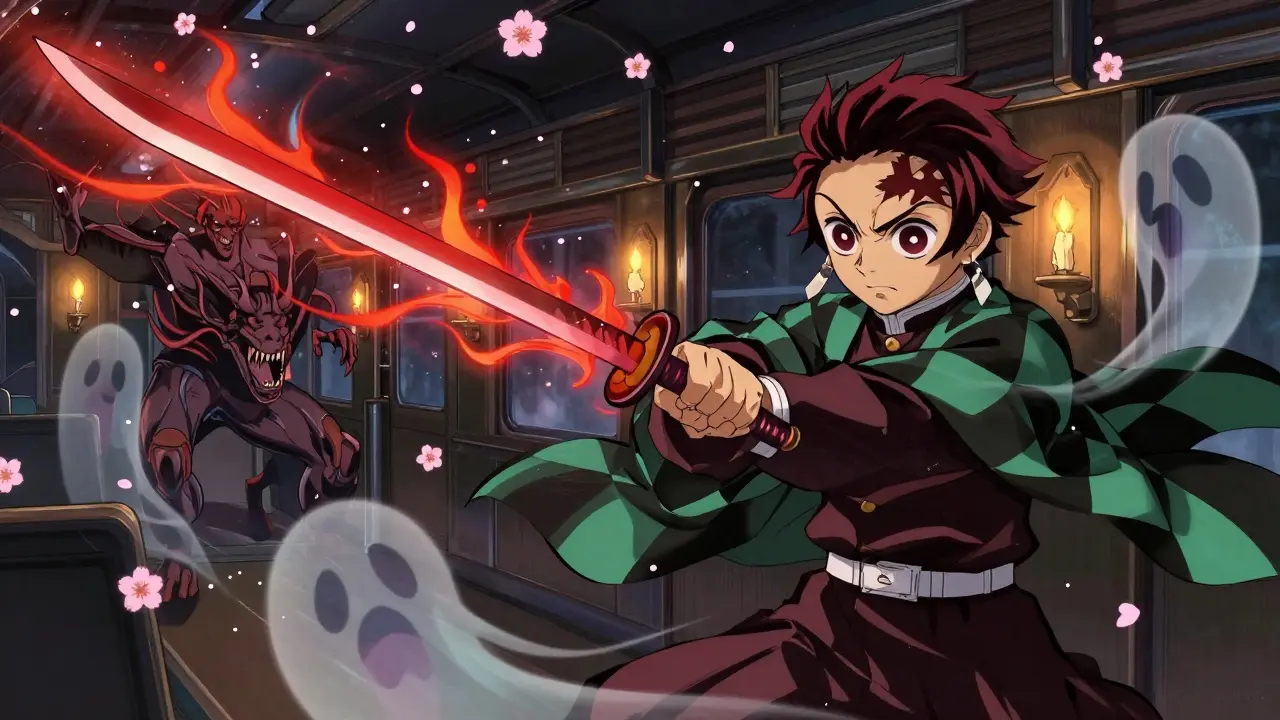
Studio Ufotable didn’t just animate the series. They reimagined it for the big screen. The fight scenes weren’t just fast-they were ballets of fire and steel. Tanjiro’s sword cuts didn’t just slice through demons. They left trails of glowing embers that lingered in the air like brushstrokes. The background art? Each frame looked like a painting from the Edo period, with cherry blossoms drifting in slow motion over a train filled with screaming spirits.
What set Mugen Train apart wasn’t just the visuals. It was the silence. In a world of booming soundtracks and loud action, the film used quiet moments to build tension. A single breath. A flicker of candlelight. A whisper of a sister’s voice. Those moments made the violence hit harder. When Tanjiro screamed in grief, you didn’t just hear it-you felt it in your chest.
And it wasn’t a fluke. The film’s success proved that anime films could compete with Disney and Pixar on emotional depth, not just spectacle. It didn’t need a talking raccoon or a robot dog. It just needed a boy who loved his sister, and a demon who remembered being human.
What Makes an Anime Film Great?
Not every anime movie is a masterpiece. Many are rushed, repetitive, or just cash grabs. But the ones that last? They share three things:
- Emotional stakes that matter - You need to care about the characters before the world ends. In My Neighbor Totoro, the kids are just trying to get home. In Princess Mononoke, they’re fighting to save a forest. Neither has a villain in a cape-but you still hold your breath.
- Visual identity - Each great anime film has a look that’s unmistakable. Ghost in the Shell with its neon rain. Summer Wars with its digital cityscapes. Demon Slayer with its ink-and-fire aesthetics. The art isn’t just background-it’s part of the story.
- Respect for the source - Fans don’t want remakes. They want expansions. Dragon Ball Z: Broly didn’t retell the original movie. It deepened it. Demon Slayer: Mugen Train didn’t copy the TV series. It gave it a cinematic heartbeat.
When a film does all three, it doesn’t just entertain. It becomes part of the culture.
Other Anime Films You Shouldn’t Miss
If you’ve only seen Dragon Ball Z and Demon Slayer, you’re missing half the story. Here are five others that shaped anime cinema:
- Princess Mononoke (1997) - Hayao Miyazaki’s epic about nature vs. industry. It’s darker than most people remember. The spirits aren’t cute. They’re terrifying. And the human cost of progress? It’s brutal.
- Ghost in the Shell (1995) - The film that predicted cyberpunk. A lone cop with a cybernetic body hunts a hacker who can control minds. It’s not about action. It’s about what it means to be human when your body isn’t yours.
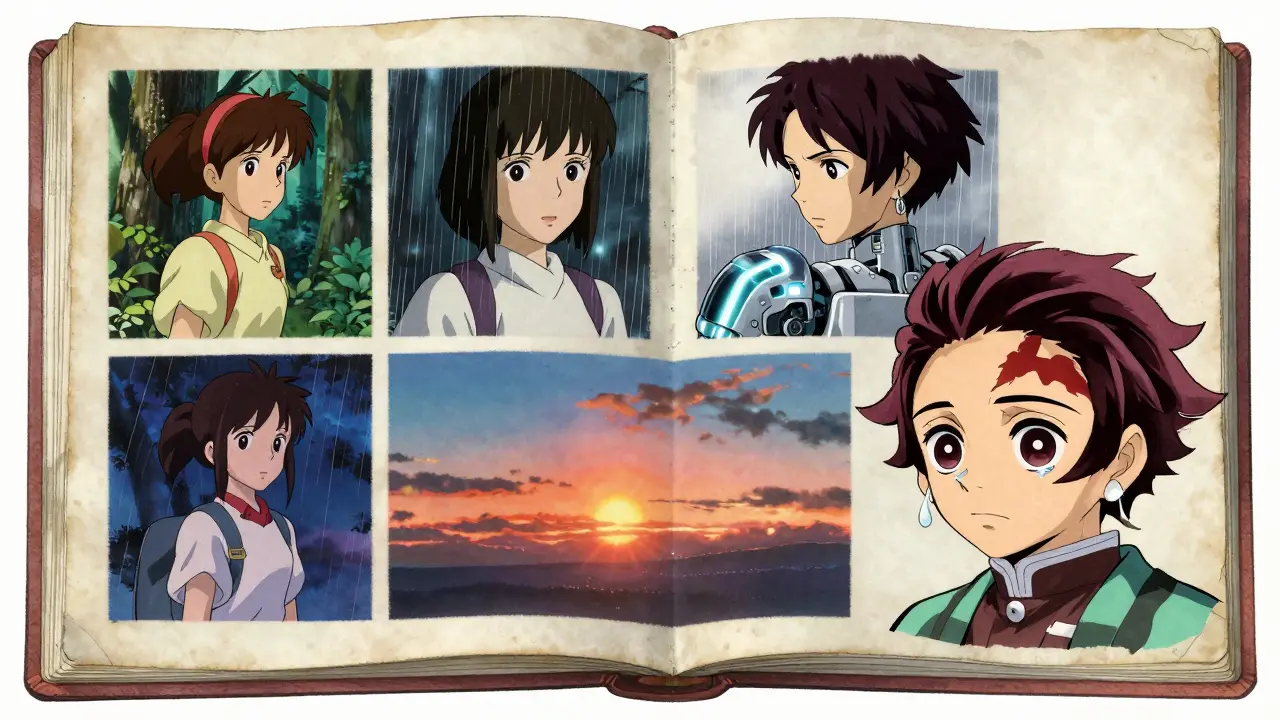
- Your Name (2016) - Two teens swap bodies across time. It’s romantic, surreal, and heartbreaking. The animation of the sky at sunset? Still one of the most beautiful things ever put to film.
- Attack on Titan: Chronicle (2020) - Not a sequel. A recap. But it’s the best recap ever made. It weaves together the entire series into a 90-minute tragedy that makes you cry even if you’ve seen it all before.
- Weathering With You (2019) - A boy meets a girl who can control the weather. It’s lighter than Your Name, but just as moving. The rain in this film isn’t weather-it’s emotion made visible.
Why Anime Films Still Matter
Some say streaming killed the movie theater. But anime films are proving the opposite. In 2025, over 70% of Japan’s top-grossing films were anime. In the U.S., Demon Slayer: Mugen Train opened in over 2,000 theaters-more than most indie dramas. People aren’t just watching them on laptops. They’re buying tickets. They’re wearing merch. They’re quoting lines like they’re scripture.
Why? Because these films don’t talk down to you. They don’t need to explain everything. They trust you to feel the silence. To read the emotion in a flicker of light. To understand that sometimes, the most powerful thing you can do is stand still and let the world fall apart around you.
From Goku’s final punch to Tanjiro’s last breath, anime films aren’t just entertainment. They’re emotional rituals. And if you’ve never sat in a dark theater, surrounded by strangers who all know exactly what’s coming next-you’re missing one of the most powerful experiences in modern cinema.
Are Dragon Ball Z movies worth watching if I’ve only seen the TV series?
Yes. The Dragon Ball Z movies aren’t just filler. Films like Battle of Gods and Resurrection ‘F’ were written by the original manga creator, Akira Toriyama. They expand the story in ways the TV series never did-adding new villains, deeper character moments, and even new transformations. If you loved the series, these films feel like the next chapter, not a side story.
Do I need to watch the Demon Slayer TV series before seeing the movie?
Not strictly, but you’ll get more out of it. The Mugen Train movie picks up right after episode 26 of the first season. It assumes you know Tanjiro’s backstory, his sister’s condition, and the basics of demon slayers. If you jump straight into the movie, you’ll still enjoy the action and visuals-but you’ll miss the emotional weight behind every decision the characters make.
Why are anime films so expensive to make?
Because they’re hand-drawn. Unlike Western animated films that use CGI for 80% of the work, anime films rely on thousands of individual frames drawn by artists. A single 10-minute action sequence in Demon Slayer took over 100 animators months to complete. Studio Ufotable spent $10 million on just the train battle scene. That level of detail can’t be rushed.
Are there any anime films that aren’t action-packed?
Absolutely. My Neighbor Totoro has no villains. The Wind Rises is a quiet biography of an airplane designer. A Silent Voice deals with bullying and redemption without a single fight scene. Anime isn’t just about battles-it’s about loneliness, love, memory, and healing. Some of the most powerful films are the ones where nothing explodes.
Where can I legally watch these anime films?
Most major anime films are available on Crunchyroll, Netflix, and Amazon Prime Video, depending on your region. Physical Blu-ray releases often include director’s commentary and behind-the-scenes footage that streaming versions don’t. If you want the full experience-especially for classics like Ghost in the Shell or Princess Mononoke-buying the Blu-ray is worth it.
Where to Go From Here
If you’re hooked after Demon Slayer and Dragon Ball Z, start with Princess Mononoke and Your Name. They’re the bridge between the action-heavy films and the deeply emotional ones. Then explore Studio Ghibli’s full catalog. Watch how the style changes-from the wild energy of Howl’s Moving Castle to the stillness of The Tale of The Princess Kaguya.
There’s no right order. Just watch what moves you. Because that’s the point of anime films-they don’t ask you to understand them. They ask you to feel them.