

Ever watched a movie and been totally sucked into the world on screen? That feeling? It’s not magic. It’s the quiet, careful work of two teams you’ve probably never heard of: art direction and set decoration. They’re the unsung heroes behind every dusty alleyway, every glittering penthouse, every eerie nursery that feels like it’s holding its breath. And while they work side by side, they’re not the same thing. Confusing them is like thinking a chef and a pantry manager are the same job. They both make the meal possible-but one designs the menu, the other fills the shelves.
What Is Art Direction?
Art direction is the big-picture blueprint. It’s the vision that says, "This movie should feel like a 1970s Soviet thriller shot through a funhouse mirror." The art director is the architect of the film’s visual language. They don’t just pick colors-they decide how space moves, how light falls, how a room tells a story before a single line of dialogue is spoken.
Think about Blade Runner 2049. The way the city towers loom over the characters, the way neon bleeds into fog, the way every surface feels cold and worn-that wasn’t an accident. That was the art director, Dennis Gassner, working with the production designer to build a world that felt lived-in and oppressive. Art direction covers everything from the shape of buildings to the texture of the sky. It’s about scale, mood, and consistency across every frame.
The art director works with the director and cinematographer to map out shot compositions. They decide whether a hallway should be narrow and claustrophobic or wide and empty to create isolation. They choose the architectural style of a futuristic city or the decay pattern of a post-apocalyptic town. They sketch layouts, approve scale models, and oversee the construction of sets. If a set is being built from scratch, the art director is the one saying, "The ceiling needs to be 12 feet lower so the camera can frame the character like a trapped animal."
What Is Set Decoration?
If art direction is the skeleton, set decoration is the skin, the clothes, the photos on the wall, and the coffee mug half-full on the desk. The set decorator is in charge of every single object you see in a scene that isn’t built into the structure. That means furniture, lamps, books, paintings, dishes, toys, newspapers, even the dust on the windowsill.
Take The Grand Budapest Hotel. The pastel pink hotel, the tiny keychain, the ornate tea set, the handwritten notes tucked into drawers-all of that was set decoration. The art director decided the hotel should be a whimsical, symmetrical box. The set decorator filled it with 1930s European luggage tags, fake newspapers from fictional countries, and a stuffed bird in a glass case that tells you everything about the owner’s personality.
A set decorator doesn’t just shop for items. They research. They dig into archives. They build relationships with prop houses and antique dealers. They track down a 1982 Sony Walkman that still works because the character in the film would’ve owned one. They know that a family in 1955 wouldn’t have had a TV in the bedroom, but they’d have a radio on the nightstand. They make sure every object has a history-even if the audience never sees it.
And here’s the catch: set decorators work fast. They have to. A set might be built on Monday. By Wednesday, it’s got to look like a 30-year-old bachelor’s apartment. By Friday, it’s a crime scene. They’re constantly swapping props, rearranging furniture, and hiding modern items under rugs. They’re the ones who make sure the coffee cup in scene 12 is the same one from scene 3. No one notices when it’s done right. Everyone notices when it’s wrong.

How They Work Together
Art direction and set decoration are two halves of the same brain. The art director says, "This room needs to feel abandoned." The set decorator answers with, "Okay, I’ll strip the walls, leave a single chair overturned, and scatter old letters under a broken lamp. I’ll add a spiderweb in the corner, but not too thick-this place was abandoned three months ago, not thirty years."
They’re in constant communication. The art director might sketch a wall with a specific pattern. The set decorator will find the wallpaper that matches it, then pick the right frame for the painting that goes on it. The art director says, "The kitchen should feel lived-in." The set decorator fills it with mismatched mugs, a half-eaten apple on the counter, and a calendar stuck on April 12th-the day the family disappeared.
Their collaboration is why some films feel real even when they’re completely fictional. In Mad Max: Fury Road, the art direction created the post-apocalyptic desert wasteland. The set decoration filled it with rusted cars welded together, homemade weapons made from bike parts, and a child’s doll hanging from a steering wheel. One built the world. The other made it feel like someone had lived in it.
Who Gets Credit?
When a movie wins an Oscar for Best Production Design, the award goes to the production designer and the art director. Set decorators are not eligible for that award. That’s a common point of confusion. But if you look at the credits, you’ll see the set decorator listed separately-and they’re just as vital.
Production design is the umbrella term. It includes both art direction and set decoration, plus lighting, costume coordination, and sometimes even location scouting. The production designer leads the whole visual team. The art director reports to them. The set decorator reports to the art director. It’s a chain of command built on trust, not hierarchy.
Some films blur the lines. In smaller productions, one person might handle both roles. But in big-budget films, they’re separate departments with separate budgets, separate teams, and separate deadlines. The art direction team might have 30 people sketching, modeling, and building. The set decoration team might have 50 people sourcing, hauling, and arranging.
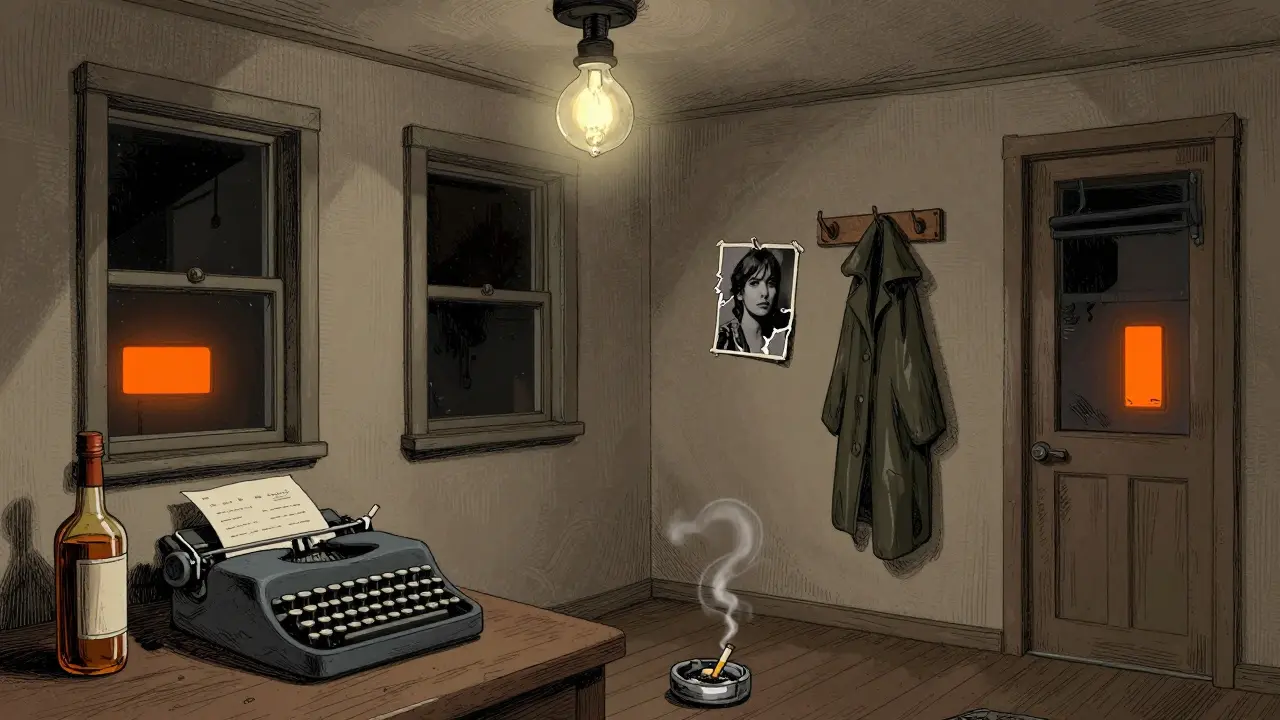
Real-World Examples
Let’s break down two contrasting scenes:
- Scene 1: A detective’s apartment in a noir film
Art direction: The apartment is in a decaying 1940s building. The windows are narrow, the ceilings low, and the hallway is lit by a single flickering bulb. The layout is designed to feel trapped. Set decoration: A half-drunk bottle of bourbon on a nightstand. A typewriter with one page of notes. A raincoat still hanging by the door. A photo of a woman with the corner torn off. A cigarette burned down to the filter in an ashtray. The art direction says "dark and claustrophobic." The set decoration says "this man is lonely, obsessed, and stuck in the past." - Scene 2: A child’s bedroom in a fantasy film
Art direction: The room floats in the sky, connected by glowing bridges. The walls are made of shifting clouds. The bed is shaped like a crescent moon. Set decoration: A stuffed dragon with one button eye missing. A half-finished LEGO castle on the floor. A notebook filled with crayon drawings of spaceships. A single sock stuck under the bed. The art direction creates the impossible. The set decoration makes it feel like a real kid lives there.
One isn’t better than the other. One can’t exist without the other.
Why It Matters
You don’t notice good art direction and set decoration. You notice bad ones. A modern coffee cup in a 1920s scene. A wall texture that doesn’t match the building’s era. A rug that looks like it came from a Home Depot catalog. These things pull you out of the story.
When done right, they do something deeper: they make you feel something. A dusty, forgotten toy in a war zone tells you a child lived there. A single framed photo on a dresser in a villain’s lair tells you they once loved someone. These details don’t need to be explained. They just need to be there.
That’s the invisible craft. The art director doesn’t just design spaces-they design emotion. The set decorator doesn’t just place objects-they place memory.
Next time you watch a film, pause on a quiet moment. Look at the room. What’s on the wall? What’s on the table? What’s missing? That’s not just decor. That’s storytelling.
Is set decoration the same as interior design?
No. Interior design focuses on comfort, functionality, and aesthetics for real people living in a space. Set decoration is about storytelling. A set decorator might put a broken clock on the wall to show time has stopped, or leave a single child’s shoe in the hallway to imply a sudden disappearance. It’s not about making a space livable-it’s about making it meaningful.
Do art directors and set decorators work on location shoots too?
Absolutely. Even when filming on real locations, art direction shapes how the space is altered-like painting over modern signage, adding period-specific railings, or removing power lines. Set decorators bring in props that match the era, replacing modern appliances with vintage ones, and adding personal items that fit the character’s backstory. A real apartment becomes a character when the right books, photos, and clutter are added.
Can someone be both an art director and a set decorator?
It’s rare on big films, but common on low-budget projects. The roles require different skill sets: art direction is about spatial planning and visual storytelling, while set decoration is about sourcing, logistics, and obsessive detail. Most professionals specialize in one. But some veteran crew members have done both, especially in indie films where budgets are tight and roles overlap.
What’s the difference between props and set decoration?
Props are items handled by actors-like a gun, a letter, a phone. Set decoration includes everything else in the space: furniture, curtains, wall art, lamps, books on shelves. Props are moved by actors. Set decoration stays put. The prop master works with the set decorator to make sure everything matches-like making sure the phone a character picks up looks like it belongs in the room.
How long does it take to design and decorate a film set?
It varies. For a small indie film, it might take 2-3 weeks. For a major studio film, it can take 3-6 months. The art direction team starts during pre-production, sketching and building models. Set decorators come in later, once the sets are built, and have as little as 2-4 weeks to fill them. Time pressure is intense, and mistakes are costly. A wrong color on a wall or a misplaced book can mean reshoots.