
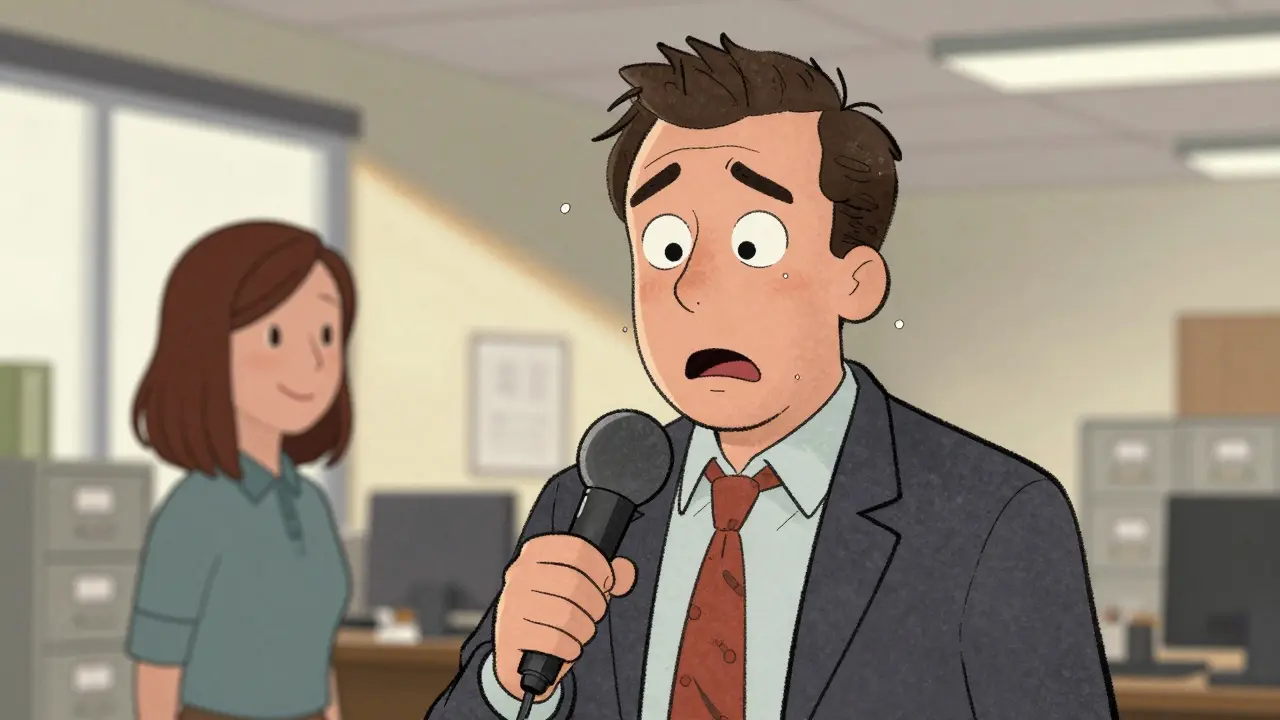
Great comedy on film doesn’t happen because someone said something funny. It happens because an actor committed to a moment so fully that the audience couldn’t help but laugh-even when nothing was supposed to be funny. Think of Steve Carell in The Office when he tries to flirt with Pam while holding a stapler like a microphone. Or Jack Black in Nacho Libre, sweating through a wrestling match while chanting about tacos. These aren’t just punchlines. They’re carefully built performances where timing, reaction, and stakes work together like gears in a clock.
Timing Is the Invisible Muscle
Timing in comedy isn’t about pausing for a beat after a joke. It’s about knowing exactly when to hold, when to rush, and when to let silence scream. In Some Like It Hot, Marilyn Monroe’s line, ‘I’m not good with names,’ lands because she says it while adjusting her glove-slow, distracted, utterly unaware she’s just insulted a mobster. The pause before the line? Half a second. The hesitation after? A full three. That’s not luck. That’s precision.
Comedy actors train their instincts like athletes. They rehearse lines with different rhythms until the rhythm matches the character’s inner chaos. In Borat, Sacha Baron Cohen doesn’t just deliver absurd lines-he lets the awkwardness build. He waits for people to react, then leans in, eyes wide, like he’s about to confess a secret. The delay isn’t accidental. It’s engineered. The longer the silence, the more the audience’s brain scrambles to catch up-and that’s when laughter spikes.
Bad timing kills comedy. Too fast, and the joke feels rushed. Too slow, and the audience forgets why they were supposed to laugh. The sweet spot? When the actor’s internal clock syncs with the audience’s expectation-and then breaks it just enough to surprise.
Reactions Are the Real Joke
Most people think the punchline is the funny part. But in film comedy, the reaction is often the punchline. Consider the scene in Superbad when Seth (Jonah Hill) spills his drink on the girl he’s crushing on. He doesn’t say anything. He just stares. His face goes from panic to horror to resignation-all in under two seconds. The camera holds on him. No music. No cutaway. Just his eyes. That’s the joke.
Great comedic actors understand that the audience laughs at the gap between what’s expected and what’s real. When a character is supposed to be cool, but they’re crumbling inside? That’s gold. When someone tries to act brave but their hands are shaking? That’s human. And humans are funny.
Think about the way Jim Carrey in The Mask reacts to his own reflection. He doesn’t just smile-he contorts. His eyebrows climb like they’re trying to escape his skull. His jaw drops like it’s been unplugged. The joke isn’t the mask. It’s the sheer disbelief on his face. The audience laughs because they recognize that feeling: when you’re trying to stay calm, but your body is screaming for help.
Even silence can be a reaction. In Waiting for Guffman, Christopher Guest’s character stands frozen after being told he’s not good enough to sing. He doesn’t cry. He doesn’t yell. He just blinks. Once. Twice. Then turns and walks away. That one blink tells you everything about his ego, his pride, his shame. It’s funnier than any monologue.
Stakes Make the Laughter Stick
Comedy without stakes is just noise. If the character doesn’t care, why should we? The best comedic performances make us believe the character thinks their world is ending-even if it’s just about getting a parking spot or surviving a family dinner.
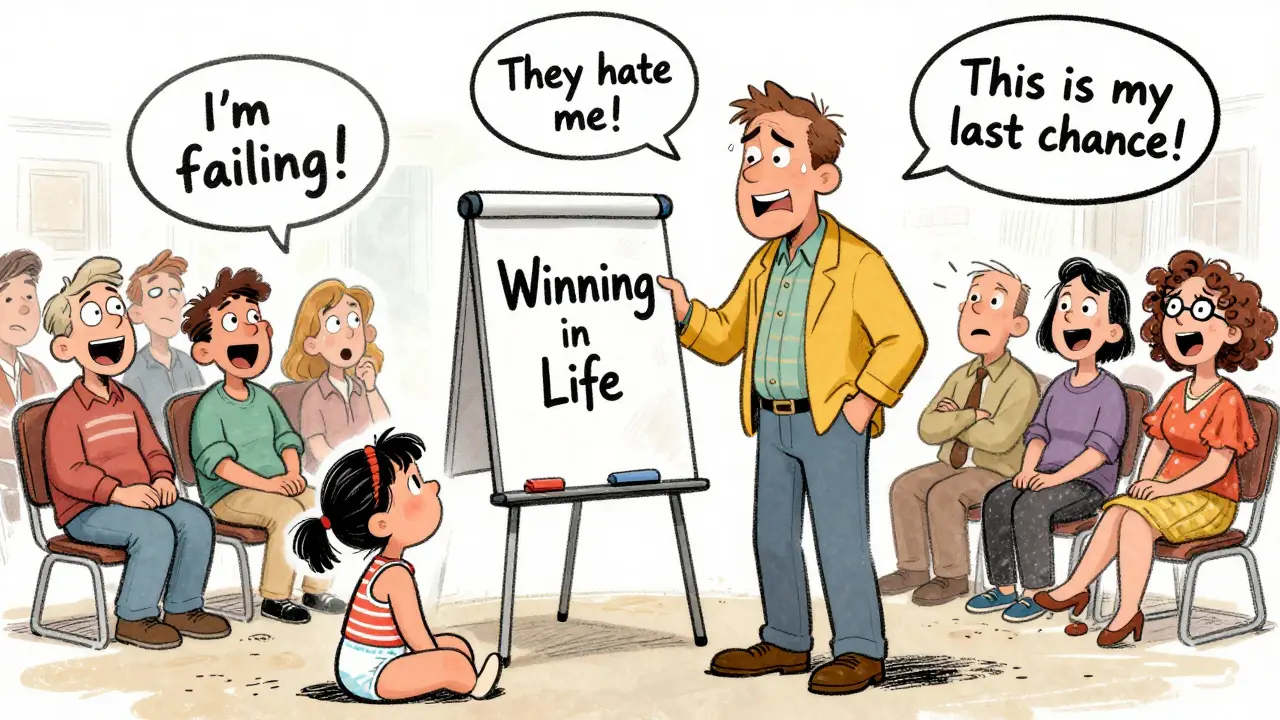
In Little Miss Sunshine, the family’s road trip is a disaster. The van breaks down. The grandfather dies. The kid doesn’t know how to dance. But the stakes? They’re real. Every character is clinging to something: validation, escape, connection. That’s why we laugh when Richard (Greg Kinnear) tries to sell his self-help seminar to a group of strangers while his daughter is wearing a diaper. We laugh because we know he believes this is his last chance. His desperation is real. And real desperation is hilarious.
Contrast that with a slapstick scene where someone slips on a banana peel. It’s funny once. But if the character doesn’t care if they fall, it’s just a gag. If they’re trying to impress their boss, or hide a secret, or get to the hospital in time? Now it’s a story. Now it matters.
Even in absurd comedy like Anchorman, the stakes are clear: Ron Burgundy isn’t just trying to keep his job-he’s trying to keep his identity. His mustache, his suit, his voice. When he’s replaced by a woman, it’s not just a job loss. It’s the collapse of his entire worldview. That’s why the scene where he screams ‘I’m in a glass case of emotion!’ lands so hard. It’s not just a line. It’s a breakdown.
The Actor’s Toolkit: How to Build a Comedic Performance
There’s no secret formula, but there are habits that separate good comedic actors from great ones:
- Know your character’s truth. What do they truly want? What are they terrified of? The funnier the character, the more real their fear.
- Don’t play the joke-play the emotion. If you’re trying to be funny, you’re already not funny. Play the character’s desperation, confusion, or pride. The humor finds you.
- Listen like your life depends on it. Comedy lives in the space between lines. If you’re waiting for your cue instead of reacting to what’s happening, the moment dies.
- Embrace awkwardness. Real people are awkward. Funny people double down on it. Don’t smooth it out. Let the silence hang. Let the eyes dart. Let the hands fumble.
- Use the environment. A chair, a cup, a mirror-they’re not props. They’re extensions of the character. A nervous actor might fidget with a pen. A confident one might use it like a baton. The object reveals the mind.
What Doesn’t Work in Comedy Acting
Some actors think comedy means exaggerating everything. Big gestures. Loud voices. Wild eyes. That’s not comedy. That’s caricature.
Overacting kills comedy because it removes the human element. If the audience thinks, ‘That’s not how anyone behaves,’ they stop laughing. They start watching a cartoon.
Another mistake? Trying to be ‘funny’ in every scene. Comedy needs breathing room. A serious moment, even a quiet one, makes the funny moments hit harder. In Marriage Story, Adam Driver’s character breaks down crying over a pair of socks. It’s devastating. But right after, he’s in a courtroom, trying to explain why he’s not a bad dad-while holding a rubber chicken. The contrast is what makes it unforgettable.
And never underestimate the power of stillness. A perfectly timed glance, a half-smile, a sigh-those moments linger longer than any punchline.
Why This Matters Beyond the Screen
Understanding comedy acting isn’t just for actors. It’s for anyone who wants to connect with people. In meetings, in conversations, in relationships-timing, reaction, and stakes shape how we’re perceived. The person who pauses before answering? They seem thoughtful. The one who reacts with surprise to bad news? They seem human. The one who treats a small mistake like a catastrophe? They’re memorable.
Comedy on film teaches us that vulnerability is the most powerful tool we have. When we let ourselves be awkward, uncertain, or ridiculous-without apology-we don’t just make people laugh. We make them feel seen.
That’s the real magic. Not the laugh. The connection.
What’s the most important skill in comedy acting?
The most important skill is emotional truth. Comedy doesn’t work when it feels fake. Even the silliest character must feel real inside. If the actor believes their character’s fear, embarrassment, or hope, the audience will too-and that’s when laughter happens.
Can you teach comedic timing, or is it natural?
Timing can be trained. Many actors study improv, watch classic comedies frame by frame, and rehearse lines with metronomes to internalize rhythm. But natural instinct helps. The best performers blend learned technique with an innate sense of rhythm and surprise. It’s like dancing-you can learn the steps, but the flow comes from feeling the music.
Why do some funny lines fall flat in movies?
They’re often delivered without context. A line might be hilarious on paper, but if the actor isn’t emotionally invested, or the scene lacks stakes, it lands like a stone. The audience needs to care about what’s at risk. If the character doesn’t care, why should we?
Is physical comedy harder than verbal comedy?
It’s different, not harder. Physical comedy requires precise control over movement and timing-think Charlie Chaplin or Buster Keaton. Verbal comedy relies on rhythm, tone, and subtext. Both demand total commitment. A poorly timed stumble is just a fall. A perfectly timed stumble that reveals a character’s panic? That’s art.
How do you know if a comedic performance is working?
You know it’s working when the audience laughs even when they shouldn’t. When a line lands after a long pause. When a glance makes people chuckle instead of the punchline. When the humor comes from character, not setup. If people remember the actor’s face more than the joke, you’ve done it right.
What to Watch Next
If you want to study comedy acting, watch these performances closely:
- Modern Times (1936) - Charlie Chaplin’s silent physical comedy still sets the standard for timing and emotional depth.
- Groundhog Day (1993) - Bill Murray’s arc from sarcastic to sincere shows how comedy can carry emotional weight.
- The Grand Budapest Hotel (2014) - Ralph Fiennes’ over-the-top elegance hides a character terrified of losing control.
- Parasite (2019) - The darkly comic moments work because the stakes are life and death.
- Barbie (2023) - Margot Robbie’s performance balances absurdity with quiet vulnerability-perfectly calibrated.
Pay attention not to what they say-but how they react. What they don’t say. What they’re trying to hide. That’s where the real comedy lives.