
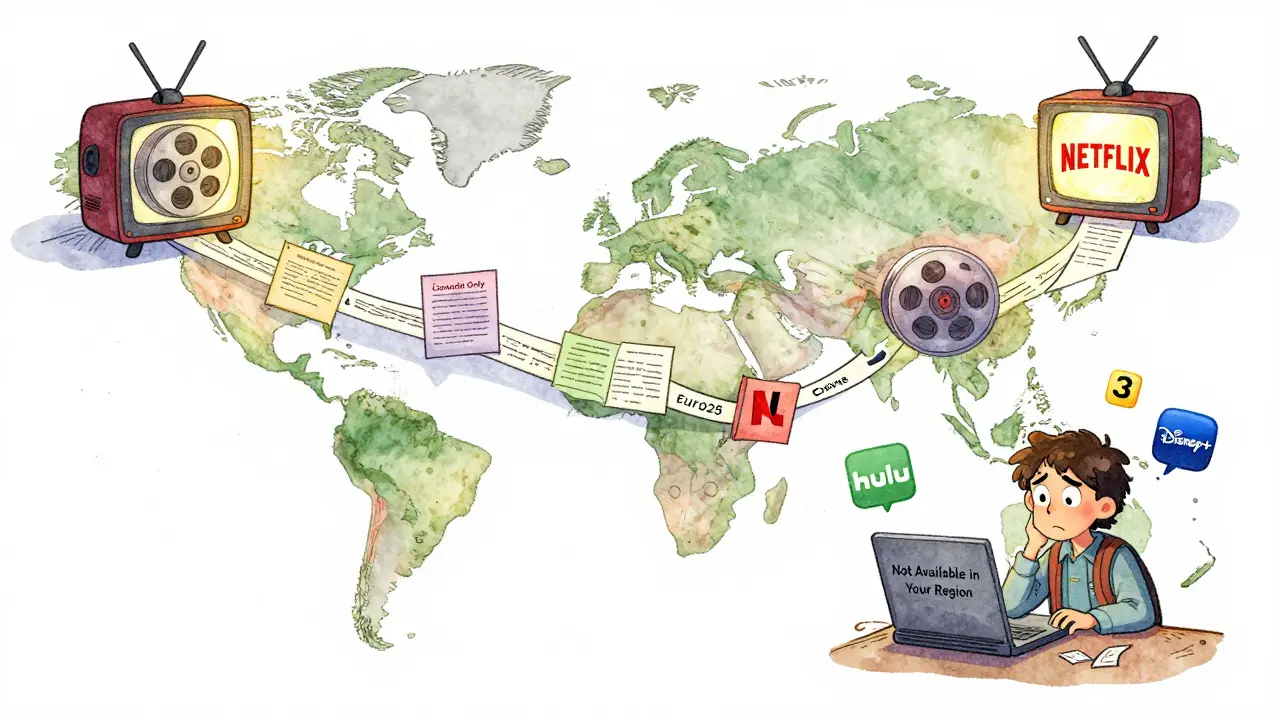
Ever tried to watch your favorite show on Netflix, only to get that frustrating message: "This title isn't available in your region"? It’s not a glitch. It’s not your internet. It’s content licensing-a complex web of legal agreements that decide what you can watch, where, and when. This isn’t just about streaming platforms. It affects movies, TV shows, music, podcasts, even e-books. If you’ve ever wondered why some content disappears when you travel, or why your friend in another country has access to shows you can’t even find, this is why.
What Exactly Is Content Licensing?
Content licensing is a contract between the owner of a piece of media-like a movie studio, TV network, or independent producer-and a distributor, such as Netflix, Hulu, Amazon Prime, or a local TV station. The owner grants the distributor the legal right to show that content to an audience, but only under specific conditions.
These conditions include:
- Which countries or regions the content can be shown in
- How long the license lasts (often 1-5 years)
- Whether it can be streamed, broadcast, or downloaded
- Whether subtitles or dubbing are required
- Whether it can be shown alongside ads or must be ad-free
For example, a small indie film might have a license that lets it stream only in Canada and Australia for two years. Meanwhile, a big-budget Netflix original might have a global license, meaning it’s available everywhere at once. The difference? Money. Big studios sell rights in chunks to maximize profits. A show might sell its European rights to Sky, its U.S. rights to HBO, and its Asian rights to Disney+-each deal priced differently based on market size and demand.
Why Do Geo-Restrictions Exist?
It’s not about technology. It’s about business models.
Movie studios and TV networks have long sold distribution rights region by region. This started in the 1970s when physical media (VHS, DVDs) were the norm. A studio would sell the rights to distribute a film in Japan to a Japanese distributor, in Germany to a German one, and so on. Each distributor paid a fee and handled local marketing, dubbing, and theater releases.
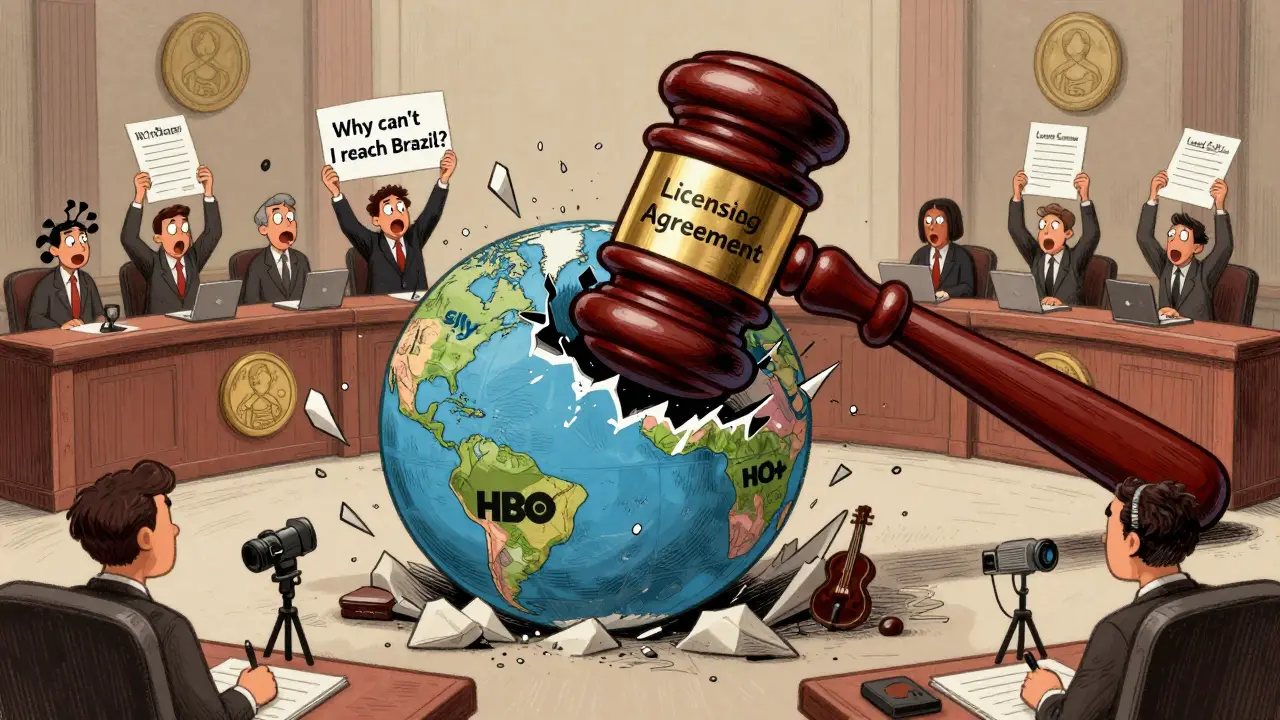
Streaming changed how we watch-but not how rights are sold. Companies still use the same old system. Why? Because local broadcasters and cable networks still hold valuable licenses. In France, Canal+ might have exclusive rights to air a show on TV for three years. Netflix can’t just stream it there until that deal expires-even if the show is already available everywhere else.
There’s also the issue of pricing. A show that’s popular in the U.S. might not sell well in Brazil. Studios don’t want to charge the same license fee for both markets. So they split deals: high fees for lucrative markets, low fees for smaller ones. That means Netflix might pay $10 million for U.S. rights and only $500,000 for South American rights. To protect their investment, they block access outside the licensed region.
How Do Streaming Services Handle This?
Streaming platforms don’t own most of the content they show. They rent it. That means they’re stuck with whatever deals their partners make.
Here’s how they cope:
- Content swapping: If Netflix can’t get the U.S. version of a show, they might license a similar one from another country to fill the gap. That’s why you sometimes see "similar titles" when your favorite show is gone.
- Original productions: Netflix, Amazon, and Apple now make their own shows. That gives them full global control. Shows like "Stranger Things" or "The Crown" aren’t blocked anywhere because no one else owns the rights.
- License expiration: When a license runs out, the content disappears. That’s why you might suddenly lose access to a show you’ve watched for years. It’s not gone-it’s just been taken back by the owner.
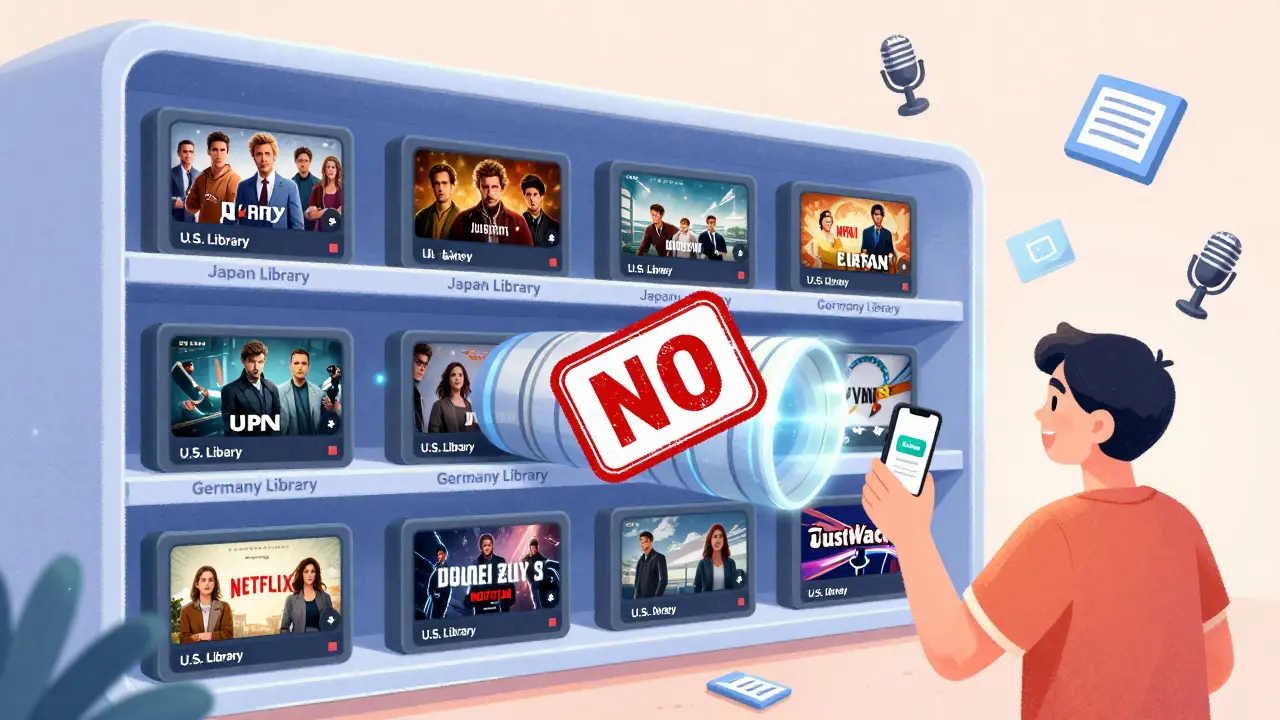
- Regional libraries: Netflix has over 200 different content libraries worldwide. A U.S. user sees a different catalog than a Japanese user. Even within Europe, Germany’s library is not identical to France’s.
Some services try to work around this. For example, Disney+ might offer a different lineup in India than in the U.S. because local production companies hold exclusive rights to certain Bollywood films. The same goes for regional sports leagues-NFL games are available live in the U.S., but blocked in most other countries unless you have a specific international package.
What About Music, Books, and Podcasts?
You might think this only affects video. It doesn’t.
Spotify has different song catalogs in different countries. Why? Record labels license music per territory. A song might be available in the U.K. but not in Brazil because the artist’s label hasn’t sold rights there. Some songs are blocked because of copyright claims from local publishers.
Same with e-books. Amazon’s Kindle store varies by country. A book published in the U.S. might not be available in Australia because the publisher hasn’t granted digital rights for that region. Podcasts? They’re less restricted, but even they sometimes get blocked if they feature music that’s licensed only for U.S. audiences.
This isn’t about censorship. It’s about legal ownership. Every piece of content has multiple rights holders: writers, composers, producers, distributors. Each one can say "no" to a specific country.
Is There Any Way Around It?
Many people use VPNs to change their location and access blocked content. Is it legal? It depends.
Using a VPN to access content isn’t illegal in most countries-but it usually violates the terms of service of the streaming platform. That means your account could get suspended. It doesn’t mean jail time, but you lose access.
Some platforms actively block VPNs. Netflix, Disney+, and HBO have teams dedicated to detecting and shutting down VPN traffic. They use IP blacklists, DNS checks, and even behavioral analysis to spot users who aren’t where they claim to be.
There’s also the ethical side. When you use a VPN to bypass restrictions, you’re bypassing the system that pays creators. The money that should go to the filmmakers or musicians might not reach them because the license agreement was never meant to cover your region.
Instead of bypassing, consider these alternatives:
- Check if the content is available on another platform in your country
- Look for legal physical copies (DVDs, Blu-rays)
- Use local streaming services that license content for your region
- Wait. Many shows eventually become globally available after licenses expire
What’s Changing?
The system is cracking. More people are demanding global access. And some companies are starting to listen.
Apple TV+ and Amazon Prime Video now offer nearly all their originals worldwide. Why? Because they control the rights from the start. No middlemen. No regional splits.
Some studios are moving toward global licensing too. In 2024, Sony Pictures announced it would start selling worldwide streaming rights for new films instead of region-by-region deals. That’s a big shift.
And then there’s the EU. The European Union passed rules in 2023 requiring streaming services to make their full catalogs available to subscribers who travel within member states. That means if you subscribe to Netflix in France, you can watch the same content in Germany, Italy, or Spain-no VPN needed.
These changes are slow. But they’re happening. The future might not be a single global catalog, but it’s moving toward fewer regional walls.
What You Can Do
You can’t fix the system. But you can understand it.
- When a show disappears, check if it’s been moved to another platform. Sometimes it’s just been licensed to a different service.
- Use tools like JustWatch or Reelgood to search across platforms in your country.
- Pay attention to release dates. New seasons often come out globally at once-especially if they’re originals.
- Support local distributors. If you want a show to come to your country, let the platform know. Demand matters.
Content licensing isn’t perfect. It’s outdated, confusing, and often frustrating. But it’s the system we’re stuck with-for now. The more people understand how it works, the more pressure there is to change it. Until then, your best move is to know your rights, know your options, and know that the reason you can’t watch that show isn’t because of your internet. It’s because of a contract signed years ago, halfway across the world.
Why can’t I watch the same shows on Netflix in different countries?
Netflix doesn’t own most of its content-it licenses it from studios and distributors. Each license agreement specifies which countries can show the show. A show might be licensed to Netflix in the U.S. but to a different service in Brazil, or not licensed at all in some regions. That’s why the catalog varies by country.
Do VPNs work to bypass geo-restrictions?
VPNs can technically let you access content from other regions, but most major streaming services like Netflix, Disney+, and HBO actively block them. Using a VPN violates their terms of service, which can lead to account suspension. It’s not illegal in most places, but it’s against the rules.
Why do some shows disappear from streaming platforms?
Streaming licenses usually last 1-5 years. Once the contract expires, the content owner can take it back. That’s why you might suddenly lose access to a show you’ve watched for years. It’s not deleted-it’s just no longer licensed to that platform.
Are original shows like Stranger Things available everywhere?
Yes. When a streaming service produces its own content-like Netflix’s "Stranger Things" or Amazon’s "The Marvelous Mrs. Maisel"-they own the global rights. That means they can release it everywhere at once without worrying about regional licensing deals.
Can I buy content to watch anywhere?
Buying digital copies (like from iTunes or Amazon) doesn’t always mean global access. Many digital purchases still have regional restrictions. For example, a movie you buy in the U.S. might not play on your account if you’re in Australia. Physical media like DVDs and Blu-rays are less restricted, but region codes can still block playback.