
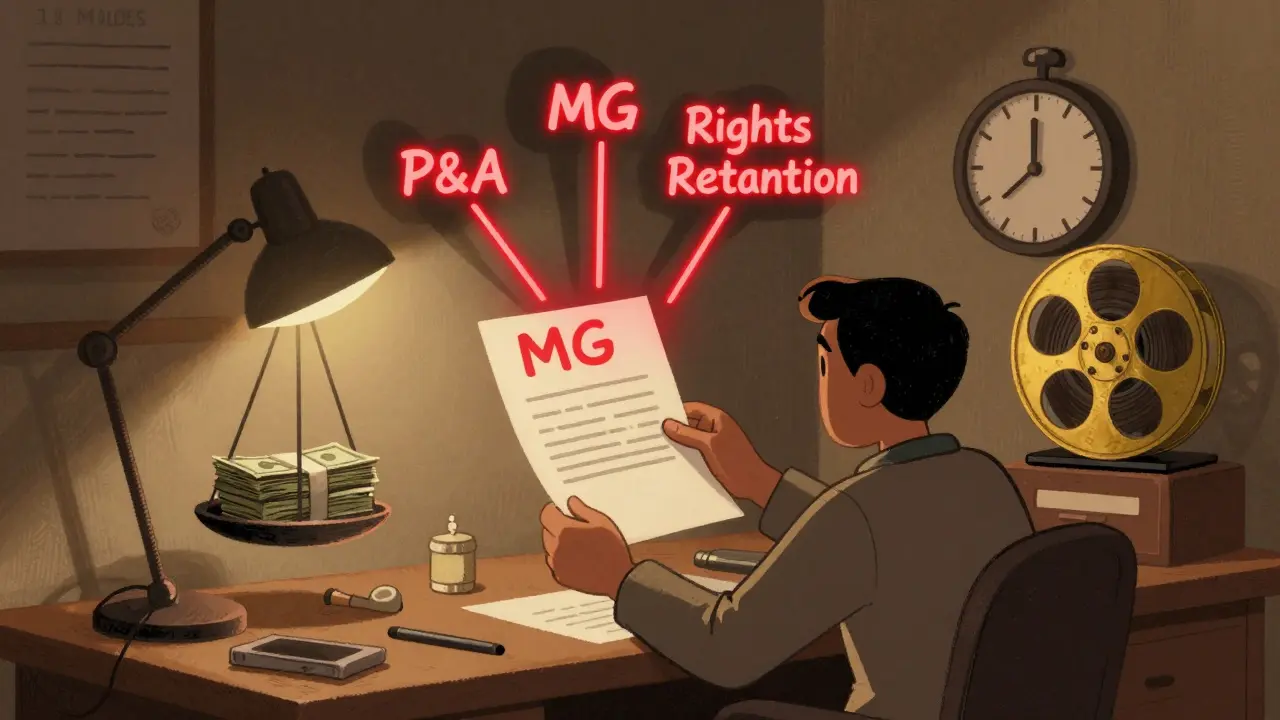
Getting an independent film seen isn’t just about making a great movie. It’s about who you give the rights to, what they pay you upfront, and what they promise to do with it after. Too many filmmakers sign deals without understanding the fine print-and end up losing control, money, or both. Let’s cut through the jargon and explain exactly what MGs, P&A, and retention of rights mean in real terms.
What Are MGs?
MGs stand for Minimum Guarantees. This is the most straightforward part of any distribution deal: a distributor agrees to pay you a set amount of money upfront, regardless of how the film does at the box office or on streaming platforms. Think of it like an advance on future earnings. If your film makes $500,000 in revenue and your MG was $200,000, you keep the $200,000 and the distributor keeps the rest until they recoup their costs. If your film only makes $150,000? You still get the full $200,000. That’s the power of an MG.
But here’s the catch: MGs aren’t free money. They’re paid against future earnings. That means if your film earns more than the MG, the distributor takes their cut first-usually 30% to 50%-until they’ve recovered their marketing spend and the guarantee. Only then do you start seeing royalties. Many indie filmmakers assume an MG is pure profit. It’s not. It’s a loan against future income, and if your film underperforms, you might never see another dollar.
What Is P&A?
P&A stands for Prints and Advertising. This is the money distributors spend to get your film in front of audiences. It includes everything from physical film prints (rare now) to digital cinema packages, trailer production, online ads, billboards, press kits, festival submissions, and even influencer outreach. A strong P&A campaign can turn a quiet indie film into a breakout hit. A weak one? It vanishes.
Here’s the reality most filmmakers don’t realize: distributors often don’t pay P&A out of pocket. They deduct it from your revenue stream. So if your distributor spends $100,000 on P&A, that money comes out of your film’s gross earnings before you see a cent. And if your film earns $80,000? You owe them $20,000. That’s called being underwater. You’ve made money, but you still owe the distributor. No payout. No profit.
Some distributors offer to front the P&A as a separate advance, but that’s rare. More often, you’re expected to cover it yourself-or worse, you’re told the distributor will handle it, but they’ll charge you back later. Always ask: Is the P&A recoupable? And if so, how much? If the answer isn’t clear, walk away.
Retention of Rights: The Most Important Clause
This is where things get dangerous. When you sign a distribution deal, you’re not selling your film. You’re licensing it. But how long? Where? For what platforms? And what happens if the distributor doesn’t release it?
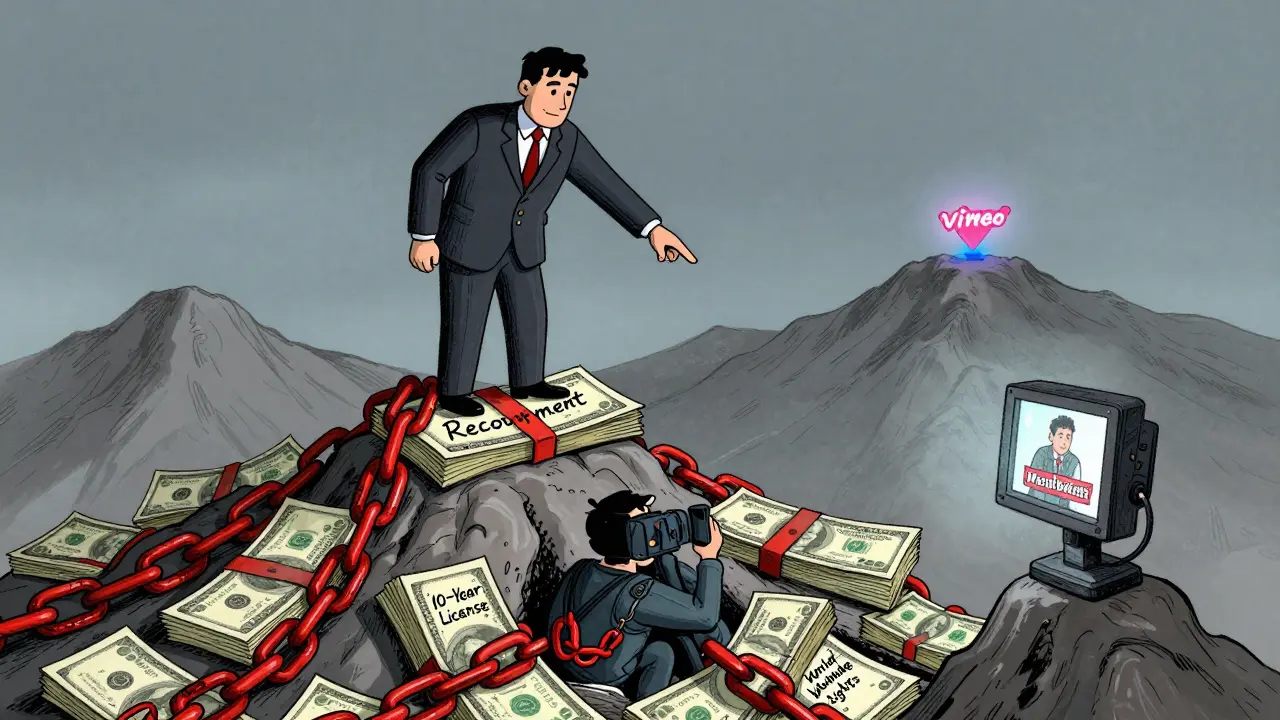
Retention of rights means you keep ownership. But if your contract gives the distributor exclusive rights for 10 years across all platforms worldwide, you’re locked in. Even if they do nothing, you can’t take your film to another distributor. You can’t self-release it on Vimeo. You can’t even screen it at a local film festival without their permission.
One filmmaker from Austin, Texas, signed a deal in 2020 with a distributor who promised to launch his documentary in theaters and on Apple TV. Two years passed. No release. No updates. When he asked for the rights back, the distributor said no-they still held the license. He lost $150,000 in production costs and two years of momentum. He didn’t get his rights back until he hired a lawyer and sued.
Never sign a deal without a reversion clause. This says: if the distributor doesn’t release the film within 12 to 18 months, the rights automatically return to you. It should also specify which territories and platforms are included. If they only get North America, you can still license Europe or Asia separately. If they get theatrical only, you can still sell streaming rights. Always carve out what you want to keep.
How to Negotiate a Fair Deal
There’s no one-size-fits-all formula, but here’s what works for filmmakers who actually make money:
- Ask for an MG of at least 50% of your production budget. If you spent $300,000, aim for $150,000+. Anything less and you’re taking a huge risk.
- Insist that P&A is non-recoupable. If they spend $100,000 on ads, that’s their problem-not yours. If they refuse, walk away.
- Never agree to a term longer than 5 years. Ten-year deals are predatory. Five is the max. Three is ideal.
- Require quarterly financial reports. No vague “you’ll be paid when we get paid.” Demand transparency.
- Get a lawyer who specializes in film, not general business. Film contracts are their own language.
Some distributors offer better terms because they’re trying to build a reputation. Companies like Magnolia Pictures and IFC Films have track records of fair deals. Others? They’re just looking for cheap content to fill their platforms. Research their past releases. Did they actually promote their films? Did filmmakers get paid? Check IMDbPro. Look at the credits. If a distributor’s name appears on 20 films from the same year and none of them have box office numbers, that’s a red flag.
What Happens If You Don’t Sign a Deal?
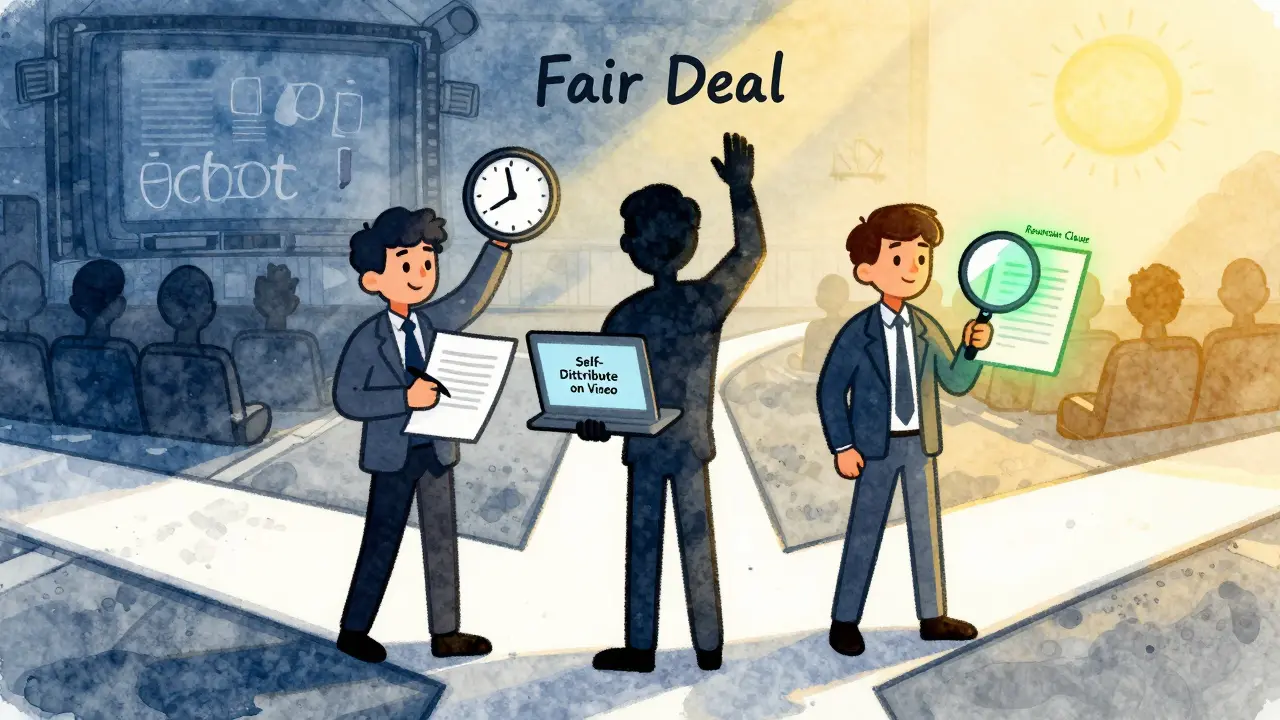
Many filmmakers think they need a distributor to survive. That’s outdated. Platforms like Vimeo On Demand, Amazon Independent Film, and even YouTube allow you to self-distribute. You keep 85% to 90% of revenue. No MG? No P&A? Fine. You handle the marketing yourself. Use social media. Run targeted ads. Partner with film blogs. Build a fanbase.
Look at The Lighthouse-it started as an indie film with no distributor. The filmmakers self-released it on Vimeo, then used word-of-mouth to land a theatrical deal later. Or consider Little Miss Sunshine, which was bought at Sundance after it went viral online. You don’t need a distributor to succeed. You need strategy.
Signing a deal isn’t the finish line. It’s the start of a partnership. And like any partnership, you need to know what you’re giving up-and what you’re getting in return.
Common Mistakes Filmmakers Make
- Signing away worldwide rights without knowing what territories the distributor actually operates in.
- Accepting a low MG because they’re desperate. That’s a trap. A $50,000 MG with no P&A is worse than no deal at all.
- Believing a distributor’s promise of “a wide release.” Without a written timeline, it’s just a sales pitch.
- Not reading the fine print on recoupment. If P&A is recoupable, you could end up owing money.
- Thinking a festival win guarantees distribution. It doesn’t. It just gets you in the door.
Every year, dozens of indie films vanish after festivals because the filmmaker didn’t understand their contract. Don’t let yours be one of them.
What’s the difference between a minimum guarantee and a license fee?
A minimum guarantee (MG) is a set upfront payment you receive, regardless of how much the film earns. A license fee is a flat payment for the right to distribute your film, usually without any future revenue sharing. MGs are more common in theatrical deals and often come with revenue sharing after recoupment. License fees are typical for streaming or TV deals, where the distributor pays once and owns the rights outright.
Can I still sell my film if I have a distribution deal?
Only if the deal doesn’t give the distributor exclusive rights. Most contracts are territorial or platform-specific. For example, if a distributor gets North American theatrical rights, you can still license streaming rights in Europe or sell to a TV network in Asia. Always check the scope of the license. If the contract says "worldwide, all media," you’re locked out. Negotiate for carve-outs.
Do I need a lawyer to review a distribution deal?
Yes. Film distribution contracts are written by lawyers who work for distributors, not filmmakers. They’re designed to protect the distributor’s interests. A lawyer who understands film financing can spot hidden recoupment clauses, unfair time limits, and rights grabs. The cost is usually $1,500 to $3,000-a small price compared to losing control of your film.
What if my distributor never releases my film?
If your contract lacks a reversion clause, you’re stuck. That’s why it’s critical to demand one before signing. A reversion clause says: if the film isn’t released within 12 to 18 months, all rights return to you. Without it, you can’t self-release, license elsewhere, or even screen it publicly. If you’ve already signed without one, consult a lawyer. Some distributors will renegotiate if you show you’re serious.
Is it better to take a low MG with P&A or no MG and keep rights?
It depends on your goals. If you need cash to cover debt or fund your next project, a low MG with P&A might make sense-but only if the P&A is non-recoupable and the term is short. If you want long-term control and profit potential, self-distribution or a non-recoupable license is better. Many filmmakers regret giving up rights for a quick payout. Think about your film’s shelf life. A documentary or arthouse film can earn for 10+ years. Don’t give that away for $50,000.
If you’re serious about your film, treat the distribution deal like a business partnership-not a favor. Ask hard questions. Demand clarity. Walk away if it doesn’t feel right. Your film deserves better.