
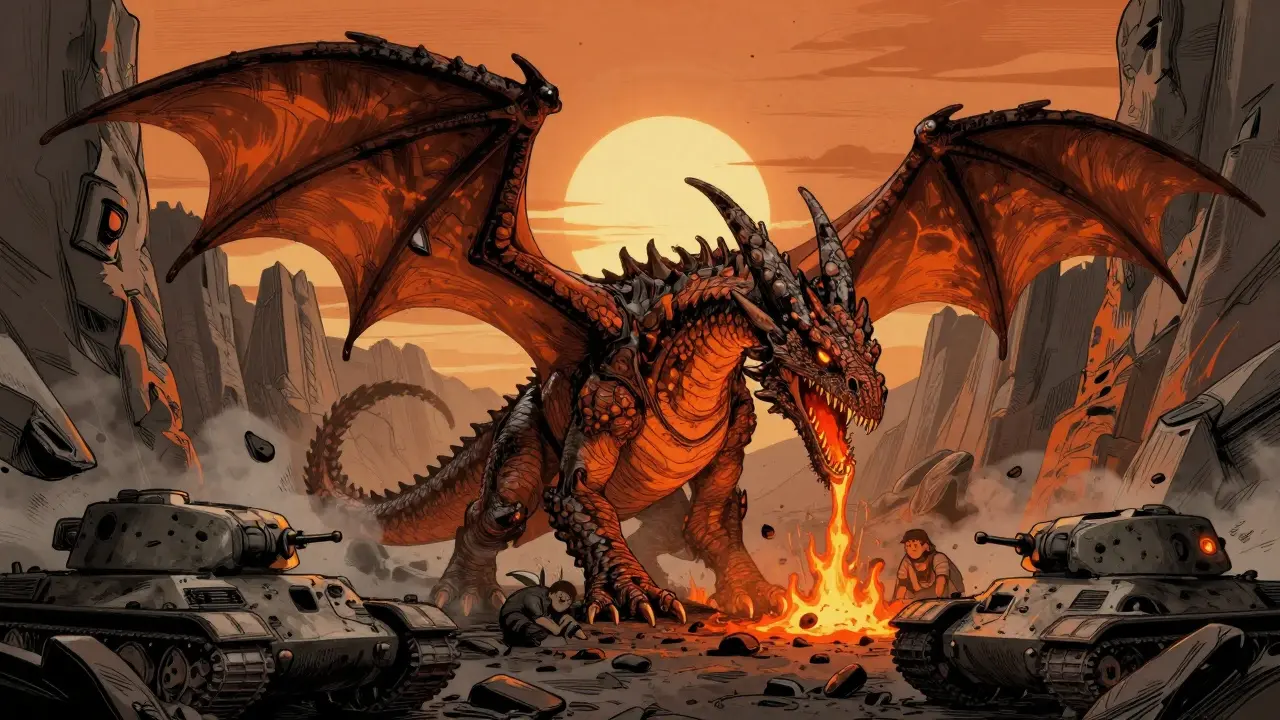
Dragons have burned their way through cinema for decades-not as mere special effects, but as symbols of power, chaos, and ancient magic. From the gritty, grounded terror of Reign of Fire to the political intrigue of House of the Dragon, dragons in film have evolved from mindless beasts to complex narrative engines. But what happens when these worlds collide? Could a dragon from Westeros stand against the mutated, post-apocalyptic beasts of Reign of Fire? And why does one feel real while the other feels mythic? The answer lies in how each film uses dragons to serve its story.
Reign of Fire: Dragons as Natural Disasters
Reign of Fire (2002) didn’t treat dragons like fantasy creatures. It treated them like dinosaurs that never went extinct-evolved, ruthless, and perfectly adapted to a world after human civilization collapsed. Directed by Rob Bowman and starring Christian Bale and Matthew McConaughey, the film dropped dragons into a near-future Earth where volcanic eruptions woke ancient creatures that could breathe fire, fly, and hunt in packs. These weren’t wise, talking beasts. They were apex predators with scales that deflected bullets and a hive-mind intelligence that made them terrifyingly efficient.The dragons in Reign of Fire had a biology that felt plausible. Their wingspan was massive-over 50 feet. Their fire wasn’t magic; it was a biological combustion system fueled by methane stored in their bodies. They laid eggs in underground caves, and their young grew fast, reaching maturity in under two years. The film’s visual effects team studied crocodiles, birds of prey, and volcanic lava flows to make the creatures feel grounded. Even the sound design was based on real animal calls pitched down and layered with industrial grinding noises.
Humanity’s response? Militarized survival. Tank-mounted flamethrowers, fortified cities, and a desperate plan to lure the alpha dragon into a canyon and collapse it with explosives. No magic swords. No chosen ones. Just men with guns trying to outlast a species that had already won.
House of the Dragon: Dragons as Political Weapons
Fast forward to 2022, and House of the Dragon turned dragons into royal inheritances. Set 200 years before Game of Thrones, the HBO series explores the Targaryen civil war known as the Dance of the Dragons. Here, dragons aren’t monsters-they’re status symbols, war machines, and living heirlooms. Each dragon is named, bonded to a rider, and treated like a crown jewel. Balerion the Black Dread, Vhagar, and Syrax weren’t just big animals. They were extensions of their riders’ wills.The show’s dragons have a different biology. They’re reptilian but scaled with a kind of ancient elegance. Their wings are membrane-based, like bats, but their bodies are armored with thick, overlapping plates. They can fly for days, dive into oceans to hunt whales, and breathe fire hot enough to melt castle walls. Unlike Reign of Fire, their fire comes from internal chemistry-but it’s tied to emotion. A dragon’s flame grows wilder when its rider is angry or afraid.
More than that, dragons in House of the Dragon are political. The right to ride one determines who sits on the Iron Throne. A dragon’s death isn’t just a loss-it’s a destabilizing event. When Vhagar dies, the realm fractures. When a dragon is captured, it becomes a bargaining chip. The show’s writers worked with paleontologists and medieval historians to make dragon behavior feel rooted in real-world animal hierarchy and royal succession.
Why These Dragons Don’t Belong in the Same World
At first glance, you might think a crossover between Reign of Fire and House of the Dragon would be epic. Imagine a Targaryen rider landing in a post-apocalyptic wasteland, only to find a pack of Reign of Fire dragons hunting survivors. But the two worlds can’t coexist-not because of scale or power, but because of meaning.Reign of Fire dragons are nature’s revenge. They’re the result of human arrogance: drilling too deep, ignoring warnings, waking something ancient. They don’t speak. They don’t care about politics. They’re the planet resetting itself.
House of the Dragon dragons are the product of human ambition. The Targaryens bred them, trained them, and used them to build an empire. Their power is tied to lineage, blood, and control. Without humans, they’re just animals. Without dragons, the Targaryens are nothing.
One is ecological horror. The other is dynastic tragedy. Put them together, and the story collapses. A Reign of Fire dragon wouldn’t bow to a Targaryen rider. A Targaryen dragon wouldn’t survive the radioactive wastelands of Reign of Fire’s Earth. Their rules are incompatible.
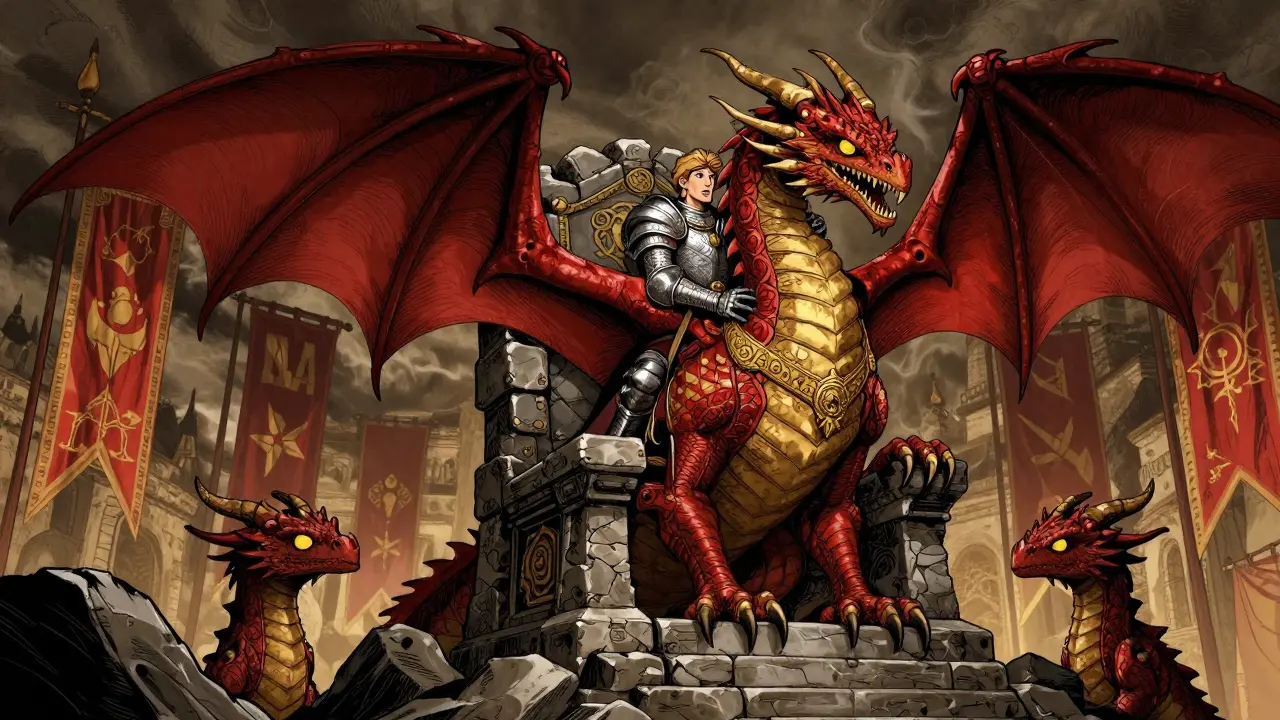
What a Real Crossover Would Look Like
If you forced a crossover, it wouldn’t be a battle. It would be a collision of civilizations.Imagine a portal opens in the ruins of King’s Landing, spitting out a pack of Reign of Fire dragons into Westeros. The Targaryens see them as a threat to their dominance. The common folk see them as gods. The dragons from Reign of Fire don’t recognize dragons as creatures to be ridden. They see the Targaryen dragons as prey-or rivals for territory.
Daenerys Targaryen, if she were alive, might try to bond with one. But the Reign of Fire dragon wouldn’t let her near. It would see her as a warm-blooded animal, not a master. Meanwhile, a surviving soldier from Reign of Fire might arrive with a flamethrower, only to realize that fire doesn’t work the same way here. The Targaryen dragons are immune to heat, their scales hardened by centuries of volcanic fire.
The real drama wouldn’t be who wins the fight. It would be who understands the dragons better. The Targaryens believe dragons are tools. The Reign of Fire survivors know they’re forces of nature. One side tries to control. The other tries to survive.
Why We Keep Bringing Dragons Back
Dragons endure because they reflect what we fear and what we desire. In Reign of Fire, we fear the Earth fighting back. In House of the Dragon, we fear our own hunger for power. Both stories use dragons to ask the same question: When you hold something too powerful, do you control it-or does it control you?Modern fantasy films keep dragons because they’re the ultimate metaphor. They’re big enough to be terrifying, smart enough to be unpredictable, and ancient enough to feel timeless. Whether they’re born from lava or bred in a dragonpit, they remind us that some forces don’t bend to human will.
And maybe that’s why we still watch. Not because we want to see fire and flight. But because we want to see what happens when humans meet something older than themselves-and realize they’re not the top of the food chain anymore.
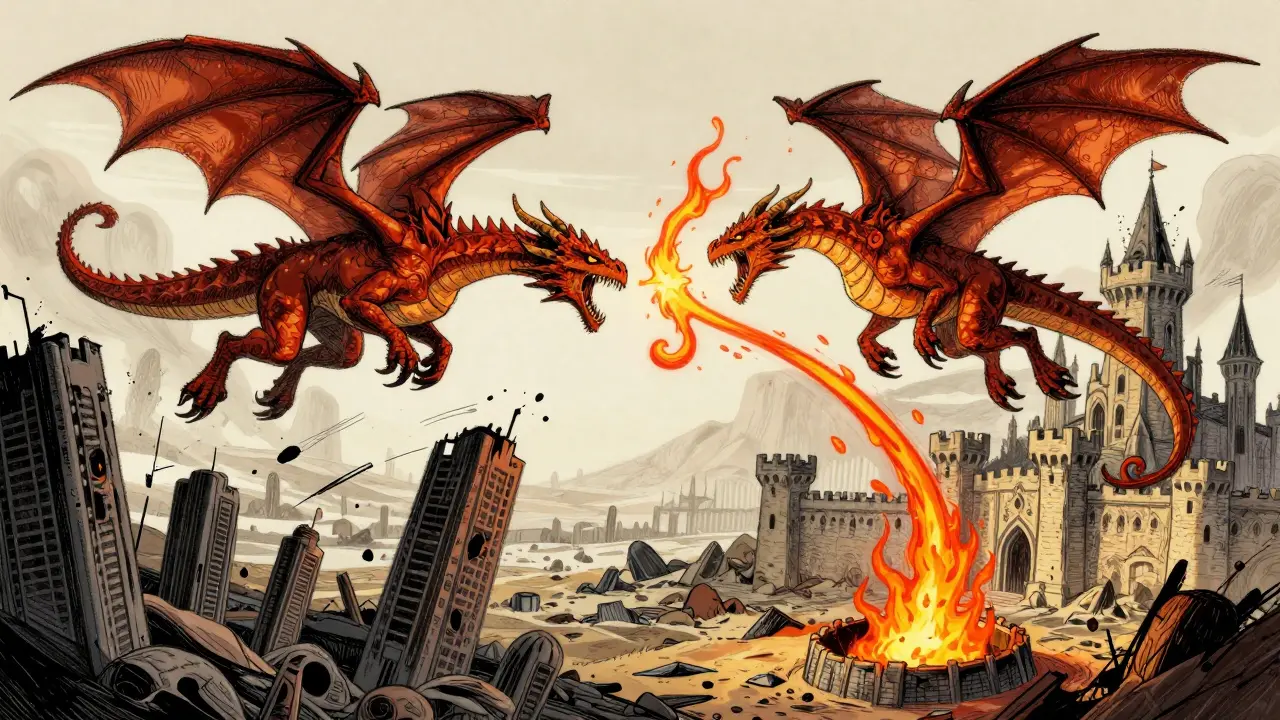
What’s Next for Dragons on Screen?
The next wave of dragon stories won’t just be about bigger fire or more wings. It’ll be about consequences. What happens when dragons are domesticated? When they’re farmed for their scales? When their bones are used in medicine? We’ve seen the rise. Now we’re ready for the fall.Upcoming projects like Dragon Age: The Animated Series and Netflix’s Witcher: Blood Origin hint at dragons becoming more integrated into daily life-not as monsters, but as endangered species. That’s the real evolution: dragons no longer as villains, but as relics of a world we destroyed.
Can dragons from Reign of Fire and House of the Dragon fight each other?
Technically, yes-but they wouldn’t understand each other. The dragons in Reign of Fire are wild, instinct-driven predators with no concept of riders or empires. The dragons in House of the Dragon are bonded to humans, raised as tools of war, and tied to bloodlines. A Targaryen dragon might try to land on a Reign of Fire dragon, but the latter would see it as prey, not a rival. The real fight wouldn’t be fire vs. fire-it’d be control vs. chaos.
Which dragon is stronger: Balerion or the alpha dragon from Reign of Fire?
Balerion the Black Dread was bigger-his wingspan could blot out the sun, and he burned entire castles in minutes. But the alpha dragon from Reign of Fire was faster, smarter, and hunted in packs. It survived nuclear winters, evolved to resist bullets, and could outmaneuver military forces. Strength isn’t just size. Balerion won in a one-on-one flame war. The Reign of Fire dragon won because it didn’t need to fight alone. It had a whole ecosystem behind it.
Why don’t dragons in House of the Dragon fly into space?
Because the world of Westeros doesn’t have space. It’s a medieval fantasy setting with no concept of rockets, oxygen, or vacuum. The dragons are bound by the physics of their world: gravity, atmosphere, and biology. Even the biggest dragon, Vhagar, can’t fly beyond the clouds. Their wings are built for thermal updrafts and mountain passes, not orbital flight. Trying to make them fly into space would break the rules of the story.
Are the dragons in House of the Dragon CGI or practical effects?
They’re almost entirely CGI, but the animators used real animal motion as a base. The team studied eagles for flight patterns, crocodiles for ground movement, and big cats for predatory stalking. They even recorded the sound of a lion’s roar and pitched it down to create the dragon’s growl. The result feels organic-not like a video game monster, but like a living creature with weight, muscle, and history.
Is Reign of Fire considered a cult classic?
Absolutely. Released in 2002, it was initially panned for its plot and pacing. But over time, fans praised its practical creature design, gritty tone, and realistic approach to survival. It’s now seen as one of the most underrated monster movies of the 2000s. Its influence shows up in later films like Godzilla: King of the Monsters and even Attack on Titan. It proved that dragons could be terrifying without magic or myth-just biology and brutality.