
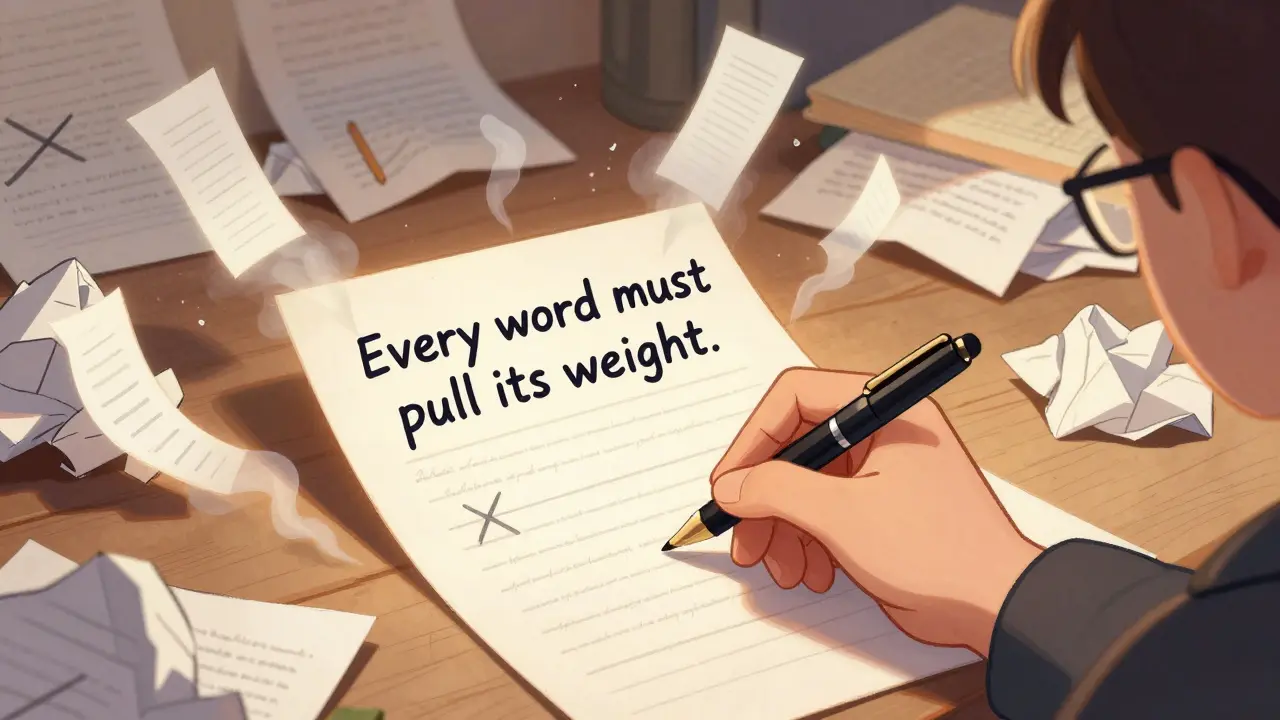
Ever read a review that felt like it was dragging? You know the one-halfway through, you’re wondering why the writer spent three paragraphs describing the theater’s seating, when the movie itself was the whole point. That’s not just bad writing. That’s a missed chance to make your voice matter. A strong review doesn’t just say what you thought. It convinces someone else to care. And that only happens when every word pulls its weight.
Start with the core claim
Before you edit anything else, ask yourself: what’s the one thing you want readers to walk away with? Is it that the film’s climax is a masterclass in tension? That the lead actor’s performance is the only reason to watch? That the script tries too hard and ends up saying nothing? Write that sentence down. Keep it simple. Then look at your draft. Does every paragraph, every anecdote, every description serve that single point? If not, it’s not decoration-it’s noise.Take a review of a recent indie drama. The original draft spent 200 words on the director’s previous films, the cinematographer’s awards, and the production budget. The final version? One sentence: "This is the director’s most focused work since 2019’s Shadow Line-and that’s saying something." That’s all the context the reader needed. The rest? Cut. The argument got sharper. The flow got faster.
Kill the fluff
Fluff isn’t just long sentences. It’s vague praise. It’s filler phrases like "I really enjoyed," "it was interesting," or "you should see this if you like good movies." Those don’t tell anyone anything. They’re emotional placeholders. Replace them with specifics.Instead of "The acting was great," say: "The lead actor holds a three-minute silent scene without blinking, and you feel every unspoken regret in his eyes." Instead of "The soundtrack was nice," say: "The score uses only a single cello note repeated like a heartbeat, building dread until the final frame." Specifics anchor your opinion in reality. Readers trust what they can picture.
And don’t forget the clichés. "A rollercoaster ride," "a cinematic masterpiece," "a must-watch"-these phrases have been used so often they’ve lost all meaning. If you catch yourself writing one, pause. Ask: what’s the real experience behind it? What did you actually feel? Name that. Then delete the cliché.
Trim the setup, keep the punch
Most reviews waste too much space on plot summary. You’re not writing a Wikipedia entry. You’re not here to explain what happened. You’re here to say why it mattered.Here’s a rule of thumb: if a reader hasn’t seen the film, give them just enough to understand your critique-no more. Two sentences max for the setup. The rest? Focus on how the story was told, not what was told.
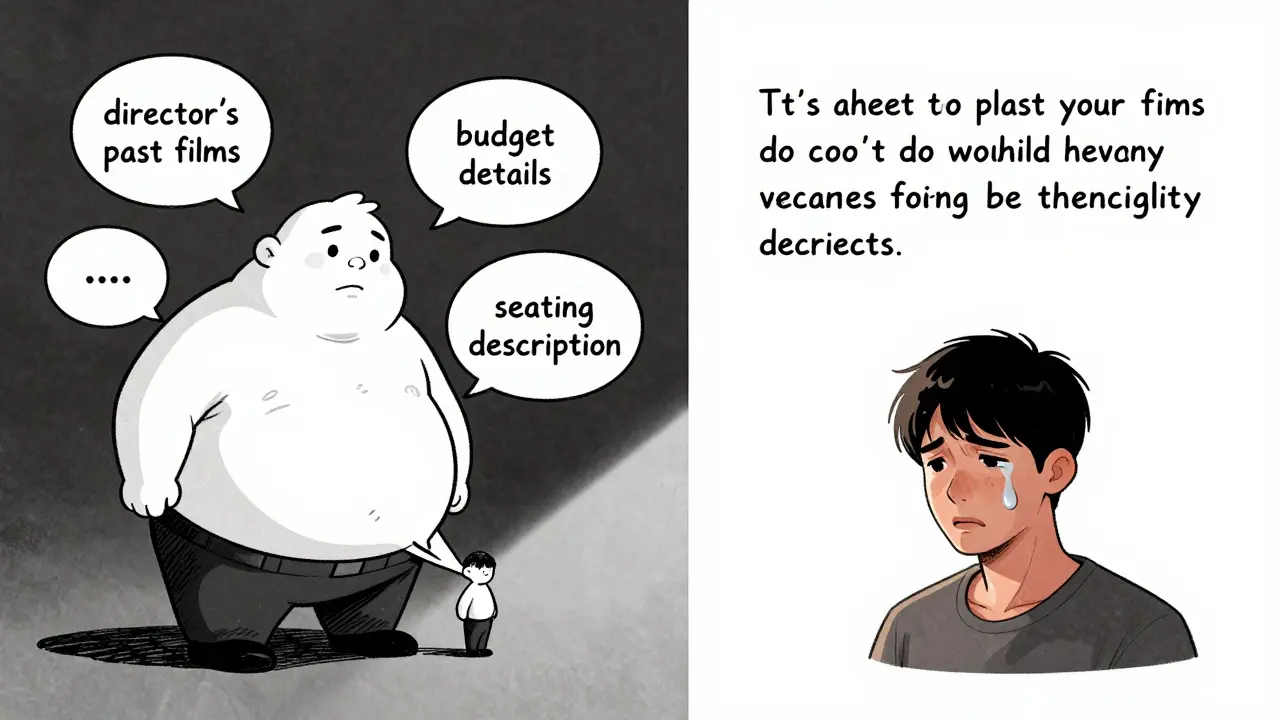
Take a horror movie review. The original opened with: "In a small coastal town, a family moves into an old house that’s been abandoned for 40 years. The father gets a new job, the daughter starts hearing whispers in the walls..." That’s 87 words. The revised version? "The house isn’t haunted-it’s hungry. And the film doesn’t scare you with jump scares. It scares you with silence." Now you know the tone, the threat, and the writer’s angle. All in 18 words.
Flow isn’t about transitions-it’s about rhythm
People think good flow means using words like "however," "moreover," or "in contrast." It doesn’t. Flow is about pacing. It’s about when you pause, when you rush, when you let a sentence land.Long sentences build tension. Short ones deliver punch. Mix them. If your review reads like a textbook-same length, same rhythm, same tone-it’ll put people to sleep. Try this: read your draft out loud. If you find yourself gasping for air in the middle of a paragraph, you’ve got a run-on. If you’re bored by your own voice, the reader is too.
Look at this line from a music review: "The album opens with a distorted guitar riff that sounds like a car crash in slow motion, then drops into a bassline so deep it vibrates your ribs, and by the third track, you realize you haven’t blinked in 12 minutes." That’s rhythm. That’s flow. No transition words. Just momentum.
Ask: What’s the worst part?
The strongest reviews don’t just praise. They admit what didn’t work. And they do it honestly, not as an afterthought. If the pacing drags in the second act, say so. If the villain’s motivation feels tacked on, call it out. Readers respect honesty more than praise.But here’s the trick: don’t just point out the flaw. Explain how it breaks the whole thing. Don’t say: "The ending felt rushed." Say: "The final 10 minutes try to resolve five plot threads at once, turning what should’ve been an emotional climax into a confusing checklist. It undermines everything the film built up to." That’s not criticism. That’s analysis.
And if you’re unsure whether to mention a flaw, ask: would I still recommend this if the problem wasn’t fixed? If the answer is yes, then the flaw is worth noting. If the answer is no, then it’s the heart of your argument.
Final pass: the one-sentence test
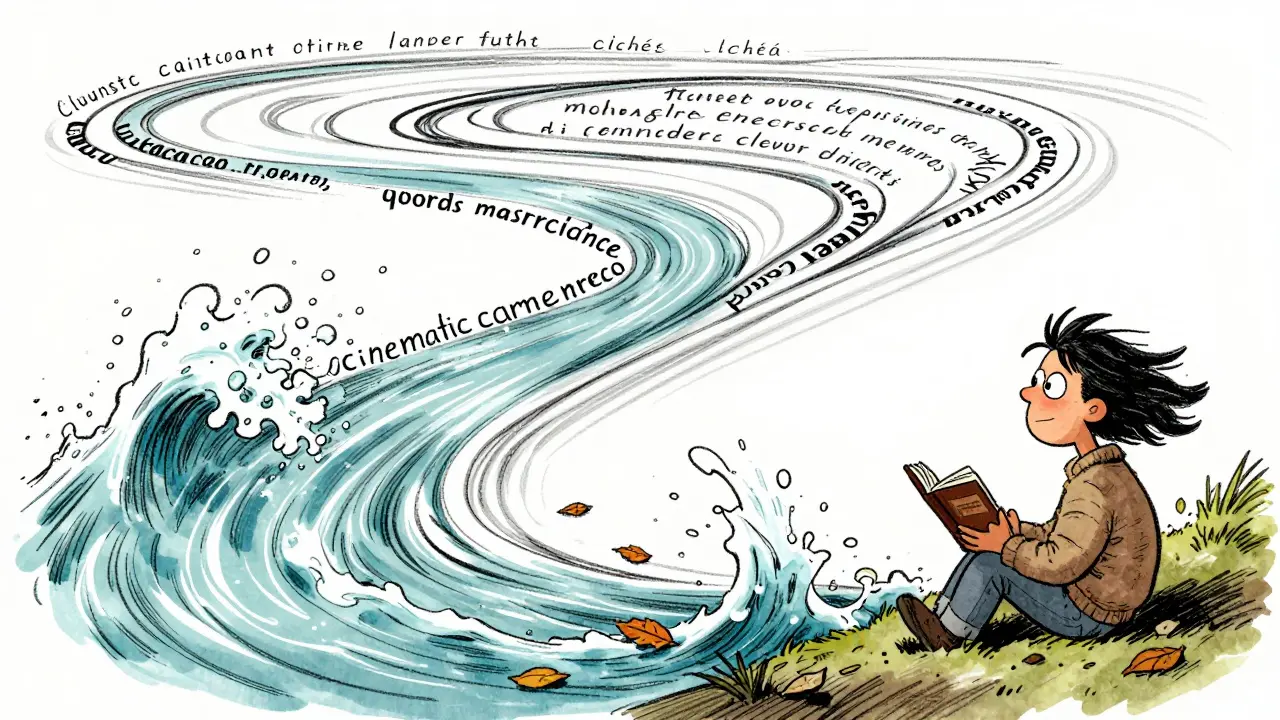
Before you hit publish, do this: summarize your entire review in one sentence. Not a tagline. Not a quote. A real, honest summary of your core argument.If you can’t do it, your review doesn’t have a center. And if it doesn’t have a center, it won’t stick with anyone.
Try it with this example: "The Last Light isn’t perfect, but its quiet, patient storytelling makes up for its slow pace-because in a world of noise, silence is the boldest choice." That’s the whole review in 20 words. Everything else? Just proof.