
On a film set, the lights don’t just turn on by themselves. The cameras don’t move without someone physically holding them. And the shadows you see in that moody scene? Someone bent over a C-stand, adjusting a flag to block the sun. This isn’t magic. It’s grip and electric work. And if you’ve ever wondered how the lighting in your favorite movie looks so intentional, it’s because of people who know how to handle flags, C-stands, and cables like second nature.
What Grip and Electric Really Do
Grip and electric aren’t just job titles-they’re two teams that keep the visual language of film alive. The electric department runs the lights: hanging them, powering them, dimming them. The grip department moves the light: shaping it, blocking it, bouncing it. They work together like a dance. One team brings the light; the other sculpts it.
Think of a scene where an actor stands in a pool of warm light, surrounded by deep shadows. That’s not the natural light. That’s a 10K HMI lamp, 20 feet above the floor, aimed just right. And someone used a 4x4 flag to cut the spill onto the wall behind them. Someone else made sure the cable running from the generator to that lamp didn’t trip a crew member walking by.
These aren’t fancy tools. They’re simple. But they’re deadly if used wrong.
C-Stands: The Workhorse of the Set
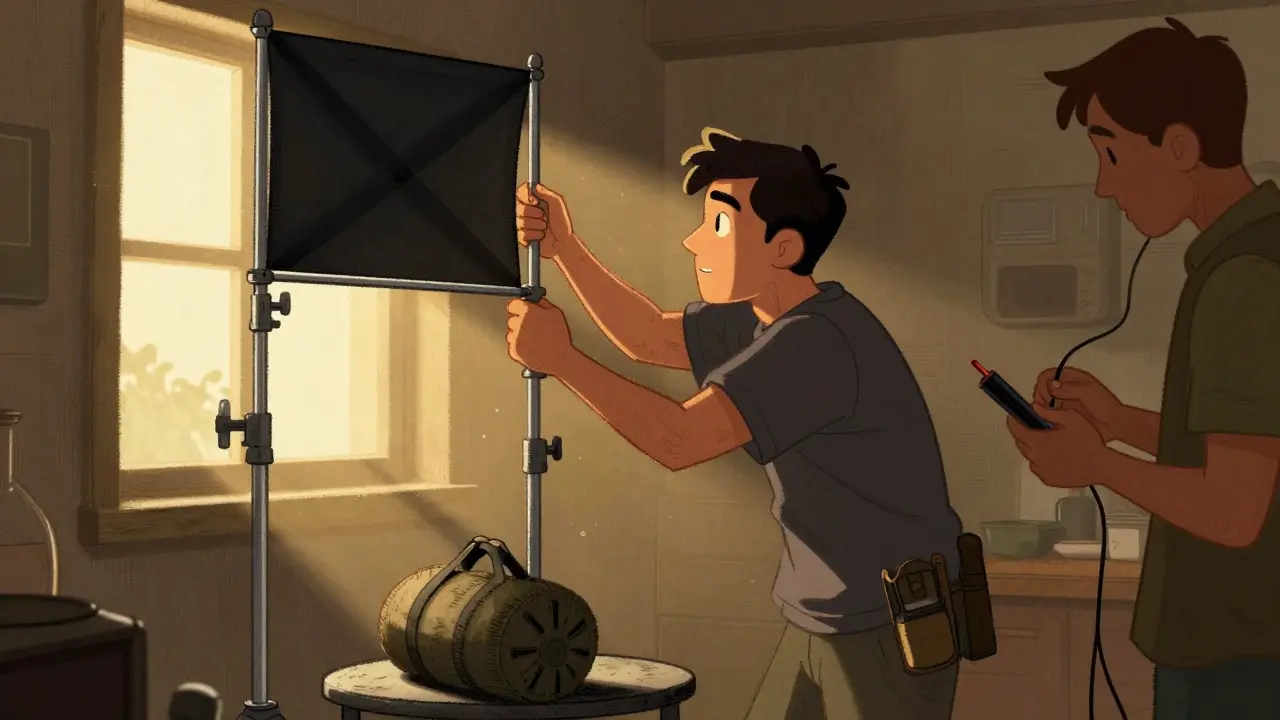
The C-stand, short for century stand, is the most common grip tool you’ll see on set. It’s a heavy metal base with three legs, a boom arm, and a grip head. You can hang a flag, a diffusion panel, a reflector, even a small light on it. It’s adjustable, stable, and-when used correctly-can hold hundreds of pounds.
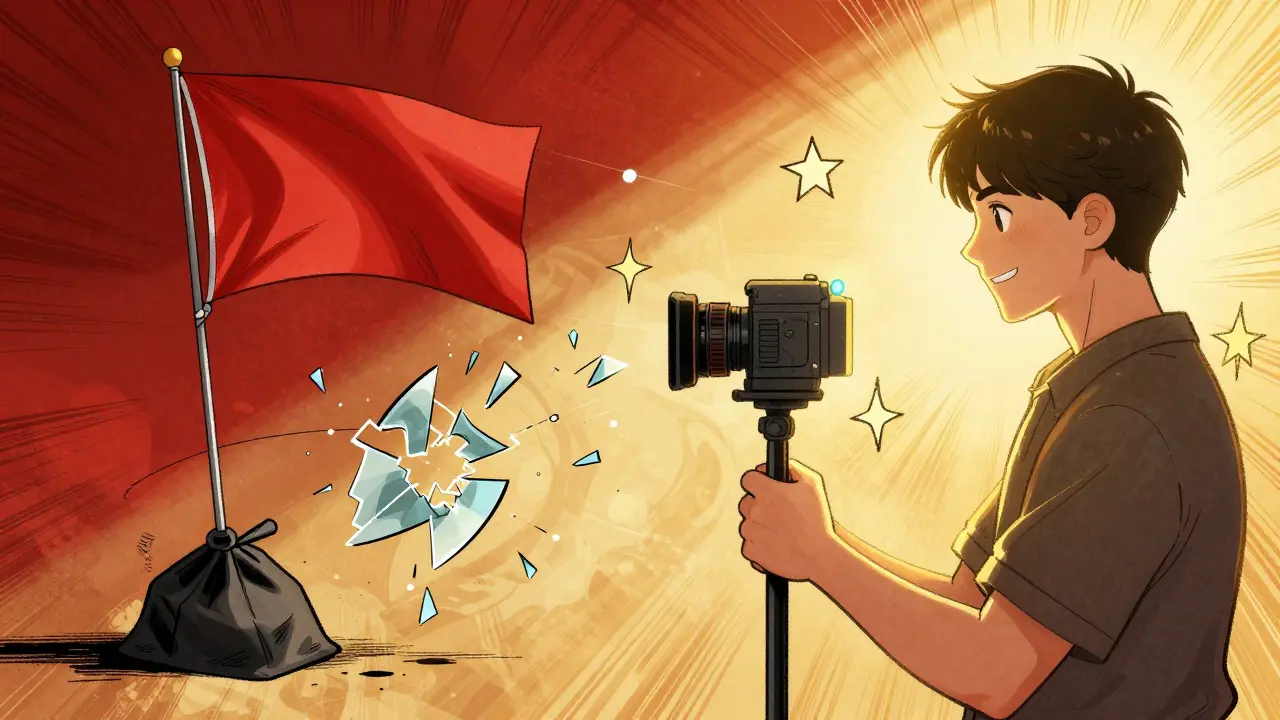
But here’s what most beginners don’t know: C-stands don’t stand on their own. They need to be weighted. Always. A 4x4 flag on a C-stand in a breeze? That’s a 30-pound projectile waiting to fall. One night on a rooftop shoot in Dublin, a crew member forgot to sandbag a C-stand holding a 4x4 silk. The wind picked up. The stand tipped. The silk hit a camera rig. The lens cracked. Cost: €4,200.
Best practice? Use a 10-pound sandbag on every C-stand. Even if it’s indoors. Even if you think it’s "fine." The grip rule is simple: if it’s above the ground, it needs to be anchored.
Flags: Controlling Light, Not Just Blocking It
A flag isn’t just a black board. It’s a precision tool. Flags come in different sizes-2x2, 4x4, 6x6-and different materials. Black fabric for hard shadows, bounce fabric for soft fill, half-black for partial cut.
On a recent indie shoot, the director wanted a sunbeam to hit the actor’s face at exactly 3:15 PM. The sun was coming through a window, but it was too wide. The gaffer handed the grip a 4x4 flag on a C-stand. The grip didn’t just hold it in front of the window. He angled it so the top half blocked the harsh top light, while the bottom half let a soft sliver through. The result? A natural-looking rim light that cost nothing but time and skill.
Flags are also used to shape shadows. A flag placed between a key light and a wall can create a clean edge, not a blurry halo. That’s how you get that cinematic look. It’s not about brightness-it’s about control.
Cable Safety: The Invisible Danger
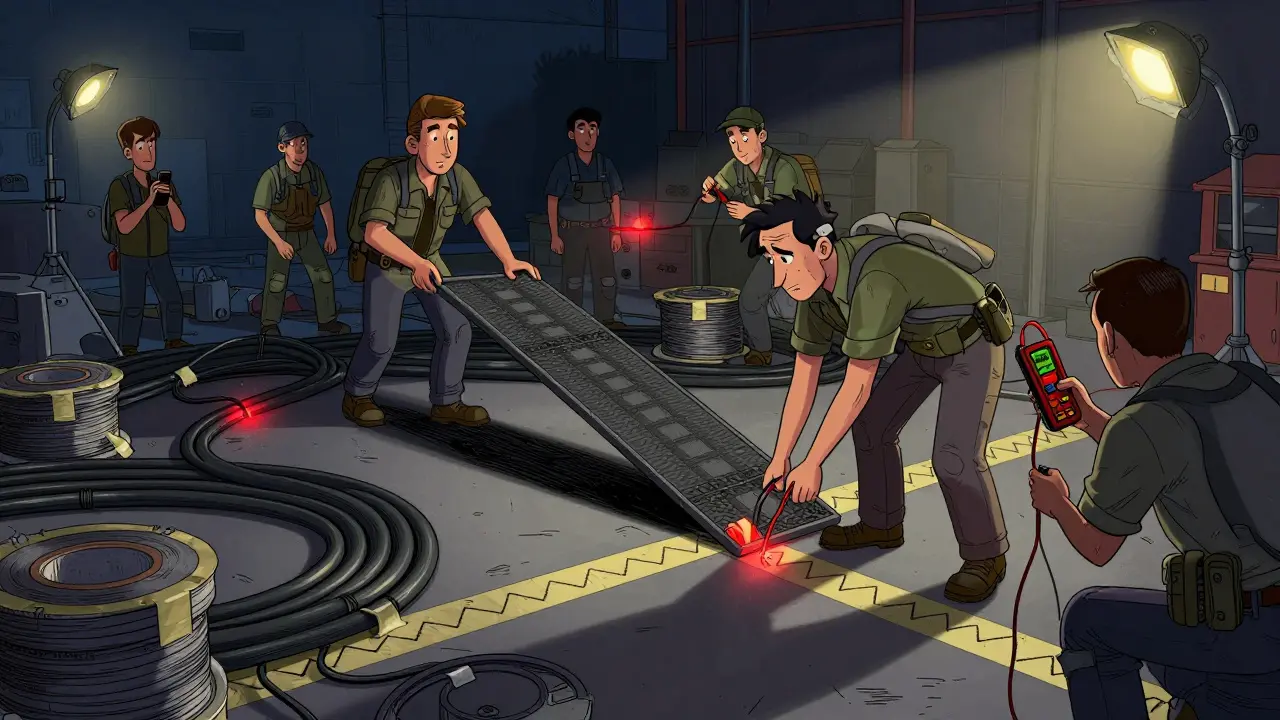
On a film set, you’ll see miles of cable. 12-gauge, 10-gauge, 6-gauge. They run under carpets, across floors, through doorways. They carry 20 amps, 50 amps, sometimes 100 amps. One frayed wire. One loose connection. One tripped cable. And you’ve got a fire. Or worse-a dead crew member.
There’s a reason every set has a dedicated cable person. They don’t just lay cables. They tape them down, route them away from foot traffic, use gaffer tape, not duct tape. They check for fraying, overheating, and proper grounding. They know that a 20-amp circuit can’t handle a 10K light without a dedicated breaker.
Here’s a real example: A production in Belfast used extension cords daisy-chained together to power a 5K light. The cords got hot. The insulation melted. The floor caught fire. No one was hurt-but the shoot shut down for three days. The insurance claim? Over €18,000.
Rule of thumb: Never daisy-chain. Never overload a circuit. Never run cable under a rug without a ramp. Always use a circuit tester before plugging in. And if a cable feels warm? Unplug it. Immediately.
Common Mistakes and How to Avoid Them
Even experienced crews slip up. Here are the top three mistakes-and how to fix them:
- Mistake: Using a C-stand without a sandbag. Fix: Always use a sandbag. Even if it’s "just a small flag."
- Mistake: Taping cables with duct tape. Fix: Use gaffer tape. It doesn’t leave residue and holds better under pressure.
- Mistake: Assuming "it’s fine" because it’s been working all day. Fix: Check everything at the end of each day. Cables degrade. Sandbags shift. Stands loosen.
And here’s one more: never trust a cable just because it looks new. I’ve seen brand-new cables with internal damage from being crushed under a dolly. Always inspect before use.
Why This Matters Beyond the Set
These aren’t just film tricks. They’re safety practices that apply anywhere electricity and physical objects intersect. A C-stand is just a tripod with a grip head. A flag is just a piece of fabric. But when you combine them with power, gravity, and human error, they become hazards.
That’s why every film school in Ireland now requires a grip and electric safety course before students can touch a C-stand. It’s not about being fancy. It’s about being alive.
And if you’re working on a low-budget project? You’re more at risk. You might not have a full crew. You might be the only person handling lights and cables. That’s when you need to be the most careful. Because no one else is watching.
What You Need to Start
You don’t need a full kit to learn. Here’s what you should have if you’re starting out:
- One 4x4 C-stand with a grip head
- One 4x4 black flag (with a 10-pound sandbag)
- One 50-foot heavy-duty extension cord (12-gauge minimum)
- A roll of gaffer tape
- A circuit tester (under €30)
Practice setting up a C-stand with a flag. Practice taping a cable across a floor. Test your circuit with a multimeter. Do it in your garage. Do it in your backyard. Make it a habit.
Because when you’re on set, you won’t have time to figure it out. You’ll need to know it.
Final Thought: Respect the Tools
There’s no glory in grip and electric work. No red carpet. No IMDB credit. But without it, every movie you love looks flat, washed out, or dangerous.
These tools are simple. But they’re powerful. And they demand respect. A C-stand isn’t just metal. A flag isn’t just fabric. A cable isn’t just wire. They’re the invisible hands that shape the light-and keep everyone safe.
So next time you watch a film and notice how the light falls just right? That’s not luck. That’s grip and electric. And someone out there, maybe in a hoodie and work boots, made sure it stayed that way.
What’s the difference between a grip and an electric?
The electric department handles lighting equipment-hanging lights, powering them, and controlling brightness. The grip department handles everything that shapes the light-flags, C-stands, diffusion, bounce boards. They work together: electric brings the light, grip sculpts it.
Why do C-stands need sandbags?
C-stands can tip over if not weighted, especially when holding flags or reflectors. Wind, accidental bumps, or even a crew member brushing past can cause them to fall. A 10-pound sandbag prevents this. It’s not optional-it’s a safety standard.
Can I use duct tape instead of gaffer tape for cables?
No. Duct tape leaves sticky residue, degrades under heat, and can peel off under pressure. Gaffer tape is designed for film sets-it’s heat-resistant, removes cleanly, and holds better. Using duct tape is a common mistake that leads to tripping hazards and damaged floors.
How do I know if a cable is overloaded?
Check the cable’s rating (printed on the insulation) and compare it to the device’s wattage. A 12-gauge cable can handle up to 20 amps. A 10K light draws about 40 amps-so it needs two 12-gauge cables on separate circuits. If a cable feels warm, unplug it immediately.
Is it safe to run cables under rugs?
Only if you use a cable ramp. Running cable under a rug traps heat and makes it hard to inspect for damage. It’s also a tripping hazard. Always use a rubber ramp or tape the cable flat to the floor with gaffer tape-never bury it.