
Holiday romance movies aren’t just about snow-covered streets and twinkling lights. They’re about the quiet moments that feel bigger than life - a shared mug of hot cocoa, a mistaken gift, a slow dance under a mistletoe branch. These films don’t need grand gestures. They thrive on the small, familiar things we recognize from our own lives, wrapped in the magic of the season.
Why the Holidays Bring Out the Love in Film
There’s something about winter that makes people feel more open. The cold pushes us indoors, closer together. Families gather. Strangers become neighbors. In holiday romance films, this isn’t just backdrop - it’s the engine. Think about it: how often do you see two people who barely know each other suddenly forced into proximity? A snowstorm traps them in a cabin. A last-minute gift swap leads to a late-night walk. A holiday party brings them face-to-face for the first time in years.
These aren’t random plot devices. They’re rooted in real human behavior. Studies from the University of California show that seasonal affective shifts during winter increase emotional vulnerability - people are more likely to open up, to reach out, to say what they’ve been holding back. Hollywood didn’t invent this. It just noticed it.
The Cozy Tropes You Can’t Escape (And Why They Work)
Some tropes show up again and again - and for good reason. They work because they feel true.
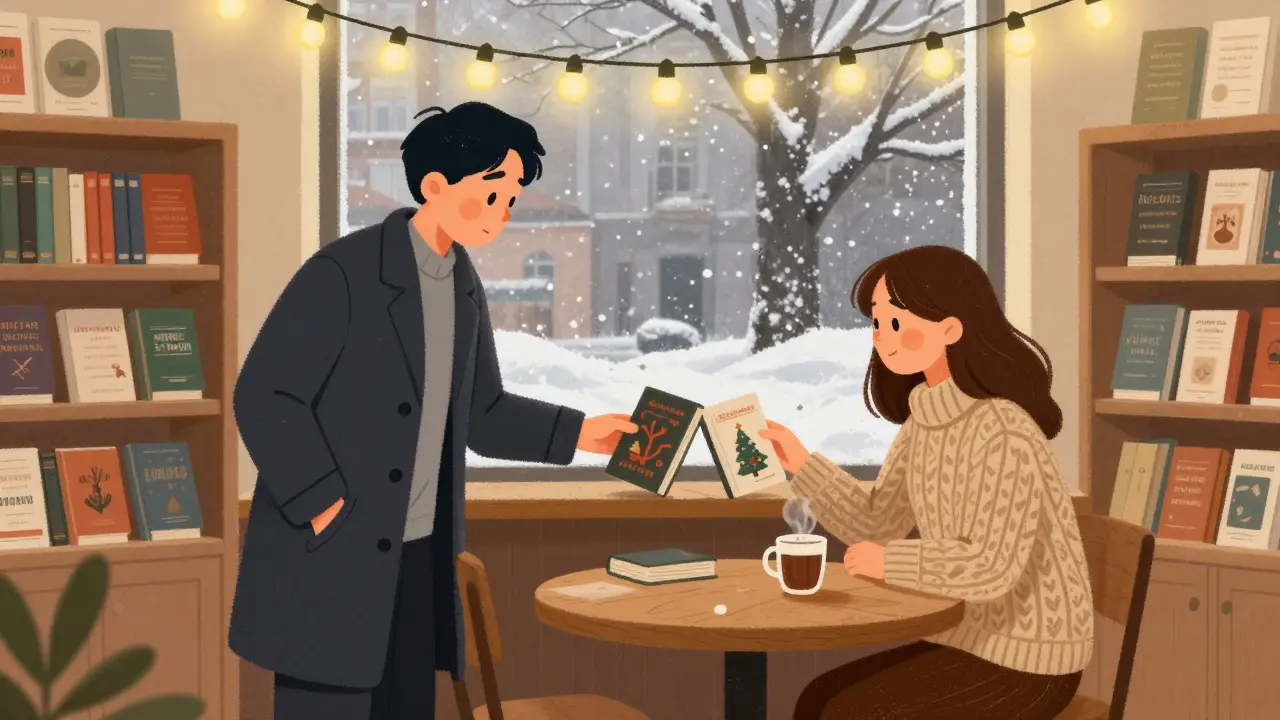
- The bookstore owner and the city planner - one loves quiet corners, the other lives in spreadsheets. Their clash isn’t about personality - it’s about rhythm. One moves with the seasons. The other tries to control them.
- The estranged ex who returns home - not because they want to reconcile, but because their dog got lost. The dog leads them back to the same street, the same café, the same bench where they used to sit. No grand speech. Just silence, then a shared laugh over burnt cookies.
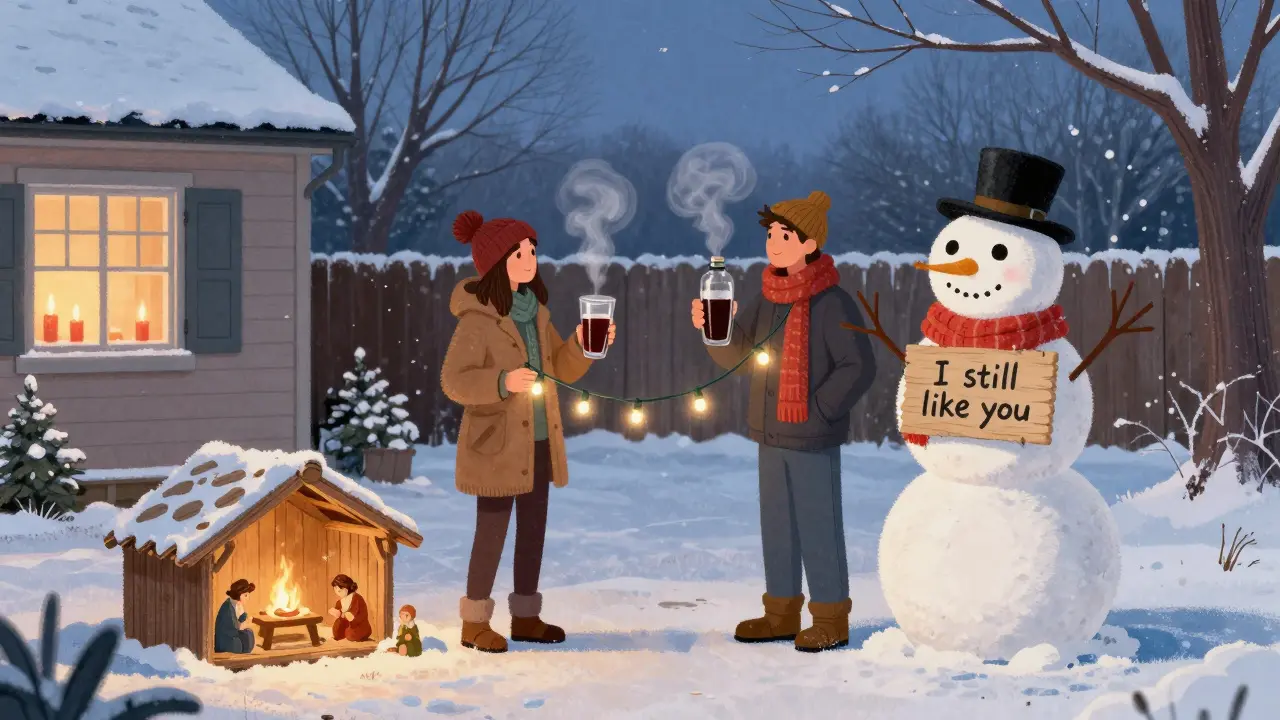
- The holiday light display that becomes a meeting point - neighbors compete to out-decorate each other. One builds a life-sized nativity scene. The other builds a giant snowman holding a sign that says, “I still like you.” They end up sharing a thermos of cider while fixing a blown fuse.
These aren’t clichés. They’re emotional shortcuts. We’ve all had that moment - the one where you’re not sure if you’re falling for someone, or just falling for the warmth of the season. The movies let us sit in that ambiguity without needing a resolution.
Setting as Character: The Most Important Player
The best holiday romances don’t just take place in snowy towns - they’re shaped by them. Think of the town in Love Actually - not a real place, but a feeling. It’s the kind of town where the barista knows your name, the local bakery closes early on Christmas Eve so everyone can go home, and the mayor still drives the sleigh during the parade.
Compare that to The Holiday, where the English countryside feels like a refuge, not just a location. The house has creaky floors and a fireplace that won’t stay lit. The characters don’t just fall in love - they fall into a rhythm that doesn’t exist in their busy city lives. The setting isn’t decorative. It’s therapeutic.
Even the weather matters. A sudden snowstorm isn’t just an inconvenience - it’s a forced pause. A power outage isn’t a nuisance - it’s a chance to talk by candlelight. These aren’t plot holes. They’re emotional triggers.
What Makes a Holiday Romance Feel Real?
Not every film gets it right. The ones that do share a few key traits:
- No instant chemistry - The best holiday romances take time. You see the hesitation. The glances that turn away too fast. The awkward small talk. Real love doesn’t bloom in one scene. It grows in the spaces between.
- Flaws aren’t erased - The hero doesn’t magically become a better person. They just start trying. The heroine doesn’t suddenly drop her career to stay. She finds a way to bring it with her.
- The holidays don’t fix everything - The couple doesn’t live happily ever after because it’s Christmas. They live happily ever after because they chose to try - and the season gave them the space to do it.
Look at The Christmas Chronicles - yes, it’s a fantasy, but the emotional core is real. The dad isn’t perfect. The kid isn’t perfect. But they show up. That’s what matters.
Why We Keep Watching - Even When We Know the Ending
Most holiday romances follow a predictable arc: meet, bicker, almost break up, reconcile under the mistletoe. So why do we watch them every year?
It’s not about surprise. It’s about comfort. These films are emotional blankets. They remind us that connection is possible - even when the world feels cold. That someone might see you, really see you, and still want to stay.
They’re not about grand declarations. They’re about showing up. Bringing soup when someone’s sick. Leaving a note on the windshield. Holding the door open when you’re both in a hurry. That’s the real magic.
Where to Find the Best Ones
Not every holiday romance is worth your time. Here are a few that actually deliver:
- Love Actually - The ensemble cast makes it feel like a community, not just a story.
- The Holiday - A perfect blend of humor, heart, and real emotional stakes.
- While You Were Sleeping - A quiet, clever twist that turns deception into devotion.
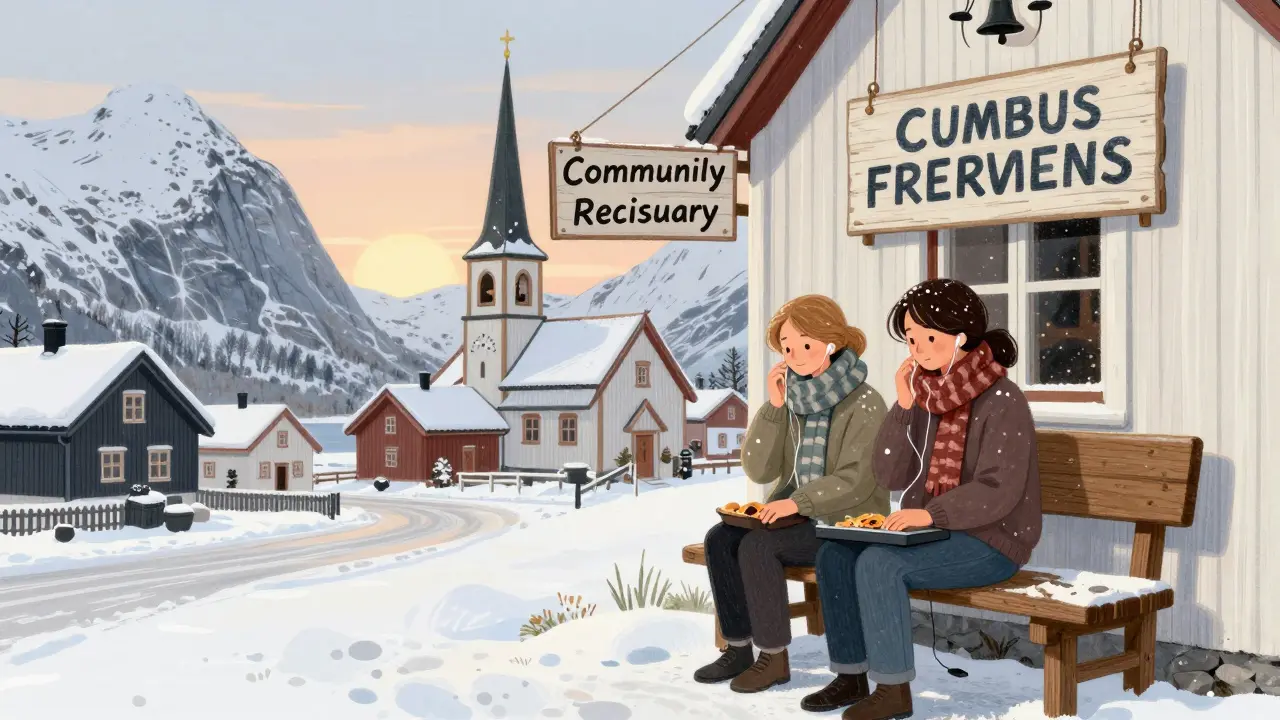
- Before We Fall Asleep (2024) - A lesser-known gem set in a Norwegian village, where silence speaks louder than dialogue.
- Christmas with You (Netflix, 2023) - A single mom and a music producer reconnect over a community choir. No grand gestures. Just rehearsals, burnt pies, and a shared playlist.
These films don’t need fireworks. They just need honesty. And a little bit of snow.
What Makes a Holiday Romance Last?
The best ones stick with you because they don’t end when the credits roll. They linger in the quiet moments after - when you’re making tea, or walking the dog, or staring out the window at the frost on the glass.
They remind us that love doesn’t need a holiday to be real. But sometimes, the holiday gives us the permission to feel it.
Why are holiday romance movies so popular every year?
They tap into universal feelings - longing for connection, the comfort of tradition, and the hope that even in cold, busy times, love can still find a way. People watch them not because they’re surprised, but because they feel seen. The predictability is the point - it’s emotional reassurance.
Do holiday romances only work during Christmas?
No. While Christmas is the most common setting, stories set around Hanukkah, New Year’s, or even Thanksgiving work just as well. What matters isn’t the holiday - it’s the emotional pause it creates. A winter festival in a small town, a snowed-in train station, or a family gathering where secrets come out - those are the real anchors.
Are holiday romances just for women?
Not at all. While marketing often targets women, the best ones have universal appeal. Men relate to the quiet longing, the fear of rejection, the desire to do something meaningful without making a scene. Films like While You Were Sleeping and Christmas with You have strong male leads who aren’t caricatures - they’re just trying to do right.
Why do these movies often have small-town settings?
Small towns simplify life. No commute. No noise. Just people who know each other. That environment makes emotional moments feel more real. In a big city, you can disappear. In a small town, you’re seen - and that’s scarier. And that’s where real connection begins.
Can a holiday romance be realistic?
Absolutely. The most realistic ones don’t have grand proposals or dramatic reunions. They have awkward silences, mismatched gifts, and late-night talks over cold coffee. Real love doesn’t need snowfall or carolers. It just needs two people willing to be a little vulnerable - and the holidays give them the excuse to try.