
Streaming 4K Netflix, gaming on Xbox Series X, or hopping on a Zoom call with your kids’ school shouldn’t feel like a battle with your internet. But if your video keeps buffering or your connection drops mid-call, the problem might not be your plan-it’s your modem. Many people don’t realize their ISP-provided modem is often the weakest link in their home network. Let’s cut through the noise and find out whether you should stick with what your provider gives you-or upgrade to your own hardware for truly reliable streaming.
Why Your ISP Modem Might Be Holding You Back
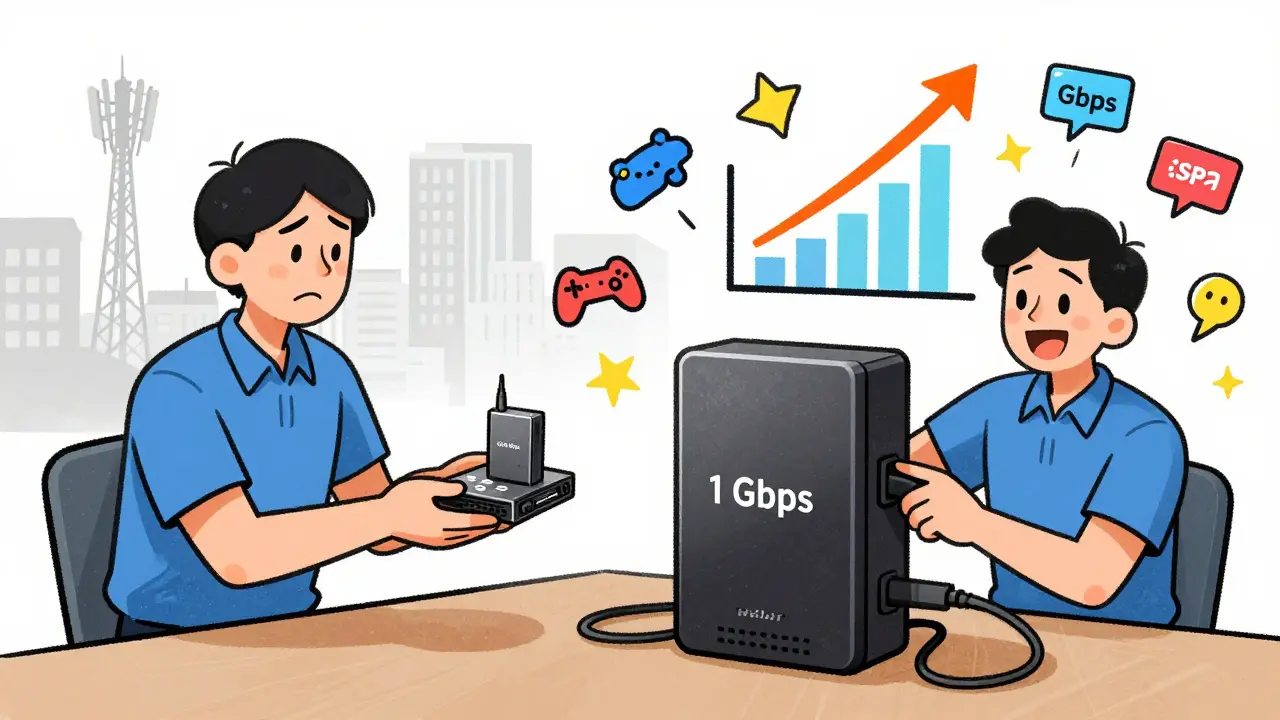
Your ISP gives you a modem because it’s convenient. They install it, they support it, and they don’t charge extra. Sounds great, right? But here’s the catch: most ISPs give you a combo unit-modem and router in one-that’s built to the bare minimum. These devices are often last year’s model, mass-produced for cost, and rarely updated. In Dublin, where broadband speeds can hit 1 Gbps, many ISP modems cap out at 300 Mbps. That’s fine if you’re just checking email. But if you’re streaming 4K on three devices, downloading game updates, and video-calling your grandma all at once? You’re asking a bicycle to keep up with a race car.
Real-world example: A neighbor in Ballsbridge switched from their ISP’s modem to a Netgear CM700 after months of pixelated Zoom calls. Their speed test jumped from 280 Mbps to 940 Mbps overnight. No plan change. Just better hardware.
ISP modems also tend to overheat. They’re crammed into small spaces, buried under TV stands, or stuck in closets with poor airflow. Over time, that heat degrades performance. I’ve seen modems from major providers fail after just 18 months. Your own modem? You can pick one with better cooling, better components, and a warranty that actually means something.
What Makes a Modem Good for Streaming?
Not all modems are created equal. For streaming, you need three things: speed, stability, and scalability.
- Speed: Your modem must support your internet plan. If you have a 500 Mbps plan, your modem should handle at least 600 Mbps. Look for DOCSIS 3.1-the current standard. DOCSIS 3.0 is outdated for anything over 300 Mbps.
- Stability: Streaming doesn’t like drops. A good modem keeps a steady connection, even under load. Check reviews for mentions of “no disconnects” or “consistent speeds during peak hours.”
- Scalability: Are you planning to add smart TVs, security cameras, or a smart home hub? Your modem should have enough channels (32 downstream, 8 upstream minimum) to handle multiple devices without slowing down.
Top performers in 2026? The Netgear CM700 is a DOCSIS 3.1 cable modem that supports up to 1 Gbps, has 32x8 channel bonding, and runs cool even under heavy use. Also reliable: the Motorola MB8600 and the Arris SB8200. All three are compatible with major Irish ISPs like Eir, Virgin Media, and Sky.
Router Matters Too-Don’t Skip It
Modem isn’t the whole story. It just brings the internet into your house. The router distributes it. If you’re using your ISP’s combo unit, you’re stuck with a router that’s slow, clunky, and barely supports Wi-Fi 5. Streaming 4K video needs Wi-Fi 6 or Wi-Fi 6E. It handles more devices, reduces lag, and prioritizes bandwidth for video.
Pair your standalone modem with a good router. For homes under 2,000 sq ft, the TP-Link Archer AX54 is a Wi-Fi 6 router that delivers strong coverage, easy setup, and QoS settings to prioritize streaming traffic. For larger homes, the Netgear Orbi RBK752 uses mesh tech to eliminate dead zones. Both work perfectly with any standalone modem.
Cost Breakdown: ISP Modem vs. Your Own
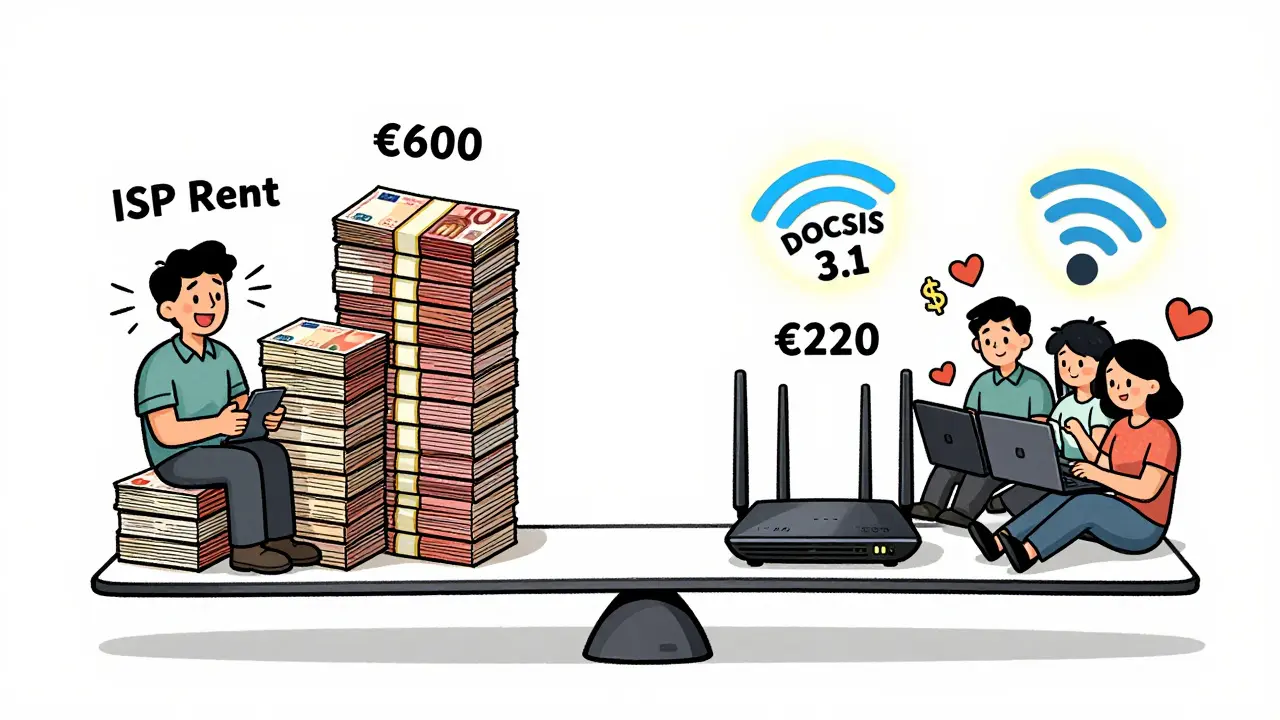
Let’s talk money. ISPs charge €8-€12 a month to rent a modem. That’s €96-€144 a year. Over five years? You’ve paid €480-€720. Meanwhile, buying your own modem costs €80-€150 upfront and lasts 5-7 years. You break even in under a year.
Here’s the math:
| Option | Upfront Cost | Monthly Fee | 5-Year Total | Lifespan |
|---|---|---|---|---|
| ISP Modem Rental | €0 | €10 | €600 | 2-3 years |
| Own Modem (Netgear CM700) | €110 | €0 | €110 | 6+ years |
| Own Modem + Router (CM700 + Archer AX54) | €220 | €0 | €220 | 6+ years |
And here’s the kicker: if you buy your own gear, you can upgrade it when needed. ISPs lock you into outdated hardware. You’re not stuck.
How to Switch Without the Headache
Switching from an ISP modem to your own sounds scary. It’s not. Here’s how to do it in under 30 minutes:
- Check your ISP’s approved modem list. Virgin Media, Eir, and Sky all publish them online.
- Buy a DOCSIS 3.1 modem like the Netgear CM700 or Motorola MB8600.
- Call your ISP. Tell them you’re switching to your own modem. They’ll guide you through activation-usually just a remote reboot on their end.
- Unplug the ISP modem. Plug in yours. Wait 5 minutes for it to sync.
- Test your speed with speedtest.net. If it’s close to your plan’s max speed, you’re done.
Most ISPs in Ireland support customer-owned modems. You won’t lose service. You won’t get charged extra. And you’ll get faster, more stable internet.
When You Should Stick With the ISP Modem
There are a few cases where sticking with your ISP’s gear makes sense:
- You’re renting and can’t make permanent changes.
- Your ISP offers a free upgrade (rare, but sometimes happens with new plans).
- You’re not streaming. Just browsing, emailing, and light video calls.
If you’re in one of these buckets, sure-keep it. But if you’re streaming, gaming, or working from home? You’re leaving performance on the table.
Final Verdict: Buy Your Own
The best hardware for reliable streaming isn’t a magic box. It’s a simple combo: a DOCSIS 3.1 modem and a Wi-Fi 6 router. You’ll pay once. You’ll save every month. And your streaming won’t freeze during the big game.
Stop renting. Start owning. Your future self-watching a movie without buffering-will thank you.
Can I use any modem with my ISP in Ireland?
Not every modem works. ISPs like Eir, Virgin Media, and Sky have lists of approved DOCSIS 3.1 modems. Always check their website before buying. The Netgear CM700, Motorola MB8600, and Arris SB8200 are the most reliable choices across all major providers.
Do I need a separate router if I buy a modem?
Yes, unless you’re happy with slow Wi-Fi. A modem only brings the internet into your home. A router distributes it wirelessly. ISP combo units have weak routers. Pairing a standalone modem with a modern Wi-Fi 6 router like the TP-Link Archer AX54 or Netgear Orbi gives you far better performance, coverage, and reliability.
Will switching modems void my ISP’s service guarantee?
No. Irish telecom regulations require ISPs to support customer-owned modems as long as they’re on the approved list. You won’t lose your service, and you can still call for technical support. The ISP will help you troubleshoot the connection-they just won’t fix your modem if it breaks.
How long do modems last?
A good modem lasts 5-7 years. ISP modems often fail in 2-3 years due to poor cooling and cheap parts. Brands like Netgear, Motorola, and Arris use better components and heat management. If you notice frequent drops or slow speeds after 4 years, it’s time to upgrade.
Is DOCSIS 3.1 really necessary for streaming?
If your plan is over 300 Mbps, yes. DOCSIS 3.0 modems max out around 300-400 Mbps. Most Irish plans now offer 500 Mbps, 800 Mbps, or even 1 Gbps. DOCSIS 3.1 is the only way to use those speeds. Without it, you’re capped-even if your ISP promises 1 Gbps.