
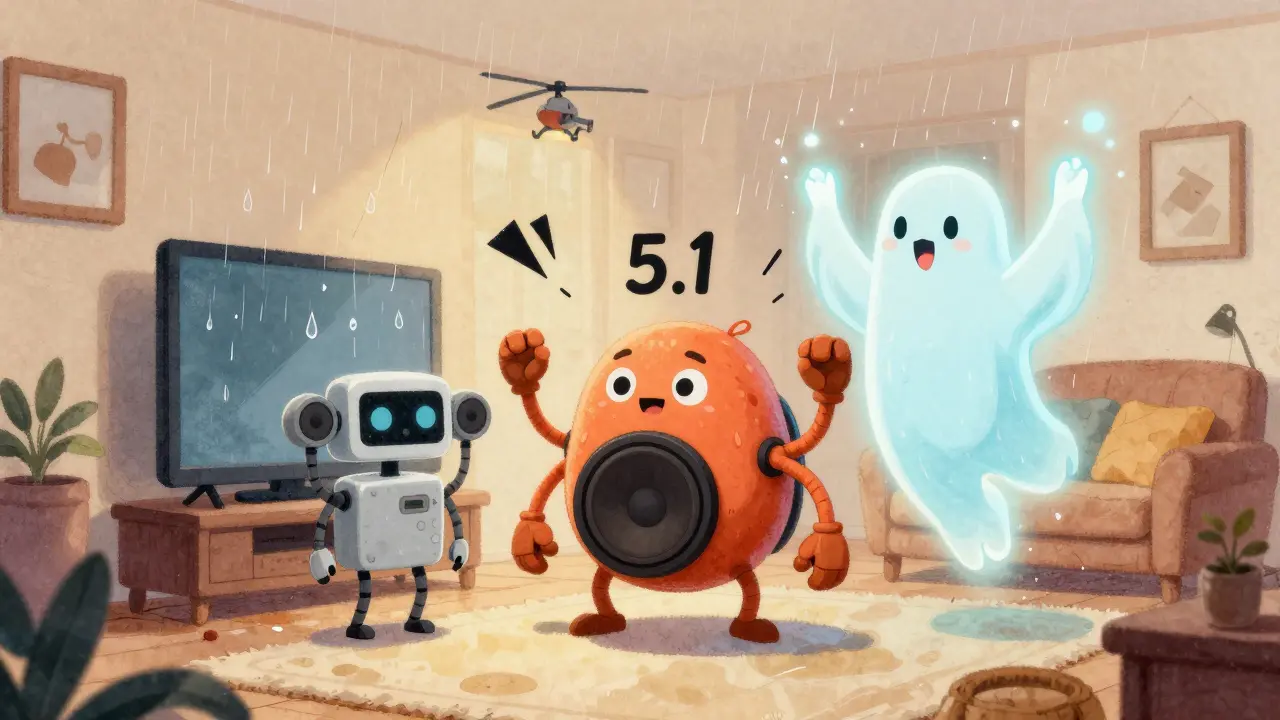
Ever sat down to watch your favorite movie on Netflix or Apple TV, turned up the volume, and felt like the sound was stuck in your TV’s tiny speakers? You’re not alone. Most people think better sound just means turning up the volume. But the real difference isn’t in loudness-it’s in audio format. Whether you’re streaming a blockbuster, listening to music, or gaming late at night, the format your audio is encoded in decides whether you hear rain falling from above or just hear a muddy mess.
What You’re Actually Hearing: Stereo, 5.1, and Dolby Atmos
Stereo is the oldest and simplest. Two speakers-left and right. That’s it. Most phones, laptops, and budget TVs still use stereo. It’s fine for podcasts or casual listening, but when a car zooms past in a movie, you don’t feel it move. You just hear it louder on one side.
5.1 surround sound changed that. It adds three more speakers: center, left rear, and right rear. Plus a subwoofer for bass. That’s six total channels. The center speaker handles dialogue so voices don’t get lost. The rear speakers create a sense of space. You hear footsteps behind you. Gunfire sweeps from left to right. It’s the standard for home theaters since the early 2000s.
Dolby Atmos is the next leap. Instead of just six fixed channels, it treats sounds like individual objects. A helicopter doesn’t just come from the rear speaker-it flies overhead, moving in 3D space. You need a soundbar with upward-firing drivers, or ceiling speakers, or both. Atmos doesn’t just expand your soundstage-it lifts it into the room.
How Streaming Services Handle These Formats
Not every streaming service gives you the same audio. Netflix, Apple TV+, Disney+, and Amazon Prime Video all support Dolby Atmos-but only if you’re on a premium plan. Netflix’s Basic plan? Stereo only. Even if you have a $3,000 sound system, you’re stuck with flat sound.
Apple TV+ is the most generous. It includes Dolby Atmos on all plans, even the cheapest one. Disney+ gives Atmos on its ad-free tier. Amazon Prime Video? Only on select titles, and you have to manually check the audio settings.
Spotify and YouTube Music? Stereo only. Even their high-quality streams don’t support object-based audio. That’s because music isn’t designed for 3D space the way movie soundtracks are. But for films? Atmos isn’t a luxury-it’s becoming the baseline.
Hardware You Actually Need
You can’t get Dolby Atmos with a $100 soundbar that claims to be “virtual surround.” Real Atmos needs either:
- ceiling speakers (two or more)
- a soundbar with upward-firing drivers that bounce sound off the ceiling
- a full 5.1.2 or 7.1.4 setup with dedicated height channels
That .2 or .4 means two or four height speakers. The number before the dot is your horizontal channels (5.1 means five speakers plus sub). You don’t need a full 7.1.4 system to enjoy Atmos. Even a 5.1.2 setup makes a huge difference.
And your TV or receiver? It must support Dolby Atmos decoding. Most TVs from 2020 onward do, but older ones don’t. Check the specs. If it says “Dolby Atmos passthrough,” that’s not enough. You need “Dolby Atmos decoding.”
For 5.1, you need at least a receiver and five speakers. Most people skip this because it’s messy. Wires everywhere. Atmos soundbars solve that. They’re compact, plug into one HDMI port, and still give you height effects.
Real-World Examples: What You’ll Notice
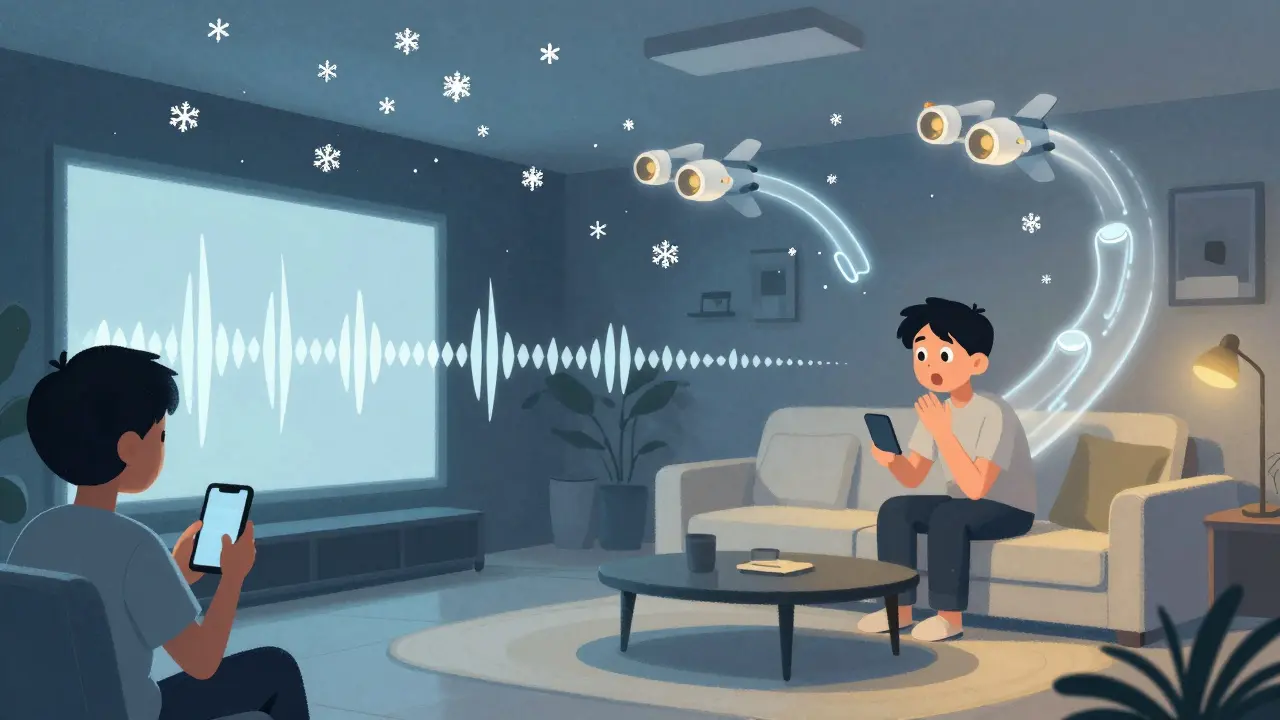
Watch Top Gun: Maverick on stereo. You hear the jet engines roar. On 5.1, they sweep across the room. On Dolby Atmos, you feel the F-18s dive over your head, then bank left-sound tracking their exact path through the sky.
Try Arrival. The alien ship hovers silently above. In stereo, it’s just a low rumble. In 5.1, it’s a deep drone from the rear. In Atmos, you hear the vibration ripple down from above, like the air itself is shaking.
Even quieter scenes matter. In The Revenant, snow falls. In stereo, it’s a hiss. In Atmos, you hear individual flakes landing on different parts of the roof, then sliding off. That’s spatial audio. That’s immersion.
When Stereo or 5.1 Is Still Fine
Atmos isn’t always worth the cost. If you live in a small apartment, watch movies on your phone, or use a TV’s built-in speakers-stick with stereo. You won’t notice the difference.
Same with 5.1. If you’re happy with clear dialogue and decent surround effects, and you don’t care about overhead sounds, 5.1 is perfectly fine. Most movies are still mixed for 5.1. Atmos is an enhancement, not a replacement.
Also, not all Atmos content is created equal. Some Netflix titles use Atmos like a marketing gimmick-just panning sounds around for no reason. The best Atmos mixes are subtle. They don’t shout. They make you feel like you’re inside the scene.
What’s Coming Next
By 2026, Dolby Atmos will be standard on all new TVs and soundbars sold in Europe and North America. Apple is pushing it hard with its HomePod and AirPods Pro. Even gaming consoles now support Atmos for games like Horizon Forbidden West and Call of Duty.
There’s also DTS:X, another object-based format. It’s less common on streaming, but some Blu-rays use it. Most people don’t need to worry about it-Atmos is the dominant standard.
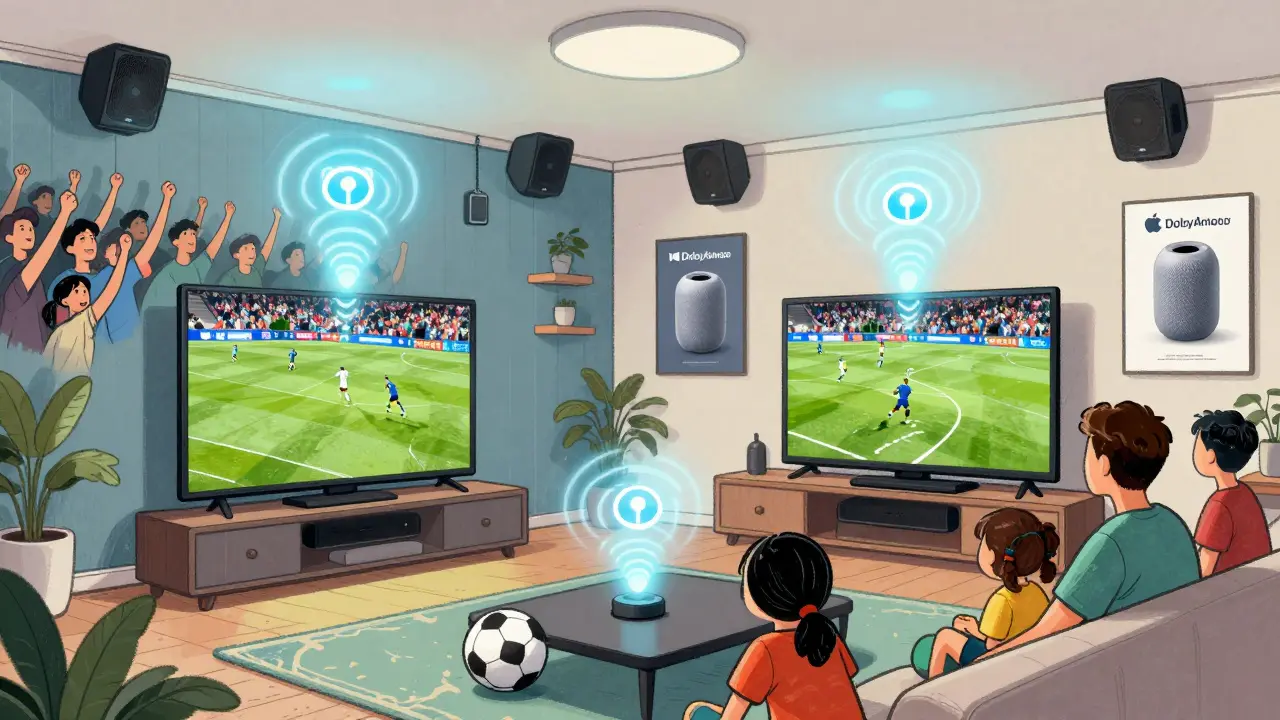
And soon, you’ll hear Atmos on live sports. Imagine watching a soccer match and hearing the crowd roar from behind you, then suddenly shifting to the left as the ball moves. That’s not sci-fi. It’s coming to ESPN+ and Sky Sports in 2026.
How to Check What You’re Actually Getting
On your TV or soundbar, go to the audio settings while playing a movie. Look for the audio format display. It should say “Dolby Atmos,” “Dolby Digital Plus,” or “Stereo.” If it says “Dolby Digital,” that’s 5.1, not Atmos.
On Netflix, press the Info button on your remote while playing a title. If you see “Dolby Atmos” listed under audio, you’re getting it. If it says “5.1,” you’re not.
On Apple TV, go to Settings > Video and Audio > Audio Format. You can force Atmos if your system supports it.
Don’t trust the title screen. Some apps show “Dolby Atmos” even when the stream is downgraded. Always check the active audio track.
Bottom Line: What Should You Choose?
If you want the best possible experience and have the space and budget-go for Dolby Atmos. It’s the future. It’s immersive. It turns watching a movie into feeling like you’re inside it.
If you’re on a budget or just want better sound than stereo without the hassle-5.1 is still excellent. You’ll notice the difference in dialogue clarity and surround effects.
If you’re watching on a phone, laptop, or basic TV? Stereo is fine. Don’t waste money chasing formats your gear can’t handle.
Audio isn’t about specs on a box. It’s about how it makes you feel. And if you’ve ever been startled by a helicopter flying overhead-or felt the silence of snow falling from above-you know why it matters.