
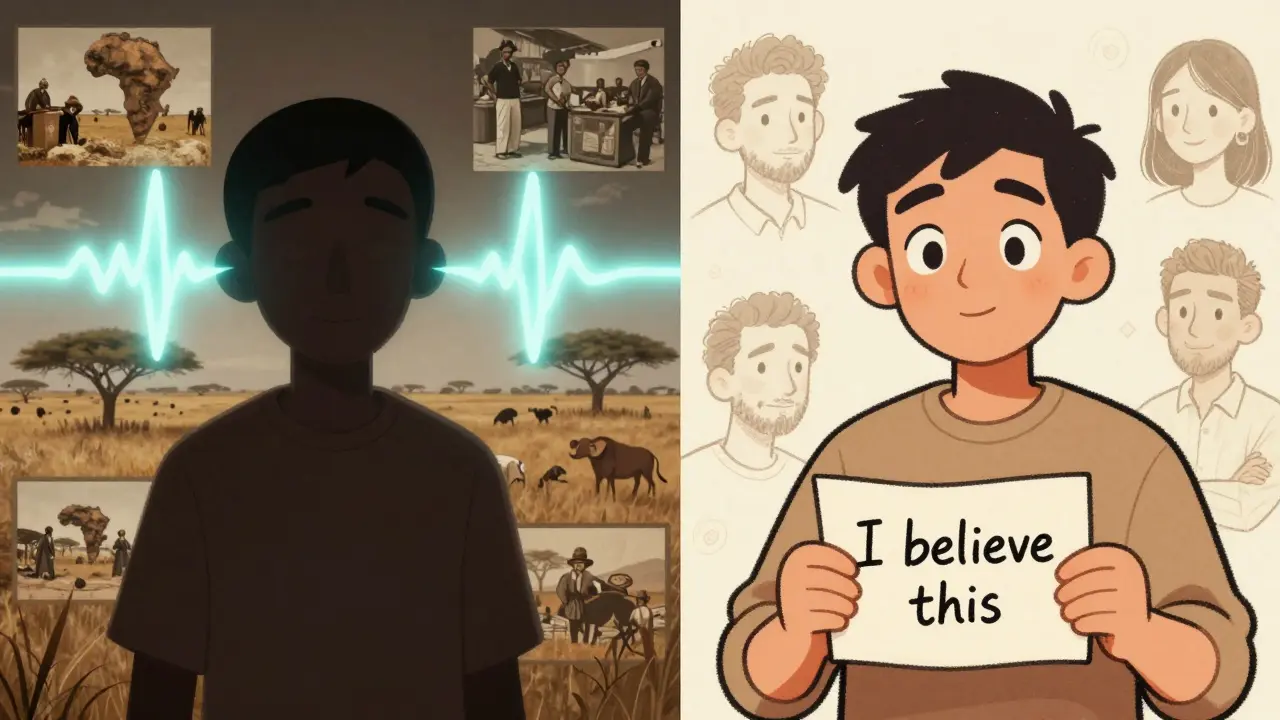
When you watch a documentary, the voice you hear doesn’t just tell you what’s happening-it shapes how you feel about it. That voice can be a calm, distant narrator speaking from the shadows, or a person right in front of you, eyes locked on the camera, telling their own story. The choice between narration and an on-camera host isn’t just about style. It’s about trust, connection, and control.
What Narration Does Best
Narration, usually a voiceover recorded in a studio, has been the backbone of documentaries since the 1940s. Think of David Attenborough’s voice drifting over African savannas or Morgan Freeman guiding you through history. These voices aren’t seen-they’re felt. They create distance, authority, and a sense of timelessness.
The power of narration lies in its neutrality. A skilled voice actor doesn’t bring their own emotions into the story. They deliver facts, context, and emotional cues without personal bias. That’s why historical documentaries, science films, and investigative pieces often rely on it. The narrator becomes a vessel for information, not a character.
But there’s a cost. Because the narrator isn’t visible, viewers can’t build a personal connection. You don’t know if they’re passionate, skeptical, or hiding something. In modern storytelling, that lack of human presence can feel cold. Especially when the subject is deeply personal-like a survivor telling their story, or a community fighting for justice-narration can unintentionally erase the people at the heart of it.
Why an On-Camera Host Changes Everything
An on-camera host is someone you see. They speak directly to the lens. They might be a journalist, a scientist, a former athlete, or even an everyday person caught in the story. Their presence forces you to engage with them-not just the facts.
Take The Social Dilemma. Jeff Orlowski doesn’t just narrate the dangers of social media-he walks through tech campuses, interviews engineers, and visibly wrestles with his own dependence on devices. His presence makes the issue feel urgent, personal, and real. You’re not just learning about addiction; you’re watching someone confront it.
On-camera hosts build trust through vulnerability. If they cry, you feel it. If they laugh nervously, you relate. If they admit they didn’t know something, you forgive them. That emotional honesty is impossible with a voiceover. A 2023 study from the University of Edinburgh found that audiences remembered 42% more details from documentaries with on-camera hosts compared to those using voiceover alone-especially when the topic involved human behavior or ethics.
But it’s not always better. An on-camera host can distract. If they’re unpolished, overly dramatic, or too self-centered, they shift focus away from the subject. A documentary about climate change shouldn’t become a show about the host’s hiking boots.
When to Choose Narration
Narration shines when you need clarity, control, and objectivity. Here’s when it’s the right call:
- You’re covering complex data-like economic trends or genetic research-and need a steady, calm voice to guide viewers through dense material.
- The story spans decades or continents, and a single human presence would feel limiting.
- You’re documenting events where the subjects can’t or won’t speak on camera-like whistleblowers, war zones, or confidential investigations.
- You want to maintain a formal tone-think PBS, BBC, or National Geographic.
One great example is The Vietnam War by Ken Burns. The narration by Peter Coyote doesn’t interrupt the archival footage. It weaves through it like a thread, letting the images and interviews breathe. The voice doesn’t try to be emotional-it lets the footage do the crying.
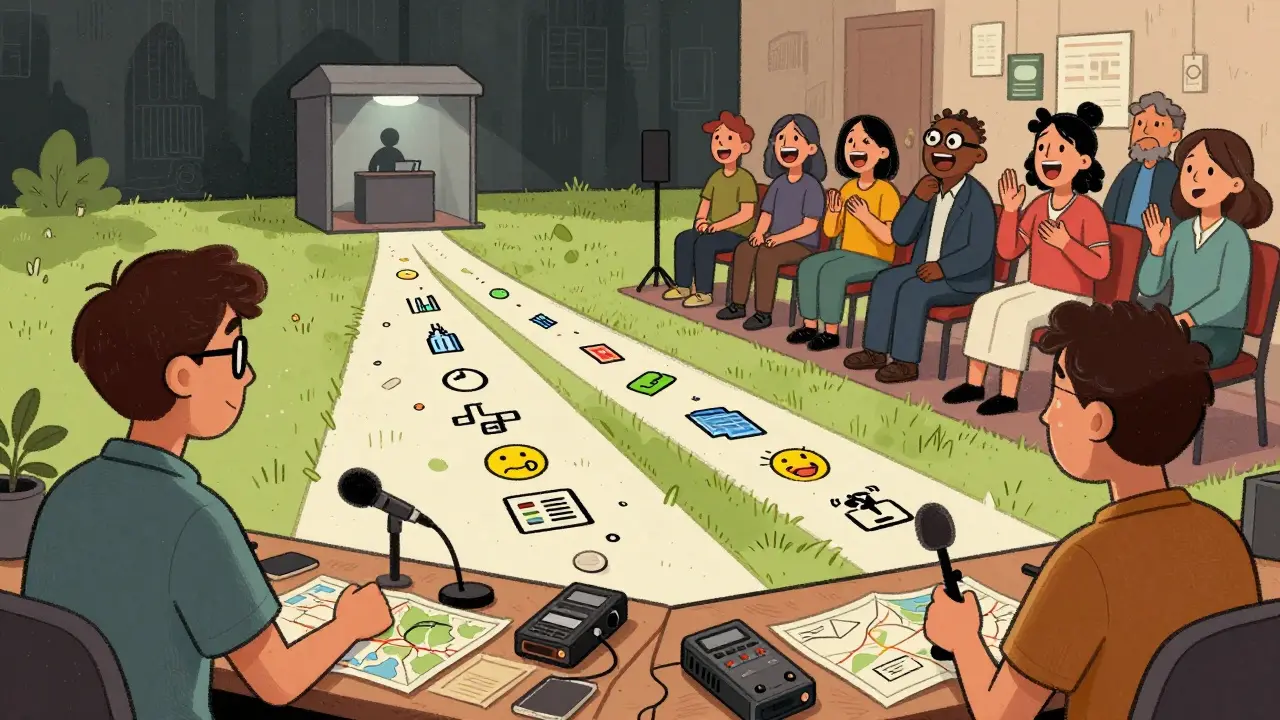
When an On-Camera Host Is Essential
Use an on-camera host when you need to:
- Humanize a story-especially one about identity, trauma, or personal transformation.
- Challenge the viewer directly-like in 13th, where Ava DuVernay doesn’t just explain mass incarceration; she confronts the viewer with uncomfortable truths.
- Break down myths in real time-like a doctor explaining a medical condition while holding up an X-ray.
- Build a brand or recurring series-think Neil deGrasse Tyson on Cosmos or John Green on educational YouTube documentaries.
Here’s the thing: an on-camera host turns your documentary into a conversation. It’s no longer “this happened.” It’s “this happened to us-and here’s what I think about it.” That intimacy can be powerful. But it demands authenticity. A host who’s faking passion or expertise will make the whole film feel hollow.
Hybrid Approaches: The Best of Both Worlds
Some of the most effective documentaries blend both. My Octopus Teacher uses narration for the broader ecological context, but the heart of the film is Craig Foster’s on-camera presence-his voice shaking as he talks about his emotional bond with the octopus. The narration gives structure; his presence gives soul.
Another example: Free Solo. The film uses narration to explain climbing techniques and physics, but the emotional core comes from Alex Honnold’s interviews and quiet moments on camera. The two voices work together, not compete.
You don’t have to pick one. Ask yourself:
- Is there a person whose perspective is essential to the story?
- Do the facts need a guiding hand, or can they stand on their own?
- Will the audience feel more connected if they see someone who’s lived this, or if they’re told about it?
What You Lose When You Get It Wrong
Choosing poorly can break your documentary. If you use narration for a deeply personal story-like a refugee’s journey-you risk sounding detached, even exploitative. Viewers might feel like they’re watching a museum exhibit instead of a human life.
On the flip side, if you put an amateur host in front of the camera for a technical subject-say, quantum physics-you risk losing credibility. The audience won’t trust someone who can’t explain the basics clearly.
One filmmaker in Dublin told me she lost 30% of her audience after switching from narration to an on-camera host who spoke too fast and fidgeted constantly. “They stopped believing the story because they stopped believing her,” she said.
It’s not about being perfect. It’s about being intentional.
Final Decision Checklist
Still unsure? Use this simple guide:
- Is the story centered on a person or group with a unique perspective? → Choose an on-camera host.
- Is the story about systems, history, or data? → Choose narration.
- Do you have a compelling, authentic person who can speak clearly and emotionally? → Go on-camera.
- Do you need to maintain neutrality or cover multiple voices without bias? → Go with narration.
- Can you afford to film the host in multiple locations with good lighting and sound? → On-camera is doable.
- Are you working with limited time or budget? → Narration is cheaper and faster to produce.
There’s no universal rule. But there is a right choice for your story. The best documentaries don’t just inform-they move people. And how you choose to speak to them-whether from behind the scenes or right in front of the lens-will decide whether they listen… or look away.
Can a documentary use both narration and an on-camera host?
Yes, and many of the most powerful documentaries do. Using narration for context and an on-camera host for emotional depth creates a layered experience. For example, My Octopus Teacher uses narration to explain ocean ecosystems while Craig Foster’s on-camera presence delivers the personal, emotional core. This blend works best when each voice has a clear role-narration informs, the host connects.
Is narration always more professional than an on-camera host?
No. Professionalism isn’t about whether someone is on camera. It’s about clarity, authenticity, and preparation. A well-prepared on-camera host who speaks confidently and honestly can feel far more professional than a poorly chosen voiceover artist who sounds robotic or disconnected. Audiences today value real human presence over polished distance.
Can I use my own voice as the narrator if I’m also the filmmaker?
You can, but be careful. Using your own voice adds authenticity, especially in personal stories. However, if your voice is uneven, too emotional, or lacks vocal control, it can distract. Many filmmakers record their narration in a quiet room with a good mic, then edit it for rhythm and tone. If you’re unsure, test it with a small audience first. If they pause the film to ask, “Who’s speaking?”-you might need a professional voice actor.
What if my on-camera host isn’t a professional speaker?
That’s often better. The most moving documentaries feature real people-not actors. A teacher, a nurse, a parent, or a former prisoner who speaks honestly and simply can be more powerful than a polished TV host. Focus on comfort, not performance. Let them speak in their own words. Edit for clarity, not perfection. Authenticity beats polish every time.
Does the type of documentary genre affect this choice?
Absolutely. Historical and scientific docs usually lean on narration for authority and scope. Personal, social justice, and character-driven docs almost always benefit from an on-camera host. True crime can go either way-narration for cold facts, host for emotional impact. Watch the top 10 docs in your genre on Netflix or PBS. Notice who’s speaking and how.