
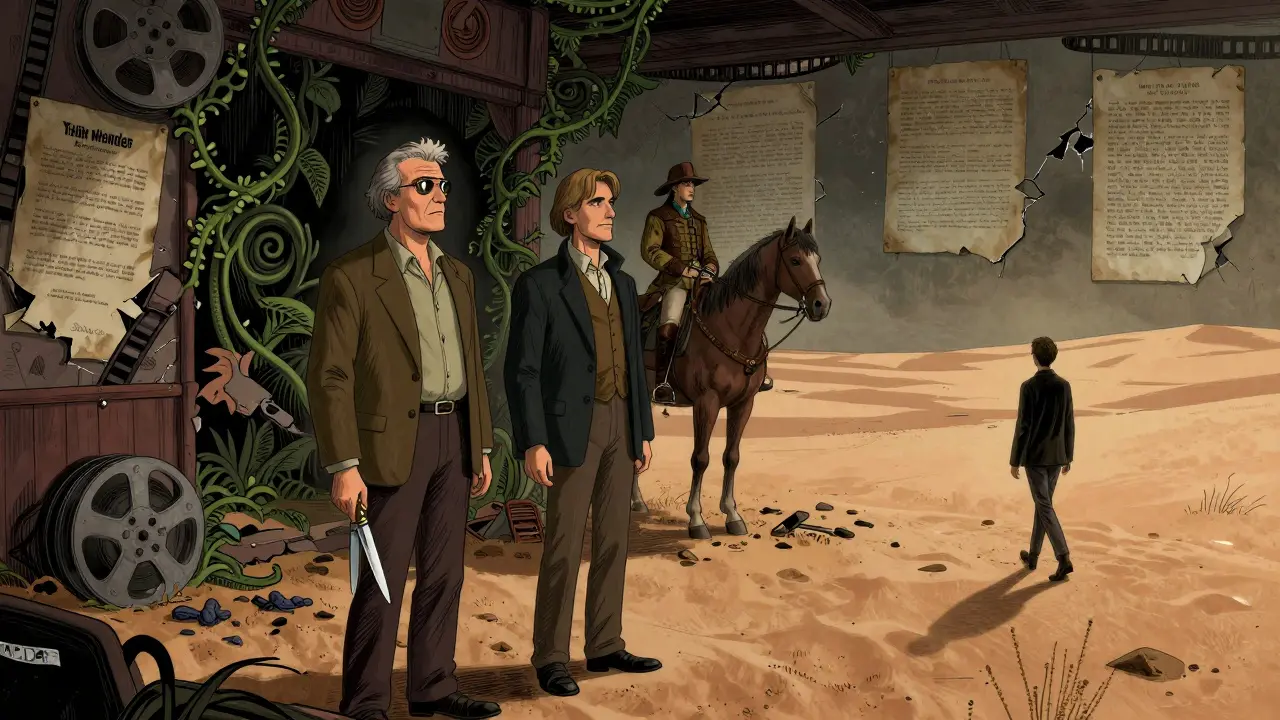
By the mid-1960s, German cinema was stuck. It was either churning out dull adaptations of old novels or copying Hollywood formulas with little soul. Then came a group of young filmmakers who said: New German Cinema isn’t just a movement-it’s a rebellion. They didn’t want to entertain. They wanted to expose. To question. To break open the silence left by the war and the lies that followed.
What Was New German Cinema?
New German Cinema wasn’t a studio or a school. It was a loose alliance of directors, writers, and producers who came together in the late 1960s and 1970s. They rejected the commercial trash that dominated German screens. They used government funding meant for cultural projects to make films about guilt, alienation, and the weight of history. These weren’t happy endings. These were raw, messy, honest films that made audiences uncomfortable-and that was the point.
The movement got its name from the Oberhausen Manifesto of 1962, where 26 young filmmakers declared: "Old cinema is dead. We are now creating a new one." They didn’t mean to make art for museums. They meant to make films that changed how people saw their own country.
Rainer Werner Fassbinder: The Angry Prophet
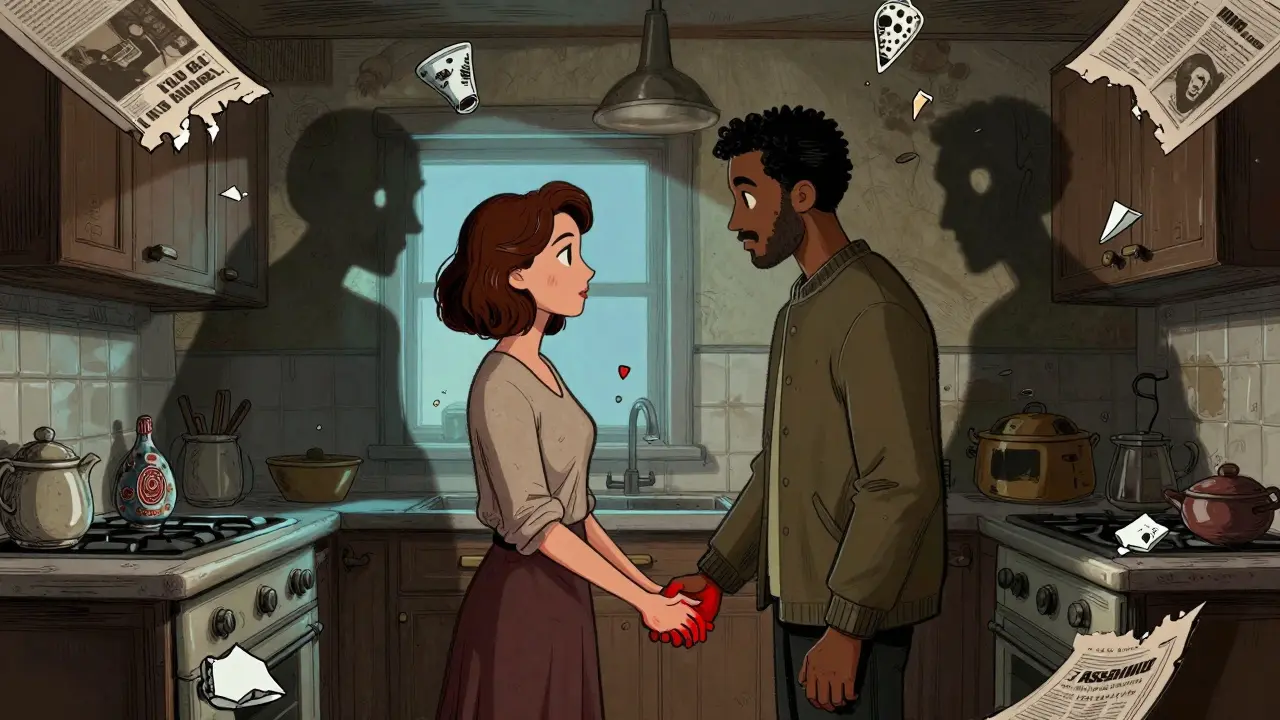
If you want to understand the rage beneath New German Cinema, watch Fassbinder’s Ali: Fear Eats the Soul. A 42-year-old German woman falls in love with a 25-year-old Moroccan immigrant. It’s a simple love story. But Fassbinder turns it into a brutal portrait of racism, loneliness, and class hatred. He filmed it in 15 days. No rehearsals. No second takes. Just raw emotion.
Fassbinder made over 40 films in just 15 years. He worked like a man possessed. He was a control freak, often writing, directing, editing, and even acting in his own movies. His style was sharp, cold, and precise. He used long static shots like a surgeon’s scalpel-cutting through the surface to show the rot underneath.
His film The Marriage of Maria Braun isn’t about a woman’s romance. It’s about postwar Germany itself. Maria survives by any means necessary-prostitution, manipulation, betrayal. She climbs the economic ladder while her country rebuilds on lies. Fassbinder didn’t blame individuals. He blamed the system that turned people into survivors and then called them heroes.
Werner Herzog: The Mad Poet of the Wilderness
Herzog didn’t care about social realism. He cared about madness. Not the kind you find in asylums, but the kind that drives people to climb mountains, cross deserts, or chase impossible dreams. His films feel like dreams you can’t wake up from.
In Aguirre, the Wrath of God, a Spanish conquistador leads a doomed expedition through the Amazon. Herzog didn’t use a script. He told his actors the general direction and then let them wander into the jungle with him. The actor playing Aguirre, Klaus Kinski, was volatile, unpredictable, and terrifying. Herzog once held a gun to his head during filming. He didn’t want to kill him-he wanted to see how far he’d go. The result? One of the most unnerving performances in cinema history.
Herzog’s Woyzeck is a brutal adaptation of a 19th-century play. A poor soldier is experimented on by doctors, mocked by his peers, and pushed to the edge. Herzog filmed it in black and white, with natural light and real locations. No studio sets. No makeup. Just the raw, cold truth of poverty. He didn’t ask for sympathy. He asked for recognition.
Herzog’s most famous line? "The world is a madhouse. We’re just the inmates who haven’t noticed yet." He didn’t make films to explain the world. He made them to show how little we understand it.
Wim Wenders: The Lonely Traveler
Where Fassbinder was angry and Herzog was obsessed, Wenders was quiet. He wandered. He listened. He filmed people who didn’t know they were being watched.
His film Paris, Texas opens with a man walking alone across the desert. He doesn’t speak. He doesn’t cry. He just walks. We don’t know who he is. We don’t know why. For 20 minutes, we watch him disappear into the horizon. That’s Wenders’ style: silence as language.
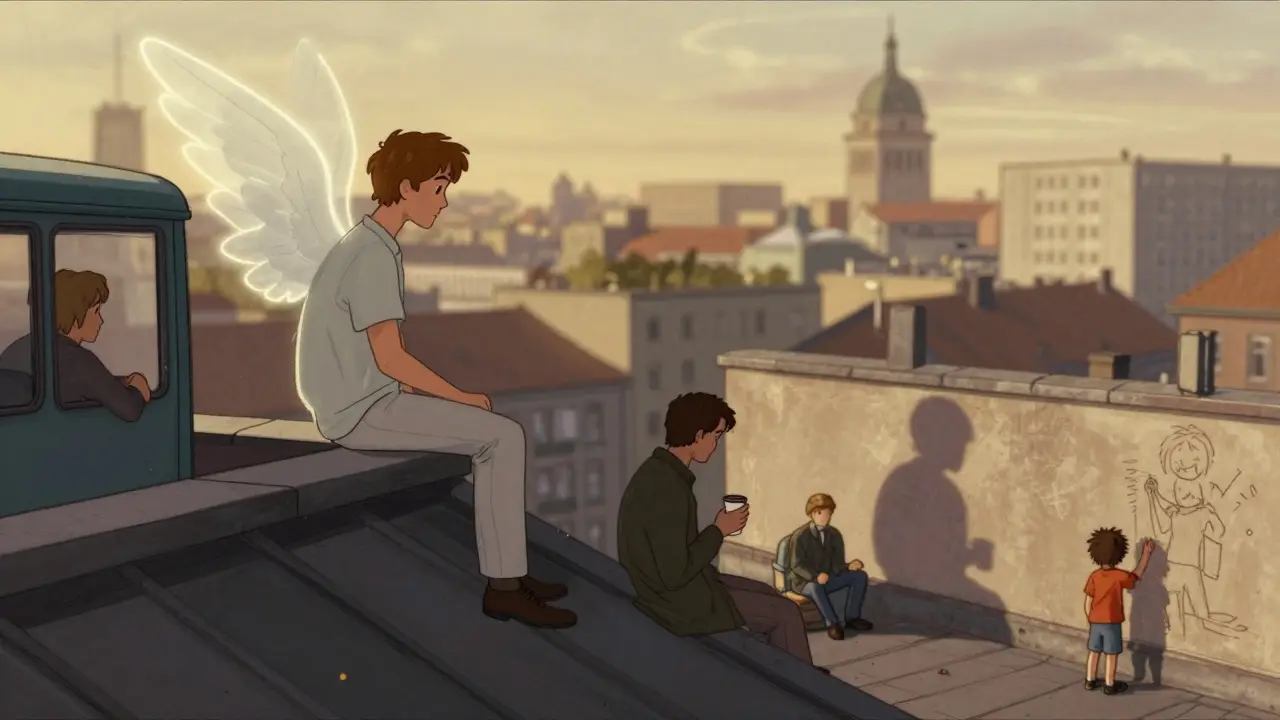
In Wings of Desire, angels walk among Berliners, listening to their thoughts. One angel decides to become human-not for glory, but because he wants to feel the warmth of a coffee cup, the ache of a broken heart, the weight of a single moment. It’s a love letter to ordinary life.
Wenders didn’t use big explosions or dramatic twists. He used street corners, train stations, and empty rooms. He filmed people talking to themselves on buses. He caught the way light falls on a wall at 4 p.m. He showed that healing doesn’t come from grand speeches. It comes from quiet connections.
How They Changed Cinema Forever
Fassbinder taught us that personal pain is political. Herzog proved that obsession can be a form of truth. Wenders showed that stillness can speak louder than action.
Before them, German films were about the past. After them, German films became about the present-messy, confusing, and alive. They didn’t wait for permission. They used borrowed money, rented cameras, and shot on location with friends. They made films that were too strange for theaters, too honest for TV, and too real for comfort.
Today, you can see their influence everywhere. In the quiet loneliness of Manchester by the Sea. In the surreal desperation of The Lighthouse. In the slow-burning grief of Nomadland. These filmmakers didn’t just make movies. They gave future directors permission to be strange, to be slow, to be human.
Where to Start Watching
If you’ve never seen a New German Cinema film, don’t start with the longest one. Start here:
- Fassbinder: Ali: Fear Eats the Soul (1974) - short, powerful, unforgettable.
- Herzog: Aguirre, the Wrath of God (1972) - a descent into obsession you won’t forget.
- Wenders: Wings of Desire (1987) - poetic, gentle, and deeply moving.
Watch them in order. Let them sink in. Don’t look for plot. Look for feeling. These films don’t ask you to understand them. They ask you to feel them.
Why They Still Matter
In 2026, we’re drowning in noise. Algorithms push us toward quick hits. We scroll past pain. We skip over silence. We mistake entertainment for meaning.
Fassbinder, Herzog, and Wenders didn’t make films to fill time. They made them to fill a void. A void left by war, by silence, by the refusal to look at what hurt.
They didn’t care if you liked them. They cared if you saw yourself in them. And that’s why, 50 years later, their films still cut deeper than anything on streaming.