
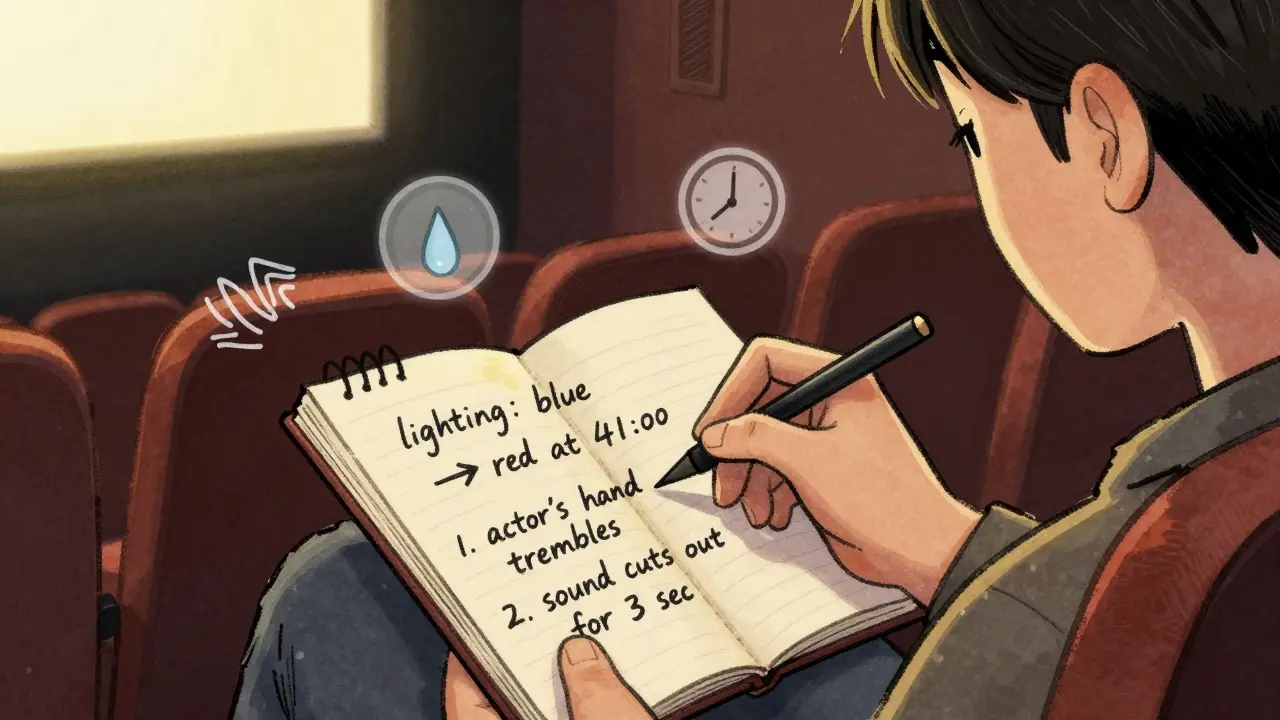
Writing a good review isn’t about saying whether you liked something or not. It’s about explaining why you felt that way-and doing it in a way that helps others decide, learn, or even feel seen. Most people jump straight to typing their thoughts after watching a movie, finishing a book, or trying a new album. But that’s like trying to paint a portrait from memory after seeing it for five seconds. You’ll miss the details. The subtle shifts in tone. The quiet moments that stick with you days later. That’s where a real note-taking system for reviews comes in.
Why Your Brain Forgets What Matters
Your brain is wired to prioritize emotion over detail. After watching a film, you might remember the ending, the main character’s arc, or how you cried during the third act. But what about the lighting in that hallway scene? The way the sound design dropped out right before the twist? The actor’s micro-expression when they lied? Those are the things that separate a shallow review from a meaningful one. And they vanish fast.A 2023 study from the University of Edinburgh tracked 120 people writing reviews after watching short films. Those who took structured notes during viewing wrote reviews that were 68% more likely to mention specific technical or artistic choices. Those who waited until afterward? Most stuck to general feelings: "It was good," "I was bored," "The acting was great."
Notes aren’t just memory aids. They’re tools to slow down your thinking. To notice. To reflect. To build a review that doesn’t just say what you felt-but why you felt it.
The Three-Layer Note System
There’s no single perfect way to take notes for reviews. But there is a proven structure that works across books, films, music, games, and even restaurants. It’s called the Three-Layer System.- Observation Layer - What actually happened? No interpretation. Just facts. Camera angles. Dialogue lines. Instrument changes. Page turns. Timing of pauses.
- Reaction Layer - How did you feel in that moment? Not "I loved it," but "My chest tightened when the violin came in," or "I laughed out loud at line three, then realized no one else did."
- Connection Layer - Where does this fit? Does this remind you of another work? A personal memory? A cultural trend? A director’s past film? A genre expectation broken or fulfilled?
Let’s say you’re reviewing a documentary about climate change. In the Observation Layer, you write: "5:23 - Cut to black-and-white footage of 1950s factory workers. No narration. Just the sound of steam escaping pipes." In the Reaction Layer: "I felt a chill, even though the room was warm. It felt like watching ghosts." In the Connection Layer: "This mirrors the opening of Manufacturing Consent, but without the talking heads. More haunting. More effective."
This system forces you to separate what happened from what you think about it-and then link it to something bigger. That’s the magic. That’s what turns a review into an experience others can step into.
Tools That Actually Work
You don’t need fancy apps. You don’t need voice recorders or AI summarizers. The best tools are the ones you’ll actually use.- Physical notebook + pen - Best for films and live performances. You can jot quickly in the dark. No screen glare. No notifications. Just you and the moment. Use symbols: ! for surprise, ? for confusion, \\ for emotional punch.
- Simple text app (like Notes or Notion) - Use templates. Create three sections labeled Observation, Reaction, Connection. Type as you go. Pause the video if you need to. It’s okay to be messy. The goal is capture, not polish.
- Audio snippets - If you’re listening to an album, record a 10-second voice memo at key moments: "That bass drop at 2:17-it’s not just loud, it’s like a heartbeat restarting." Save it with a timestamp.
One reviewer I know uses a $3 spiral notebook for every movie he sees. He doesn’t write full sentences. He writes fragments: "lighting: blue → red at 41:00", "actor’s hand trembles when he says "I’m fine"", "sound cuts out for 3 seconds before scream." Three months later, he opens it and writes a 1,200-word review in under an hour. He didn’t remember any of it until he saw his notes.
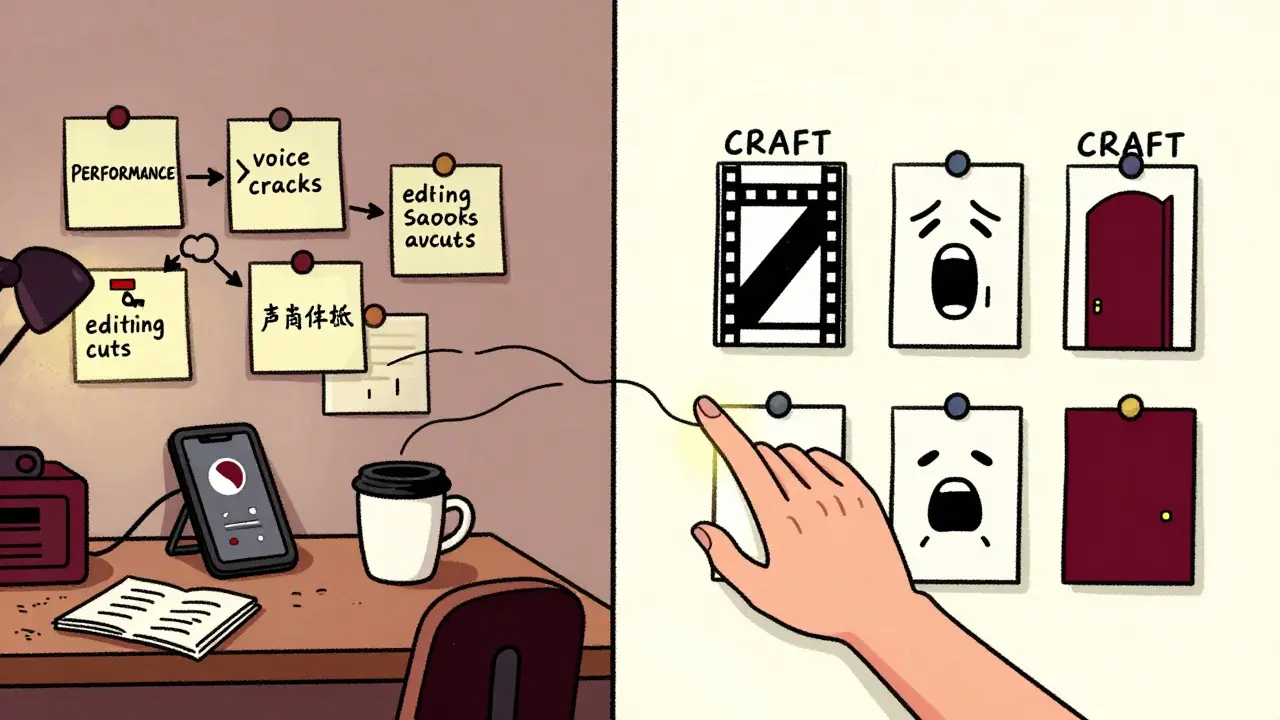
Performance vs. Craft: What to Track
Not all reviews are the same. Some focus on performance-how well something was executed. Others focus on craft-how meaning was built, layered, and delivered.Performance notes track technical quality:
- Acting: Did the actor stay in character during emotional shifts?
- Editing: Were cuts smooth? Did pacing match tone?
- Sound: Was dialogue clear? Was music used intentionally or as filler?
- Writing: Were lines natural? Did dialogue reveal character or just advance plot?
Craft notes track intention and meaning:
- Symbolism: Was a color used repeatedly? Why?
- Structure: Was the story told in reverse? Why now?
- Subtext: What’s not said? What’s hidden in silence?
- Context: How does this reflect the time it was made? The culture it came from?
Here’s the trick: you need both. A great performance without craft feels hollow. A brilliant craft without performance feels academic. Your notes should capture both.
Take the film Oppenheimer. Performance notes might say: "Cillian Murphy’s voice cracks on line: "I am become Death." No re-take. Raw." Craft notes: "The black-and-white sequences aren’t just flashbacks-they’re the weight of history pressing down on color. The score drops out during nuclear test. Silence as the bomb’s voice."
How to Turn Notes Into a Review
Don’t write your review right after the experience. Wait 24 hours. Let the emotion settle. Then go back to your notes.Start with your Connection Layer. What’s the big idea? The theme? The question the work is asking? That’s your hook.
Then pick three Observation and Reaction pairs that best support that idea. Don’t summarize everything. Pick the moments that changed how you saw the whole thing.
Example:
- Hook: This isn’t a love story-it’s a warning about how we silence people who feel too deeply.
- Pair 1: Observation: "She says "I’m fine" three times in the last scene. Each time, the camera holds on her eyes longer." Reaction: "I realized she wasn’t lying. She was giving up."
- Pair 2: Observation: "The score fades out completely during their final argument." Reaction: "It felt like the world stopped listening to them."
- Pair 3: Observation: "The last shot is of an empty swing moving in the wind." Reaction: "I thought of my mother. She used to sit on that swing after my dad left."
That’s your review. No fluff. No clichés. Just truth, anchored in what you saw and felt.

Common Mistakes to Avoid
Most people fail at review note-taking not because they’re lazy-but because they misunderstand what the goal is.- Writing summaries instead of observations - "The hero saves the city" is a summary. "The hero hesitates for 7 seconds before jumping off the roof, then doesn’t look back" is an observation.
- Using vague emotional language - "It was moving" means nothing. "I had to pause the movie because I was crying and couldn’t see the screen" means something.
- Trying to be original - You don’t need to say something no one’s ever said. You need to say what you saw and felt. That’s original enough.
- Waiting too long to take notes - If you wait more than 10 minutes after the experience, you’ve already lost 40% of the details.
There’s no perfect review. But there are reviews that feel true. And they all start with notes that were honest, specific, and slow.
What Happens When You Stick With It
After six months of using this system, something changes. You start noticing things everywhere. In conversations. In ads. In the way people hold their coffee. You don’t just consume art anymore-you engage with it. You start seeing craft in everyday moments.And when you write a review, people read it differently. Not because you’re smarter. But because you’ve given them a window into your mind. They don’t just get your opinion. They get your attention.
That’s the real power of note-taking for reviews. It doesn’t make you a better critic. It makes you a more present human.
Do I need special software to take review notes?
No. The best tools are simple: a notebook and pen, or a plain text app. What matters is consistency, not features. Apps with templates help, but they’re not required. Many top reviewers use handwritten notes because they’re faster and less distracting.
How long should my review notes be?
There’s no set length. Some people write 200 words. Others write 20 bullet points. The goal isn’t volume-it’s coverage. If you captured at least three key moments in each layer (Observation, Reaction, Connection), you’ve done enough. Quality beats quantity every time.
Can I use this system for non-art reviews, like products or restaurants?
Absolutely. For a restaurant: Observation = "The bread arrived cold, but the butter was whipped with rosemary." Reaction = "I felt confused-like someone tried too hard but forgot the basics." Connection = "This reminds me of that tiny café in Prague where everything was perfect except the service." The same system works for gadgets, apps, books, even services.
What if I don’t remember details after a week?
That’s why you write notes immediately after. If you waited, you’ve already lost the details. The system only works if you capture the moment while it’s fresh. If you’re reviewing something you watched months ago, your notes won’t help-you’ll be guessing. Stick to recent experiences.
Is this system only for professional critics?
No. It’s for anyone who wants their voice to matter. Whether you’re posting on Instagram, writing a blog, or just sharing thoughts with friends, this system makes your opinion clearer, deeper, and more convincing. You don’t need a platform. You just need to pay attention.
Next Steps: Start Small
Pick one thing you’ll review this week. A song. A TV episode. A book chapter. Watch or listen to it. Pause every 10 minutes. Write one observation. One reaction. One connection. That’s it. Just three lines. Do that three times. Then write your review.You don’t need to be perfect. You just need to be present.