
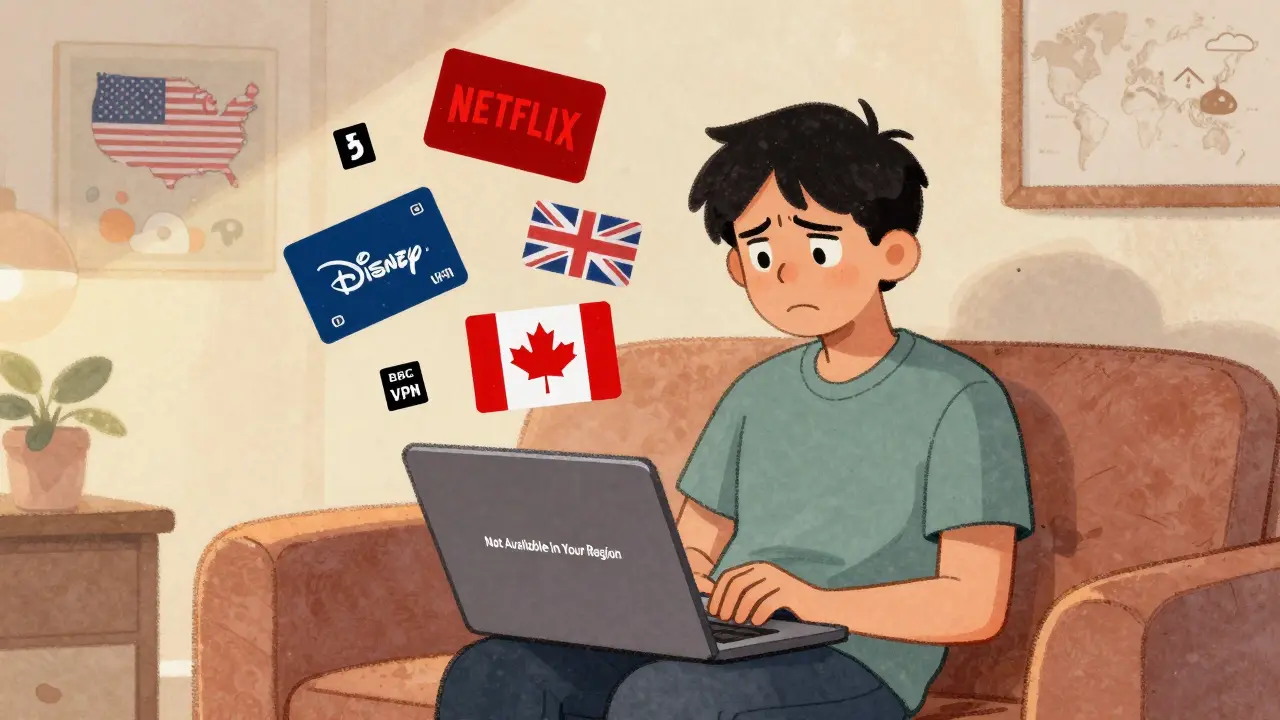
If you’ve ever tried to watch a show that’s only available in another country, you know the frustration. You find the perfect series on Netflix, Disney+, or Hulu-but the platform won’t let you sign up. It says something like, "This service isn’t available in your region." You’re not blocked because you’re bad at technology. You’re blocked because your payment method doesn’t match the country’s requirements.
Most streaming services tie your account to your payment details. If your credit card is issued in the U.S., but you’re physically in Brazil, they’ll lock you out. Even if you’re traveling, living abroad, or just want access to a better content library, your bank account or card becomes the gatekeeper. That’s where gift cards and digital wallets come in.
Why Your Credit Card Won’t Work Abroad
Streaming platforms use your payment information to determine your location. It’s not just about your IP address. They check the billing address tied to your card, the country code on your bank, and even the currency you’re paying in. If any of those don’t match the region you’re trying to access, you’re denied.
For example, if you’re in Germany and want to subscribe to Hulu, which only accepts U.S. payment methods, your German Visa card won’t cut it. Even if you use a VPN to appear as if you’re in the U.S., Hulu will still see your card’s origin and reject the transaction. It’s a double lock: location + payment.
This isn’t a glitch. It’s by design. Content licensing is region-specific. A show licensed for Canada can’t legally be streamed in Australia without a separate deal. Streaming services have to follow those rules-or face legal penalties. So they use payment systems as enforcement tools.
How Gift Cards Bypass Region Locks
Gift cards are the most straightforward workaround. They’re not tied to your bank or location. They’re physical or digital vouchers with a set value, bought in the target country. Once redeemed, they add credit to your account, letting you pay for subscriptions without using your own card.
Here’s how it works in practice:
- You want to access Netflix US. You buy a Netflix gift card from a U.S.-based retailer like Amazon.com, Best Buy, or even a third-party seller like MyGiftCardSupply.
- You create a new Netflix account using a U.S. email and a U.S. VPN.
- You redeem the gift card during signup. No credit card needed.
- Netflix now sees you as a U.S. subscriber. Content unlocks.
Same goes for Disney+, Apple TV+, and HBO Max. Each has its own gift card system. Some are sold in stores. Others are available online. The key is buying them from a seller based in the country whose library you want.
There’s a catch: gift cards expire. Most last 12 to 24 months. And if you run out of credit, you’ll need to buy another. But for occasional use-say, watching a limited-run series that’s only on a foreign platform-it’s a cheap, clean solution.
Digital Wallets: The Next-Gen Workaround
Gift cards are simple, but they’re not always convenient. What if you want to pay monthly? What if you’re living abroad long-term? That’s where digital wallets come in.
Digital wallets like PayPal, Skrill, and Revolut can be linked to foreign bank accounts or prepaid cards. But here’s the trick: you need to set them up with a local address and payment method from the country you’re targeting.
For example:
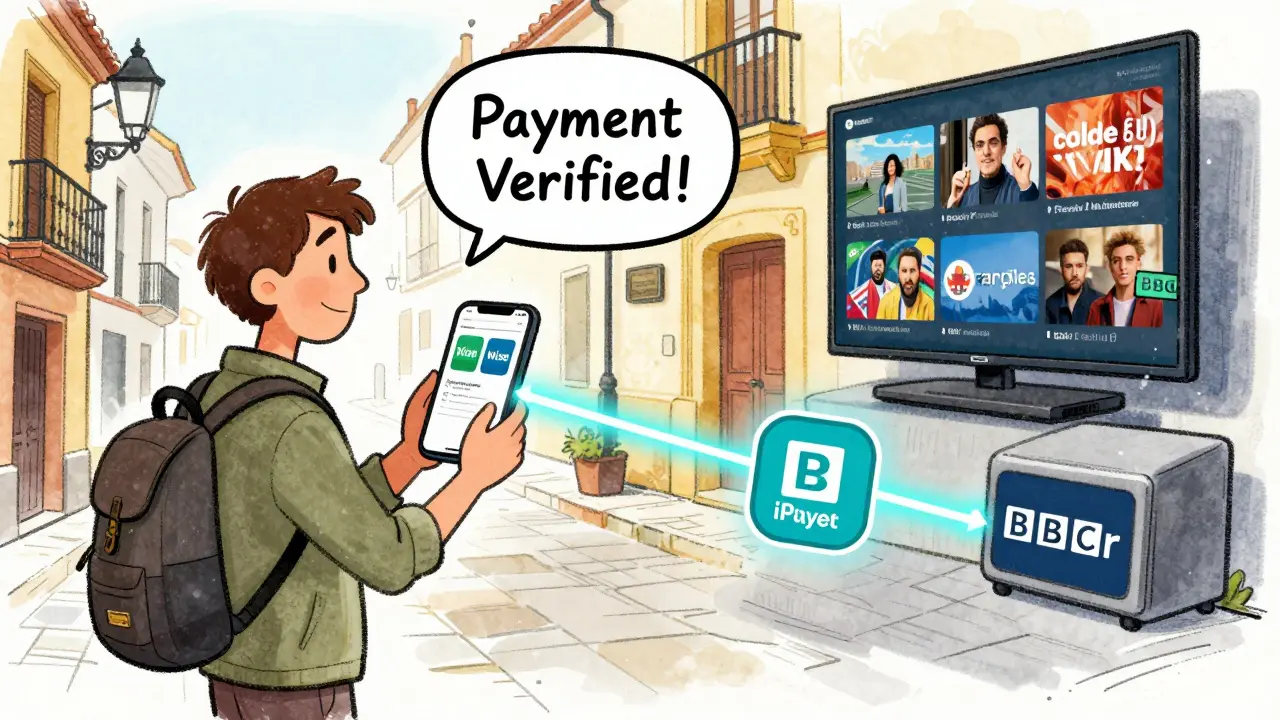
- You move to Japan and want to keep your UK BBC iPlayer subscription.
- You open a Revolut account and add a UK bank account as a funding source.
- You set your Revolut profile address to a UK postal code.
- You use Revolut to pay for BBC iPlayer. The service sees a UK payment method and grants access.
Some wallets even let you hold multiple currencies. So you can buy a monthly subscription in USD, pay in EUR, and avoid currency conversion fees. Revolut, Wise, and N26 are popular for this. They’re not magic, but they give you more control than a regular bank.
Important: You can’t just create a fake address. Streaming services verify billing addresses through third-party tools like MaxMind or Experian. If your address doesn’t match your card’s issuing country, you’ll get flagged. You need real, verifiable details from the target country.
Where to Buy Gift Cards Legally
Not all gift card sellers are trustworthy. Some sell stolen cards. Others charge 50% over face value. Stick to reputable sources:
- Amazon (in the target country’s store): Buy U.S. Netflix cards on amazon.com, UK Disney+ cards on amazon.co.uk.
- Official retailer sites: Best Buy, Target, Walmart, and local chains often sell digital gift cards instantly.
- Trusted resellers: MyGiftCardSupply, GiftCard Granny, and CardCash are vetted marketplaces. They offer discounts and buyer protection.
- Local convenience stores: In countries like Canada, Australia, or Germany, you can buy physical gift cards at pharmacies or supermarkets.
Avoid eBay, Craigslist, or random Telegram groups. The risk of fraud is high. A $50 gift card that doesn’t work isn’t just a loss of money-it’s a loss of time and trust.
Wallets vs. Gift Cards: Which Is Better?
Here’s a quick comparison:
| Feature | Gift Cards | Digital Wallets |
|---|---|---|
| Best for | Short-term access, one-time use | Long-term subscriptions, recurring payments |
| Cost | Face value + shipping (if physical) | Free to set up, small currency fees |
| Renewal | Buy new card each time | Auto-renew with linked funding |
| Verification | None needed after redemption | Requires real address and ID |
| Flexibility | Works with one service | Can pay for multiple platforms |
If you’re just trying out a foreign library for a month, gift cards win. If you’re living overseas and want to keep your home services active, a digital wallet is the smarter long-term play.
What Doesn’t Work (And Why)
Many people try to use free VPNs, fake IDs, or hacked accounts. These almost always fail-and they’re risky.
- Free VPNs are slow, insecure, and often blocked by streaming services.
- Using someone else’s account violates terms of service. You can get banned.
- Changing your profile country in settings won’t help. Payment is the real key.
- Some services now require SMS verification from a local number. No local phone? No access.
There’s no secret hack. The only reliable methods are gift cards and verified digital wallets with real local details.
Real-Life Example: A Student in Spain
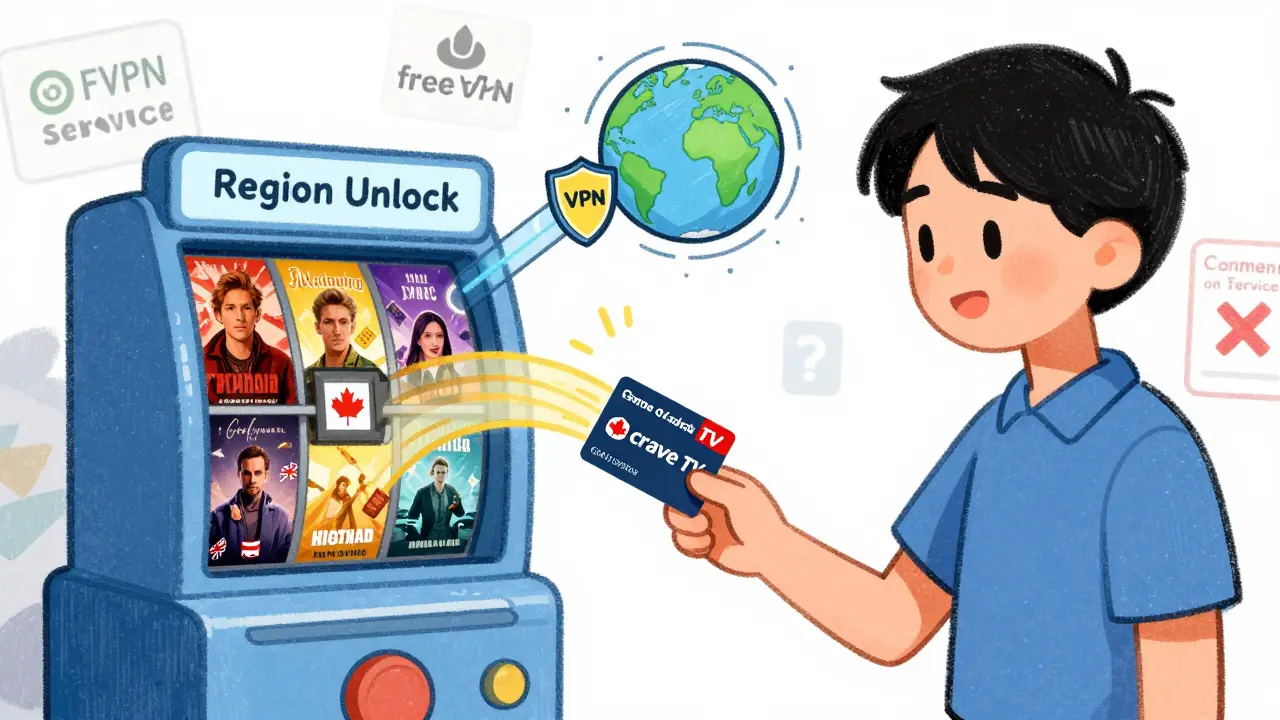
Meet Ana. She’s a university student from Canada studying in Barcelona. She misses her Canadian Crave TV shows and wants to watch BBC iPlayer for British documentaries.
She buys a $10 Canadian Crave gift card from a trusted reseller. She creates a new account using a Canadian email and a paid VPN with a Canadian server. She redeems the card. Done. Crave works.
For BBC iPlayer, she signs up for a Wise account. She links her Canadian bank, adds a UK postal code (from a friend’s address), and uses Wise to pay monthly. BBC accepts it. No issues.
Two months later, she’s watching both libraries without paying international fees or risking her main credit card.
Legal and Ethical Considerations
Is this legal? Mostly yes. Buying a gift card from a legitimate seller and using it to access content is not illegal. You’re not hacking. You’re not stealing. You’re paying for access.
But it does violate most streaming services’ Terms of Service. They say you must use their service in the country where you live. If they find out you’re using a gift card or wallet from another region, they can cancel your account. They rarely do-unless you’re flagged for high usage or abuse.
Most people use these methods responsibly. No one’s streaming 20 shows a day across 10 regions. They just want to watch what’s available. Streaming services know this. Enforcement is inconsistent.
Still, don’t expect support if your account gets locked. You’re operating outside their intended use. But if you’re careful, quiet, and pay fairly, you’ll be fine.
What’s Next for International Streaming?
Streaming services are slowly relaxing region locks. Netflix now offers the same content globally in many cases. Disney+ is merging libraries in Europe. But in places like Asia, Latin America, and parts of Africa, content is still fragmented.
Until global licensing becomes standard, gift cards and wallets will remain the most practical tools for accessing content across borders. They’re not perfect. But they’re the only ones that work reliably.
Start small. Buy one gift card. Try one wallet. See what works for you. The world’s content is out there. You just need the right key.
Can I use a gift card from another country to subscribe to a streaming service?
Yes, but only if you create an account using a VPN that matches the gift card’s country. For example, a U.S. Netflix gift card won’t work on a UK account unless you’re using a U.S.-based IP address during signup. Once the card is redeemed, you can switch your VPN, but the account will stay tied to the region of the gift card.
Do digital wallets like PayPal work for international streaming?
Only if your PayPal account is linked to a bank or address in the target country. A PayPal account registered in Brazil won’t work for a U.S. Hulu subscription. But if you set up a PayPal account with a U.S. address and funding source, it will. Services check the billing details, not just the wallet name.
Are gift cards refundable if I can’t use them?
Almost never. Gift cards are treated like cash. Once purchased, they’re non-refundable. That’s why it’s critical to buy from trusted sellers and confirm the card works with your target service before spending. Always check the card’s terms before buying.
Can I use a friend’s address to set up a digital wallet?
Technically yes, but it’s risky. Many wallets require ID verification linked to the address. If your friend’s ID doesn’t match your name, your account may be flagged. Use this only if you have a trusted connection and can provide documentation. Never use fake documents.
Why do some services block gift cards altogether?
Some platforms, like Apple TV+ and HBO Max, restrict gift card use for new accounts. They require a credit card for initial signup. This is to prevent fraud and ensure payment reliability. Once you’re subscribed, you can sometimes switch to gift card payments. Check each service’s help page for details.