
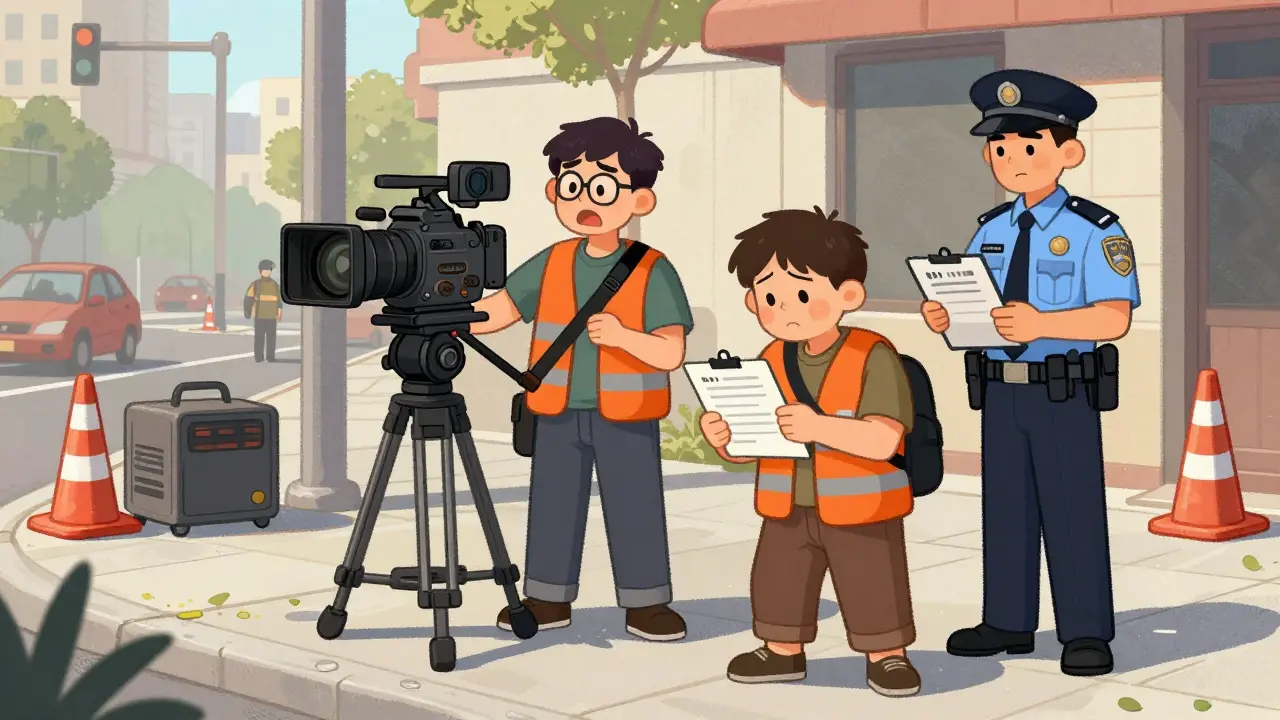
Want to shoot a scene on a city street, a quiet park, or even someone’s front yard? It’s not as simple as showing up with a camera and rolling. Too many indie filmmakers learn the hard way: no permit, no shoot. And if something goes wrong without insurance? You could be on the hook for tens of thousands. This isn’t about red tape-it’s about protecting your project, your crew, and the people whose space you’re using.
Why You Can’t Just Film Anywhere
You might think filming on public property is free. It’s not. Cities, counties, and even state parks require permits because filming disrupts daily life. A camera crew blocking a sidewalk, generators humming at 7 a.m., or a truck parked where people normally drop off kids at school? That’s not harmless. Local governments track these disruptions and charge fees to cover extra police, traffic control, cleanup, and administrative work.Private property is even stricter. Even if the owner says yes, you still need a location release form. This isn’t just a polite note-it’s a legally binding document that says the property owner consents to your filming and waives any future claims. Without it, you can’t get insurance, and distributors won’t touch your film.
What Permits You Actually Need
Permit requirements vary wildly depending on where you are. In Dublin, for example, you need to apply through the local council if you’re filming on public roads, sidewalks, or parks. In Los Angeles, it’s the Department of Motion Pictures. In smaller towns, it might just be a phone call to the mayor’s office.Here’s what most permits cover:
- Use of public space (streets, parks, plazas)
- Traffic control and road closures
- Noise permits (especially for late-night shoots)
- Electrical usage (if you’re tapping into public power)
- Special equipment (cranes, drones, large lighting rigs)
Some places require you to submit a detailed shot list, schedule, and even a map showing where you’ll be filming. Don’t wait until the day before. In many cities, processing takes 7-14 days. Rush fees can double the cost.
Insurance: The Non-Negotiable
You can’t get a permit without insurance. Most jurisdictions require at least $1 million in general liability coverage. Some, like New York City, ask for $5 million. This isn’t optional-it’s the law.What does this insurance actually cover? If a crew member drops a light and breaks a storefront window, or if a passerby trips over a cable and fractures their wrist, your insurance pays for repairs and medical bills. Without it, you’re personally liable. That means your savings, your car, even your home could be at risk.
Location filming insurance usually includes:
- General liability (covers property damage and bodily injury)
- Equipment insurance (for cameras, lights, tripods)
- Workers’ compensation (if you have paid crew)
- Umbrella coverage (extra protection beyond base limits)
Companies like Film Empower, Motion Picture Insurance, and even some local production services offer policies tailored for indie filmmakers. Don’t buy a generic business policy-those won’t cover film-specific risks.
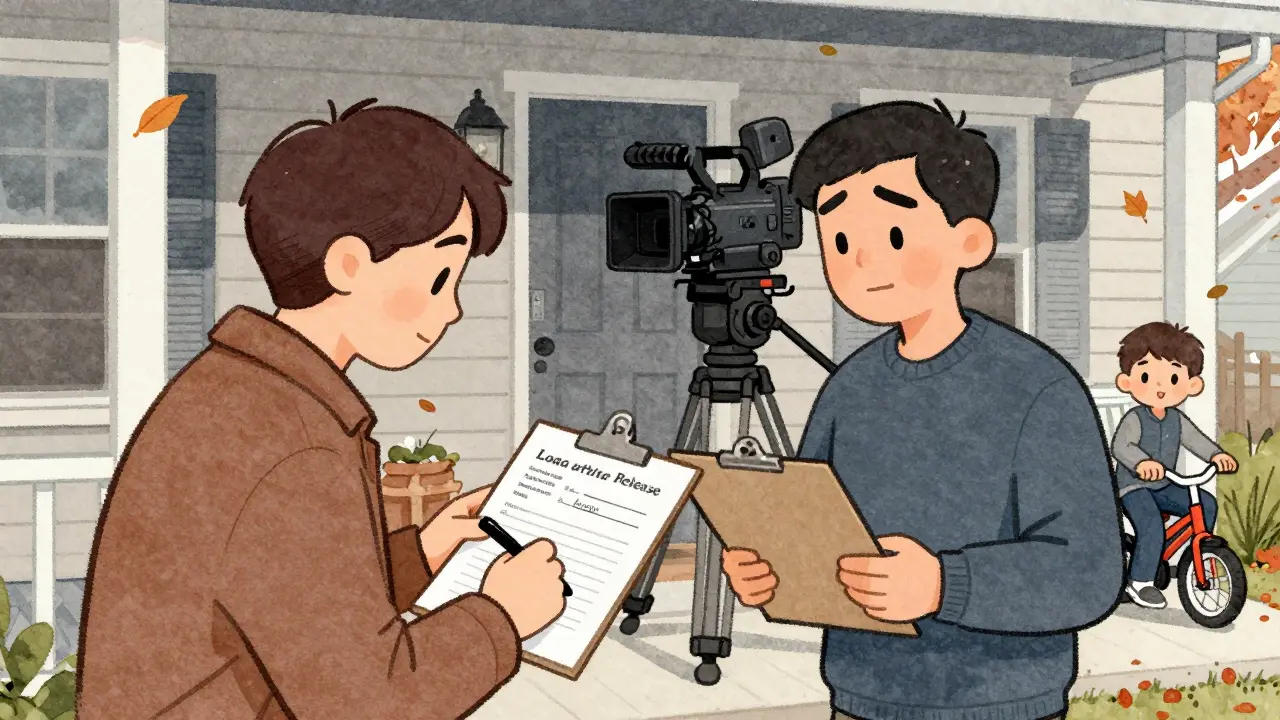
How to Get a Location Release Form
If you’re filming on private land-someone’s house, a café, a warehouse-you need a signed location release. This isn’t a form you download from a blog. It should include:- Full name and contact info of the property owner
- Exact address and description of the location
- Dates and times of filming
- What you’re filming (e.g., “interior scenes of a kitchen”)
- Whether you’ll be using props, altering the space, or bringing in heavy equipment
- Confirmation that the owner has no ownership claim to the footage
- Signature and date
Many production companies use templates from the Producers Guild of America or Film Independent. You can also hire a production lawyer to draft one, but for small projects, a clear, handwritten agreement signed in front of a witness works fine.
What Happens If You Skip These Steps
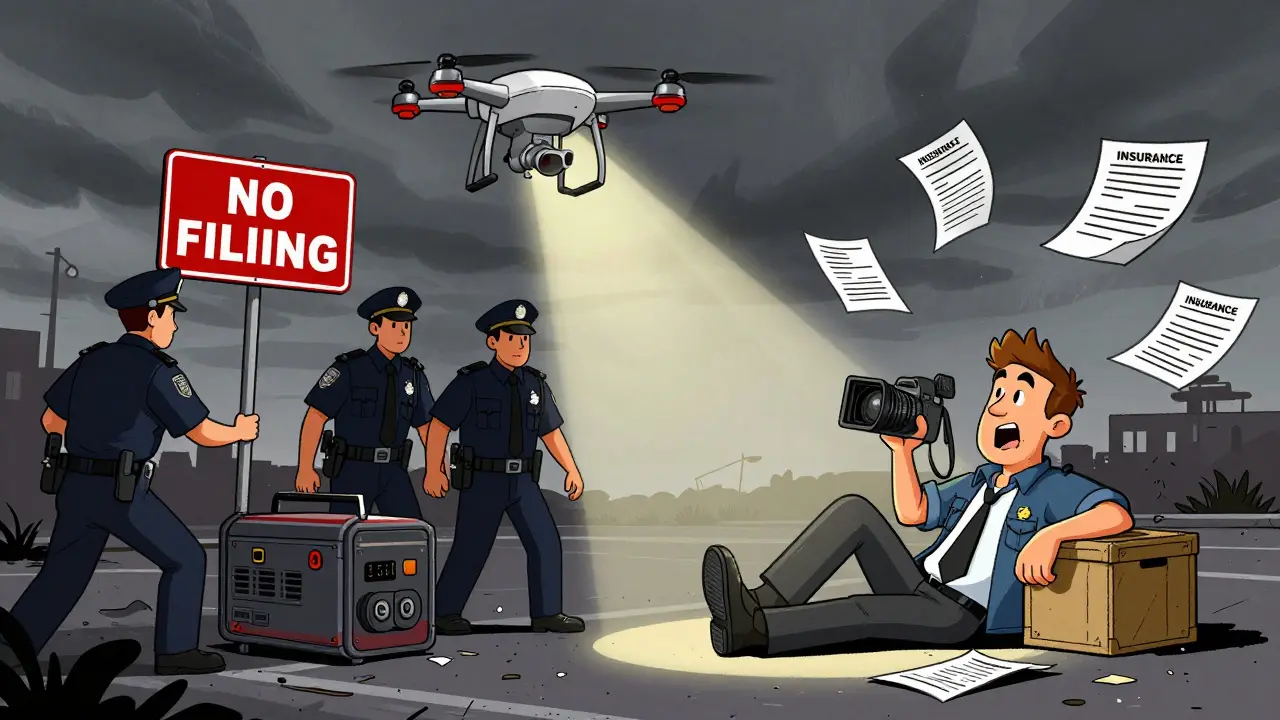
I’ve seen crews get shut down mid-shoot. Police show up, shut off the power, and demand you pack up. Sometimes they fine you on the spot-$500, $2,000, even more. Your footage? Gone. Your schedule? Destroyed.Worse, if someone gets hurt and you don’t have insurance, you’re legally responsible. A single lawsuit can kill a low-budget film before it even screens. Distributors won’t touch it. Festivals will reject it. Your name could end up on a blacklist.
One filmmaker in Cork spent €8,000 on a shoot-only to be told two days in that they didn’t have a valid permit. The entire shoot was scrapped. The camera rental company refused to return the gear until the fine was paid. That’s not a mistake you recover from easily.
Pro Tips to Avoid Common Mistakes
- Start early: Apply for permits at least three weeks before your shoot date. Rush fees are real.
- Call ahead: Ask if the location requires a fire marshal, police escort, or environmental review. Some parks ban filming during nesting season.
- Document everything: Take photos of the location before and after. Keep copies of permits, insurance certificates, and signed releases in a folder labeled “Legal Pack.”
- Know your limits: Don’t assume a permit lets you film everywhere on the property. Some permits only cover the sidewalk, not the driveway.
- Check for hidden fees: Some cities charge for parking permits, waste disposal, or even the number of crew members.
What to Do If You’re Already Filming Without a Permit
If you’re already shooting and realize you missed a step, stop immediately. Don’t try to bluff your way through. Call the local film office or council and explain the situation. Many will work with you if you’re honest and cooperative. You might still get fined, but you’ll avoid a full shutdown or legal action.Some cities have “compliance programs” for first-time offenders. You might be asked to complete a short training or pay a reduced fee. But if you’re caught lying or hiding equipment? That’s when things get serious.
Final Checklist Before You Roll Camera
Make sure you have these before you turn on the camera:- Valid location permit from the local authority
- Proof of insurance (minimum $1 million liability)
- Signed location release form for every private property
- Copy of your crew’s contact info and emergency numbers
- Written plan for traffic, noise, and waste management
- Emergency contact for the local film office
These aren’t bureaucratic hurdles. They’re the foundation of a professional, safe, and legally protected production. Skip them, and you’re gambling with your film, your reputation, and your finances.
Do I need a permit to film in my own backyard?
Usually not-if you’re not disturbing neighbors, blocking public space, or using loud equipment that violates local noise ordinances. But if you’re filming for commercial release, some insurers still require a location release form, even for private property. Always check with your insurance provider.
Can I use a drone without a permit?
No. Even small drones require permits in most cities, especially if flying over public areas or near people. In Ireland, you need permission from the Irish Aviation Authority (IAA) for any commercial drone use. Fines for flying without approval can reach €5,000.
How much does location filming insurance cost?
For a low-budget indie film, expect to pay between €200 and €800 for a basic policy covering $1-$2 million in liability. Costs rise with shoot duration, crew size, and equipment value. Some companies offer daily rates-ideal for short shoots.
What if a property owner refuses to sign a release?
Then you can’t film there. No exceptions. Some owners worry about privacy, liability, or changes to their property. Offer to shoot at a different time, limit crew access, or even pay a small fee to ease their concerns. If they still say no, find another location.
Do I need insurance if I’m just using my phone to film?
If it’s purely personal and non-commercial, no. But if you’re posting the video online for views, selling it, or entering it in a festival, you’re making a commercial product. Most platforms and festivals require proof of insurance-even for phone footage. Play it safe: get coverage.