
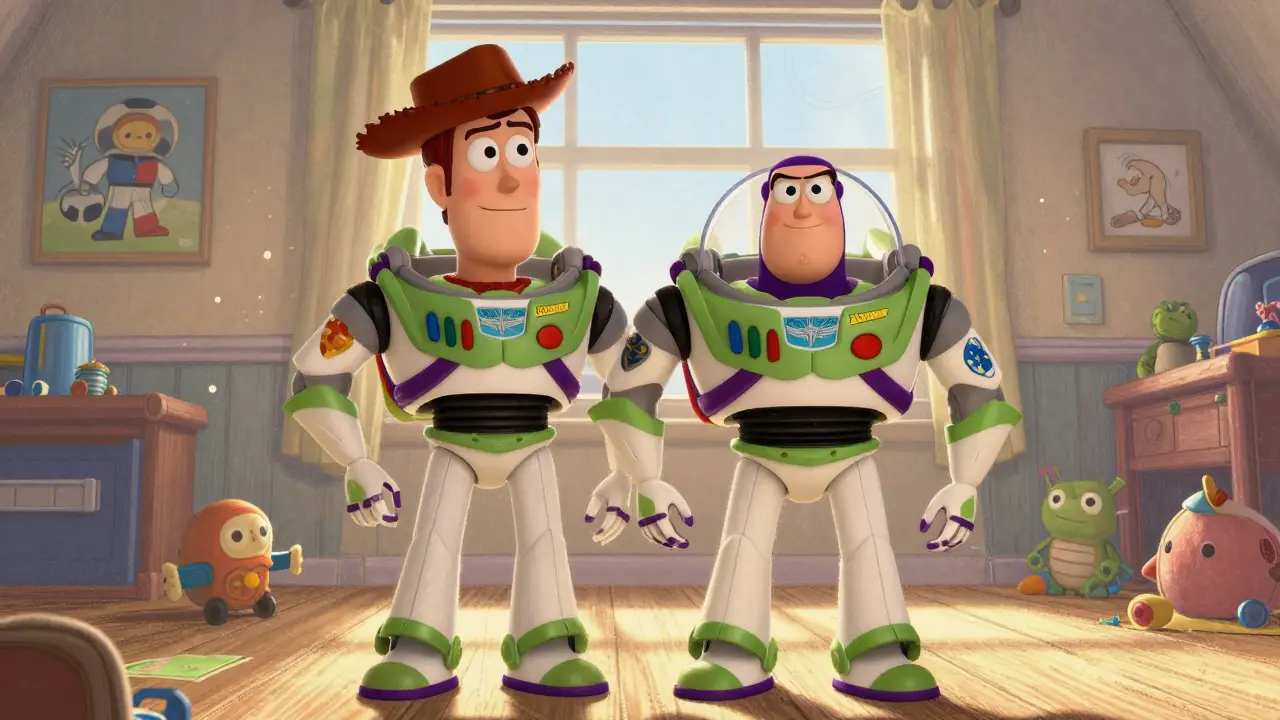
When Pixar released Toy Story in 1995, no one knew it would change animation forever. It wasn’t just the first fully computer-animated feature film-it was a leap into a new kind of storytelling. The world saw Woody and Buzz not as pixels, but as characters with hearts. That movie didn’t just launch a studio. It redefined what animation could be.
From a Tech Experiment to a Storytelling Powerhouse
When Disney agreed to fund Toy Story, they expected a kids’ movie. What they got was a story about jealousy, loyalty, and identity-told through toys. The animation wasn’t perfect. Woody’s fur looked stiff. The lighting in Andy’s room felt flat. But the heart? That was real. Audiences connected. It made $192 million worldwide. Pixar wasn’t just a studio anymore. It was a force.
The Golden Age: 1998-2007
After Toy Story, Pixar didn’t rest. They doubled down on stories that mattered. A Bug’s Life (1998) was a underdog tale disguised as an insect comedy. Monsters, Inc. (2001) flipped fear into empathy-monsters scared kids, but what if the real monster was the system that kept them in fear? The film’s design alone was revolutionary. Sulley’s fur had over 2 million individually rendered strands. That level of detail wasn’t just for show. It made the impossible feel real.
Finding Nemo (2003) took them underwater. Rendering water, light, and coral reefs took 18 months just for one sequence. But the story? Simple. A dad crosses an ocean to find his son. That’s all. No villain. No magic. Just love, fear, and patience. It won the Oscar. And it made $940 million.
The Incredibles (2004) was the studio’s first superhero film. It wasn’t about capes or lasers. It was about burnout. Mr. Incredible was tired. He missed his family. The film mirrored real life-parents stuck in routines, kids growing up too fast. The animation pushed boundaries again: wind through hair, fabric on skin, reflections on metal. It looked like live-action, but it was all hand-crafted in code.
Dark Days and Reinvention
By 2009, Pixar hit a wall. WALL-E (2008) was a quiet, poetic film about loneliness and Earth’s collapse. Critics adored it. Audiences? Not so much. It made $533 million, but that was less than half of what Toy Story 3 would make two years later. People were starting to think: Is Pixar losing its edge?
Then came Toy Story 3 (2010). It wasn’t just a sequel. It was a farewell. The toys faced being thrown away. The scene where they walk toward the incinerator? That wasn’t just animation. It was grief. Millions of adults cried. It became the highest-grossing animated film ever at the time. Pixar proved they could still make you feel things, even when the world expected fireworks.
But the real test came after Disney bought Pixar in 2006. Suddenly, the studio had to produce films faster. Cars 2 (2011) and Monsters University (2013) felt like sequels made for merchandising. Fans noticed. The magic seemed to fade.
The Return of Meaning: Inside Out and Soul
Then came Inside Out (2015). No action. No villains. Just five emotions living inside a girl’s head. Joy, Sadness, Anger, Fear, Disgust. The film didn’t simplify emotions. It showed how sadness isn’t something to fix-it’s something to carry. The science behind it? Based on real psychology from UC Berkeley. The film made $857 million. But more than that, it helped kids talk about mental health. Teachers used it in classrooms. Parents cried with their kids.
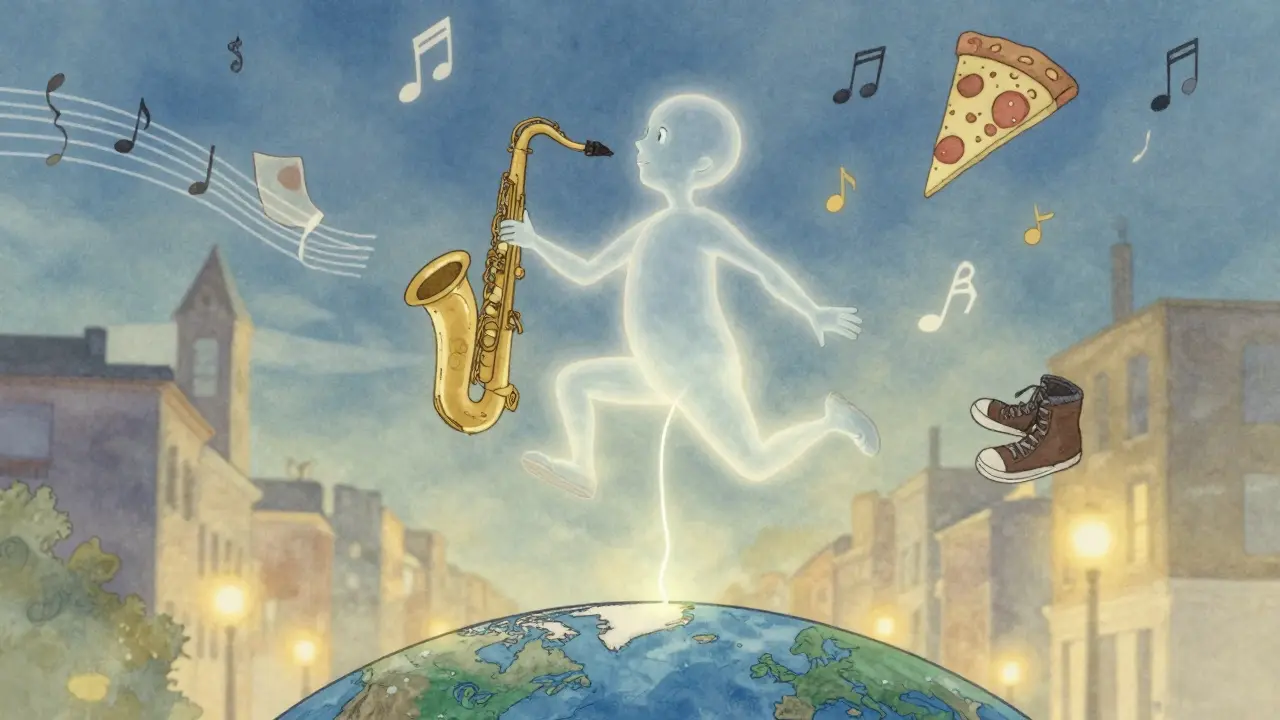
And then came Soul (2020). A jazz musician dies on the way to his big break. He ends up in the Great Before, stuck with a soul who doesn’t want to go to Earth. The film asks: What’s the point of life if you’re not chasing your dream? The answer? There is no point. Not one. Life isn’t about achieving. It’s about noticing. The smell of pizza. The feel of leaves underfoot. The way your shoes squeak when you walk.
Soul didn’t have a box office haul like Toy Story 3. It was released during the pandemic, straight to Disney+. But its impact? Deeper. People wrote essays. They posted videos of themselves listening to the soundtrack while staring out windows. It didn’t win Best Animated Feature because it was flashy. It won because it made people pause. For the first time, Pixar made a film about not becoming something. About being here.
What Makes Pixar Different?
Other studios make animated films. DreamWorks has laughs. Blue Sky had heart. But Pixar? They make films that live inside you long after the credits roll. Why?
- They start with emotion, not plot.
- They let silence speak. No music. No jokes. Just a character sitting alone.
- They treat children like thinking beings. No dumbing down.
- They risk failure. Luca (2021) had no villain. No conflict beyond fear of being seen. And it worked.
Every Pixar film since Toy Story has been built on a single question: What does it mean to be alive? Not in a grand way. In a quiet, everyday way.
The Legacy
Pixar didn’t just invent CGI. They invented emotional truth in animation. They turned pixels into tears. They made us care about a lamp, a robot, a soul without a body. And they did it by refusing to chase trends. While others chased sequels, Pixar chased questions.
Today, Pixar’s next film is rumored to be about grief and memory. No title. No teaser. Just a team working in silence. That’s how they’ve always done it. Not with hype. Not with marketing. But with patience. With honesty. With the courage to say: Maybe the most important thing isn’t what happens next. It’s what you notice while you’re waiting.
Why did Pixar’s early films succeed where others failed?
Pixar’s early films succeeded because they focused on emotional truth before technical brilliance. While other studios made cartoons with slapstick humor and simple morals, Pixar asked deeper questions: What does it mean to be loved? To be afraid? To grow up? Toy Story wasn’t just about toys coming alive-it was about a toy’s fear of being replaced. That kind of vulnerability connected with adults and kids alike. The technology was new, but the heart was timeless.
How did Pixar manage to stay creative after being bought by Disney?
Disney’s acquisition in 2006 gave Pixar more resources but also more pressure to produce sequels. To stay creative, Pixar kept its leadership separate-John Lasseter and Ed Catmull remained in charge. They enforced a rule: no film gets greenlit unless the story moves them personally. They also held ‘braintrust’ meetings, where directors showed unfinished work to peers for honest feedback. No ego. No politics. Just storytelling. That culture protected their creative soul even as corporate demands grew.
Did Pixar invent computer animation?
No, Pixar didn’t invent computer animation. Research into CGI began in the 1960s, and short films like Humpty Dumpty (1983) existed before Toy Story. But Pixar was the first to use it for a full-length feature film with emotional storytelling. They didn’t just make a technical breakthrough-they made a cultural one. They proved that CGI could carry complex human emotions, not just action or spectacle.
Why is Soul considered one of Pixar’s most important films?
Soul is important because it challenged the idea that life’s purpose is tied to achievement. Most animated films celebrate goals: become a hero, win the competition, find the treasure. Soul says: Your life doesn’t need a grand mission. Joy can be found in the ordinary-a warm breeze, a slice of pizza, a conversation with a stranger. It was a radical message in a world obsessed with productivity. And it resonated deeply during the isolation of the pandemic. People didn’t just watch it. They reflected on their own lives.
What’s next for Pixar after Soul?
Pixar’s upcoming projects continue to explore emotional depth over spectacle. The next film, rumored to be titled Wish or The Book of Memories, is said to focus on grief and how we hold onto loved ones after they’re gone. It’s being developed by a team that worked on Soul and Luca. There’s no official release date, but early reports suggest it will be quieter, slower, and more intimate than any Pixar film before it. That’s the pattern now: less noise. More meaning.