
Action Film Safety: What You Need to Know About Stunts, Gear, and On-Set Risks
When you watch a car flip over a cliff or a hero leap from a skyscraper, you’re seeing action film safety, the behind-the-scenes system of protocols, training, and equipment that makes extreme stunts possible without serious injury. Also known as stunt safety, it’s not magic—it’s discipline, physics, and years of experience packed into every second of chaos you see on screen. Most people assume these scenes are just edited together from clips, but the truth is far more intense: real people, often with decades of training, are putting their bodies on the line—every single time.
Stunt coordination, the art of planning and executing dangerous sequences with precision, is the backbone of any major action film. A good stunt coordinator doesn’t just pick who jumps—they design the fall, calculate the airbag placement, test the rigging, and rehearse the timing down to the millisecond. Without them, even a simple punch could turn into a broken neck. This isn’t guesswork. It’s engineering. And it’s why modern films like Mad Max: Fury Road or John Wick look so brutal yet feel so controlled. The same team that plans a motorcycle jump also checks the harnesses, monitors weather, and ensures medics are within 90 seconds of every shot. On-set safety isn’t optional—it’s legally required on most professional sets. Crews use motion capture, wire rigs, crash pads, and even virtual rehearsals before a single camera rolls. You don’t see it because they’ve made it look effortless.
But it’s not perfect. Behind every stunt that goes right, there are stories of near-misses, old injuries, and corners cut under pressure. Some productions still rely on outdated gear. Some actors refuse doubles. Some directors push too hard. The industry has improved dramatically since the 1980s, when stunt deaths were common, but the risk never fully disappears. That’s why you’ll find stunt performers, highly trained athletes who specialize in physical risk, often working in teams, with insurance policies that cover long-term medical care. They’re not extras—they’re professionals with certifications, medical exams, and contracts that outline every possible contingency.
What you’ll find in the posts below isn’t just a list of action movies. It’s a look at how real people make impossible scenes look real—without getting killed. From the physics behind a 30-foot drop to the hidden safety gear inside a superhero suit, these stories reveal what happens when adrenaline meets accountability. You’ll see how filmmakers balance spectacle with safety, and why the best action scenes are the ones you never realize were dangerous to begin with.
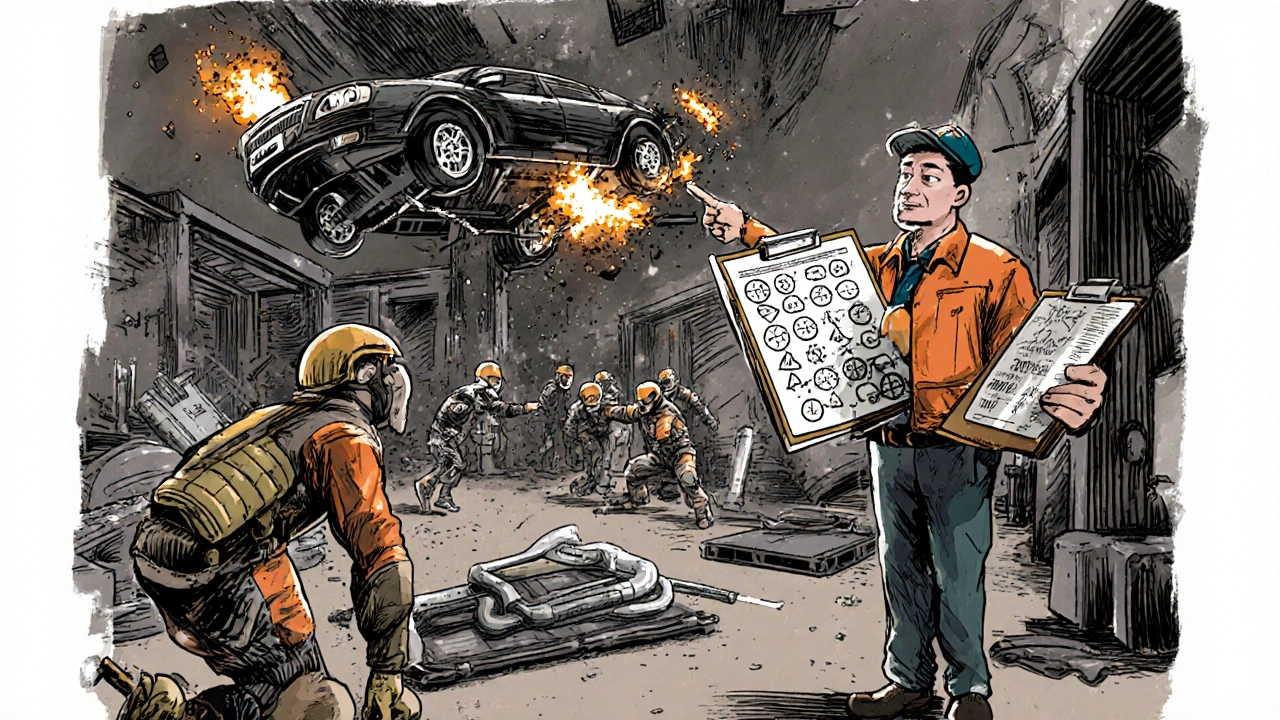
Stunt Coordinators Explained: How Safety, Design, and Adrenaline Shape Action Films
Stunt coordinators are the unseen architects of action films, blending physics, precision, and courage to make dangerous stunts look real while keeping performers safe. Here’s how they do it.