
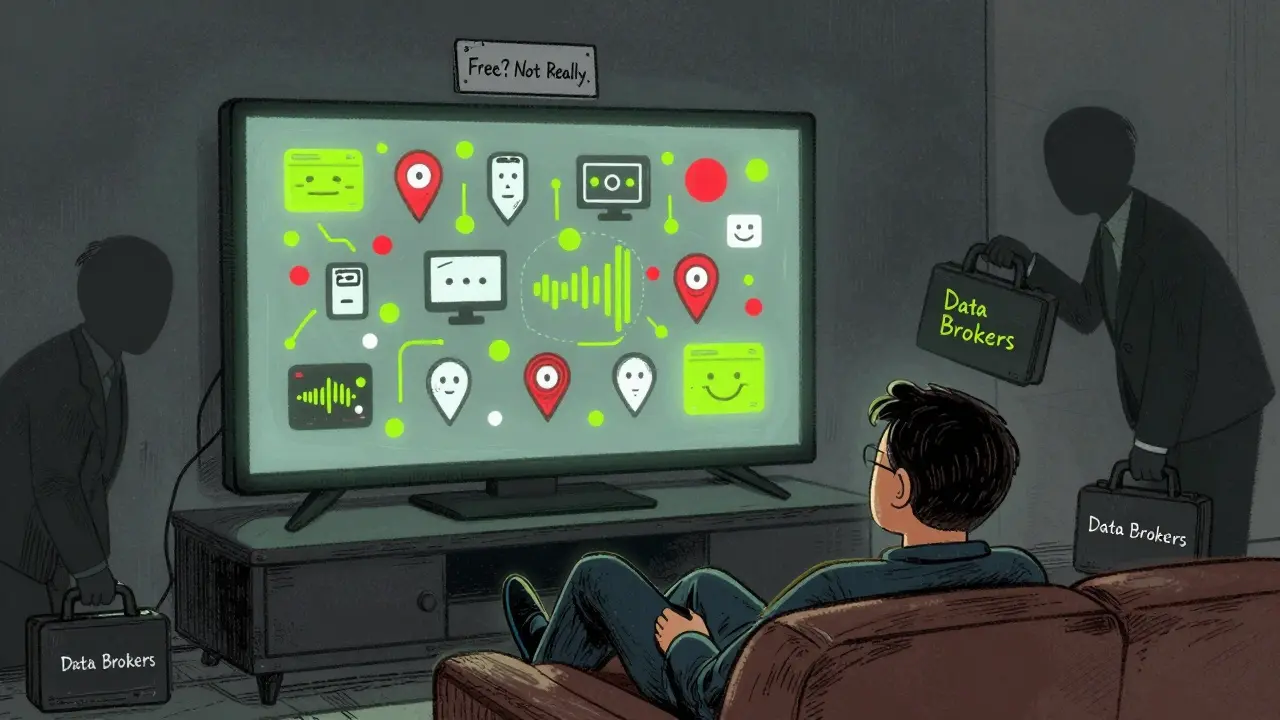
You think free streaming is free? Think again. Every time you hit play on that movie or show without paying a cent, you’re not just watching content-you’re being watched. Your habits, your moods, your preferences, even your late-night binges are being tracked, packaged, and sold. No one tells you this upfront. But the price isn’t in euros or dollars-it’s in your privacy.
How Free Streaming Makes Money Without Charging You
Netflix charges $18 a month. Disney+ costs $14. But platforms like Tubi, Pluto TV, and Crackle? Zero monthly fee. So how do they stay in business? They don’t sell you content-they sell you. Advertisers pay these services to show you targeted ads. And the better they know you, the more they pay.
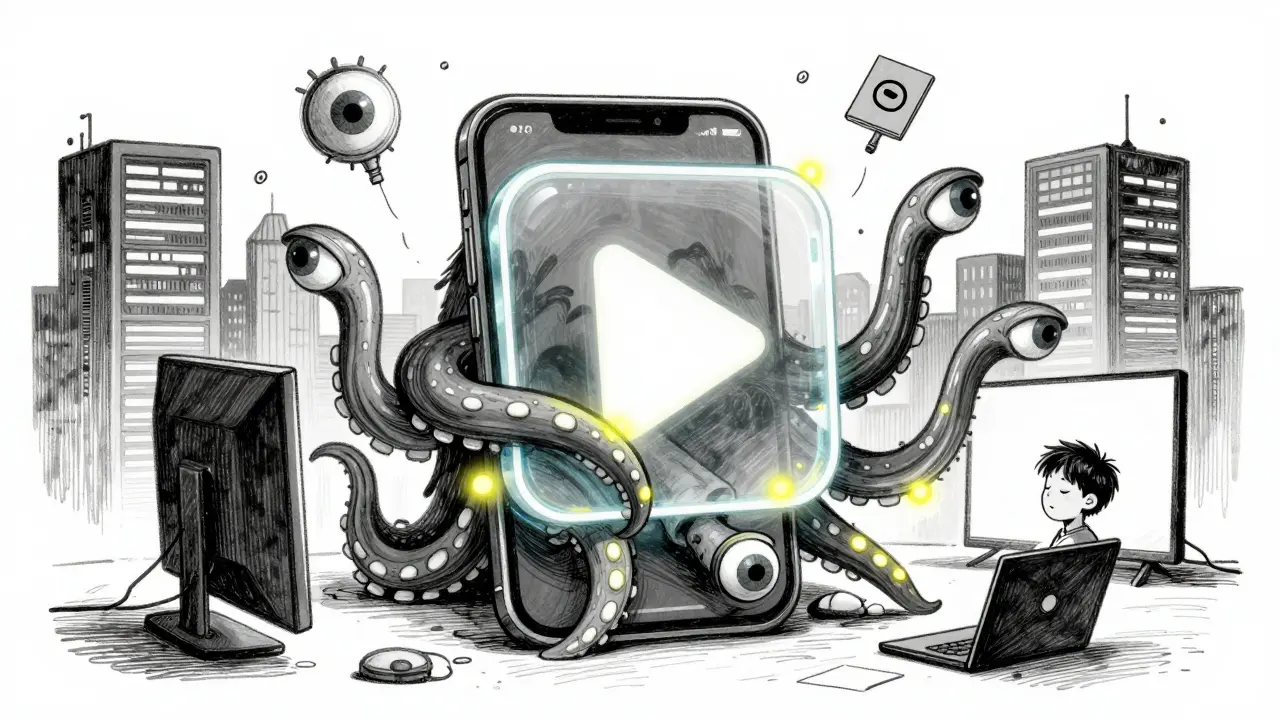
It’s not just banner ads you see between episodes. It’s behavioral tracking. Your device ID, your IP address, your watch history, how long you pause, whether you skip ads, even the time of day you watch-all of it gets logged. Some services collect this data through embedded trackers in their apps, others through third-party analytics tools like Google Analytics, Adobe Audience Manager, or Quantcast. These tools follow you across devices, building a profile that’s more detailed than your own memory.
One 2024 study by the University of Dublin’s Digital Ethics Lab found that free streaming apps collected an average of 147 data points per user per session. That’s more than most banking apps. And unlike paid services, which limit ads to avoid ruining the experience, free platforms rely on constant interruptions-and constant data gathering-to survive.
What Exactly Is Being Collected?
It’s not just what you watch. It’s how you watch it.
- Device fingerprinting: Your phone model, operating system version, screen resolution, and even installed fonts are used to create a unique identifier-even if you clear cookies.
- Location data: Even if you turned off GPS, your IP address can pin you to within a few blocks. Some apps log your location every time you start streaming.
- Emotion tracking: Some platforms use facial recognition (via your webcam, if enabled) to detect if you’re smiling, frowning, or looking away during emotional scenes. This helps advertisers decide which products to push next.
- Social graph mapping: If you log in with Facebook or Google, they link your streaming habits to your social circle. Watching a lot of true crime? You’ll start seeing ads for security systems-and your friends might too.
- Audio fingerprinting: Background noise in your home? Some apps use your phone’s mic to listen for TV audio and confirm you’re actually watching. Yes, that’s real.
This isn’t speculative. In 2023, the Irish Data Protection Commission fined a major free streaming service €2.3 million for collecting biometric data from users’ webcams without consent. The company claimed it was for “user engagement analytics.” That’s the language they use to make invasive practices sound harmless.
Who Buys Your Data-and Why
Your streaming profile doesn’t stay with the platform. It gets sold to data brokers. Companies like Acxiom, Experian, and LiveRamp aggregate data from hundreds of sources: your shopping habits, your fitness app, your email open rates, your streaming history. They then sell these profiles to advertisers, political campaigns, insurance firms, and even employers.
Imagine this: You’ve been watching a lot of documentaries about heart disease. You’ve paused three times to Google symptoms. You’ve watched three episodes of a show about cholesterol. Within days, you start seeing ads for heart monitors-and then a letter from your health insurer asking if you’ve considered upgrading your plan. Coincidence? Unlikely.
Insurance companies in the U.S. have been buying streaming data since 2022 to assess risk profiles. In Europe, it’s less common-but not illegal. The GDPR doesn’t ban data collection; it just says you should be told and have the right to opt out. Most free streaming apps bury that option deep in settings, or don’t offer it at all.
The Privacy Trade-Off You Never Agreed To
When you sign up for Spotify Premium, you know you’re paying for ad-free listening. When you subscribe to Apple TV+, you pay for no ads and better encryption. But with free streaming? You’re not given a choice. The terms and conditions are 50 pages long, written in tiny font, and say things like:
“We may collect and process sensitive personal data including behavioral patterns, emotional responses, and device interactions to improve our services and third-party advertising.”
You didn’t click “I agree” because you didn’t see it. Or you clicked it without reading-because everyone does. That’s the design. These services rely on your indifference.
And once your data is out there, you can’t get it back. Data brokers keep records for years. Even if you delete your account, your profile might still exist in their databases. A 2025 audit by Privacy International found that 78% of free streaming services still retained user data for over five years after account deletion.

What You Can Do About It
You don’t have to give up streaming. But you can take back control.
- Use a VPN: A reliable VPN hides your IP address and location. Choose one that doesn’t log activity-ExpressVPN and Mullvad are known for strong privacy policies.
- Disable personalized ads: In your device settings, turn off “Ad Personalization” on Android and iOS. On smart TVs, go to Settings > Privacy > Advertising and switch it off.
- Block trackers: Install uBlock Origin on your browser. It stops most embedded trackers before they load.
- Use ad-free alternatives: Consider services like Kanopy (free with library card) or Hoopla. They’re funded by public institutions and don’t track you.
- Don’t log in with social accounts: Create a separate email for streaming. Don’t link it to Facebook, Google, or Apple.
- Check your permissions: Go into your streaming app settings. Turn off location access, camera access, and microphone access unless you absolutely need them.
None of this is perfect. But it reduces your footprint. And small steps add up.
Why This Matters More Than You Think
This isn’t just about ads. It’s about power. When corporations know your habits better than your family does, they can influence your choices-what you buy, what you believe, even how you feel. Free streaming isn’t a gift. It’s a surveillance economy disguised as entertainment.
And the worst part? You’re not the only one. Millions of people in Ireland, across Europe, and globally are doing the same thing-watching for free, unaware that their attention is being auctioned off in real time. The system works because it’s invisible. Until you start asking: Who’s watching me? And why?
Next time you start a show without paying, pause for five seconds. Ask yourself: What am I really paying with?
Are free streaming services legal?
Yes, most are legal-but many operate in a gray area when it comes to data collection. In the EU, GDPR requires clear consent for tracking, but many free streaming apps bury consent in long terms of service or use “legitimate interest” as a loophole. Enforcement is inconsistent. If you’re in Ireland or another EU country, you have the right to request your data or ask for deletion under GDPR. Many services ignore these requests or make the process difficult.
Can I be tracked even if I use a VPN?
A good VPN hides your IP address and location, which stops most tracking. But if you’re logged into your Google or Facebook account while streaming, those companies can still link your activity to your identity. Device fingerprinting can also identify you across sessions. A VPN helps, but it’s not a full shield. Combine it with browser extensions like uBlock Origin and avoid logging into personal accounts on free platforms.
Do paid streaming services collect less data?
Generally, yes. Services like Netflix, Apple TV+, and Amazon Prime Video collect less behavioral data because they don’t rely on ads. They still track what you watch to recommend content, but they don’t sell your data to third-party advertisers. Their business model is subscription-based, so they have less incentive to build detailed profiles for marketers. Still, they may share anonymized data with partners-so read their privacy policies carefully.
Is it safe to use free streaming apps on smart TVs?
Smart TVs are among the worst offenders. Many brands like Samsung, LG, and Roku have built-in tracking systems that monitor what you watch, how long you watch, and even your voice commands. Some even use microphones to listen for keywords. Disable personalized advertising in your TV’s settings, turn off voice recognition, and avoid signing in with accounts. Consider using a streaming stick like Roku or Fire TV with a VPN instead of relying on built-in apps.
What happens to my data if I delete my account?
It depends on the service. Under GDPR, companies must delete your data upon request-but many delay, partially delete, or transfer it to third parties before deletion. A 2025 investigation found that 62% of free streaming platforms retained user data for over a year after deletion. Always submit a formal data deletion request via email or their privacy portal, not just by clicking “Delete Account.” Keep proof of your request.