
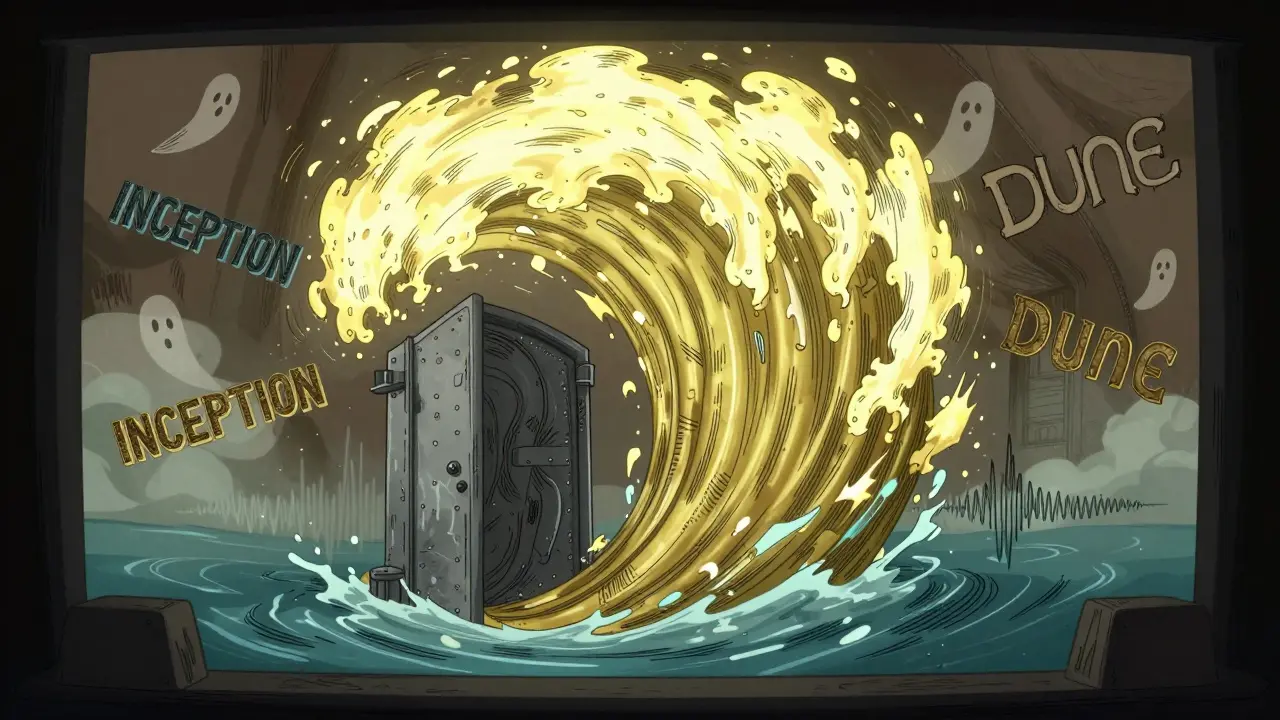
Ever heard a movie trailer and felt your heart jump before the title even appeared? That’s not magic. It’s trailer music-a highly engineered emotional weapon. Every boom, every rising string, every silence before the drop is calculated. This isn’t just background noise. It’s the hidden script of the trailer, designed to make you feel something before you’ve seen a single frame.
What Is a Braaam?
The braaam is the most recognizable sound in modern trailer music. Think of it as a deep, resonant, rumbling blast-like a giant metal door slamming shut underwater. It’s not a single instrument. It’s a layered monster: low-frequency sine waves, distorted brass, processed orchestral hits, and sometimes even reversed choir samples. The first braaam you probably remember was in the trailer for Inception (2010). Hans Zimmer used a modified pipe organ note, slowed down and drenched in reverb. It wasn’t just loud-it felt physical. You felt it in your chest.
Before braaams, trailers used orchestral swells or punchy stings. Now, braaams dominate action, sci-fi, and superhero trailers. Why? Because they create a sense of scale and threat without needing dialogue. A braaam says: This is big. This is dangerous. This is not to be ignored. It’s the sonic equivalent of a 100-foot wave crashing on screen.
The Build-Up: How Tension Is Engineered
A build-up is the slow climb from calm to chaos. It’s not random. It follows a pattern: start quiet, add layers, increase tempo, raise pitch, drop the beat. The most common build-up uses strings-violins and cellos-playing repeating motifs that get faster and louder. Each time they repeat, another layer joins: a percussion hit, a synth pulse, a choir swell.
Think of The Dark Knight trailer. The ticking clock sound? That’s the heartbeat. Then the low cello drones creep in. Then the violins start a frantic rhythm. Then-silence. Then the braaam hits. That silence? It’s the most dangerous part. Your brain fills it with dread.
Build-ups don’t just use music. Sound designers layer in non-musical elements: distant sirens, metallic groans, radio static, even breathing. These aren’t effects. They’re emotional triggers. They make you feel like something’s coming-something you can’t see yet.
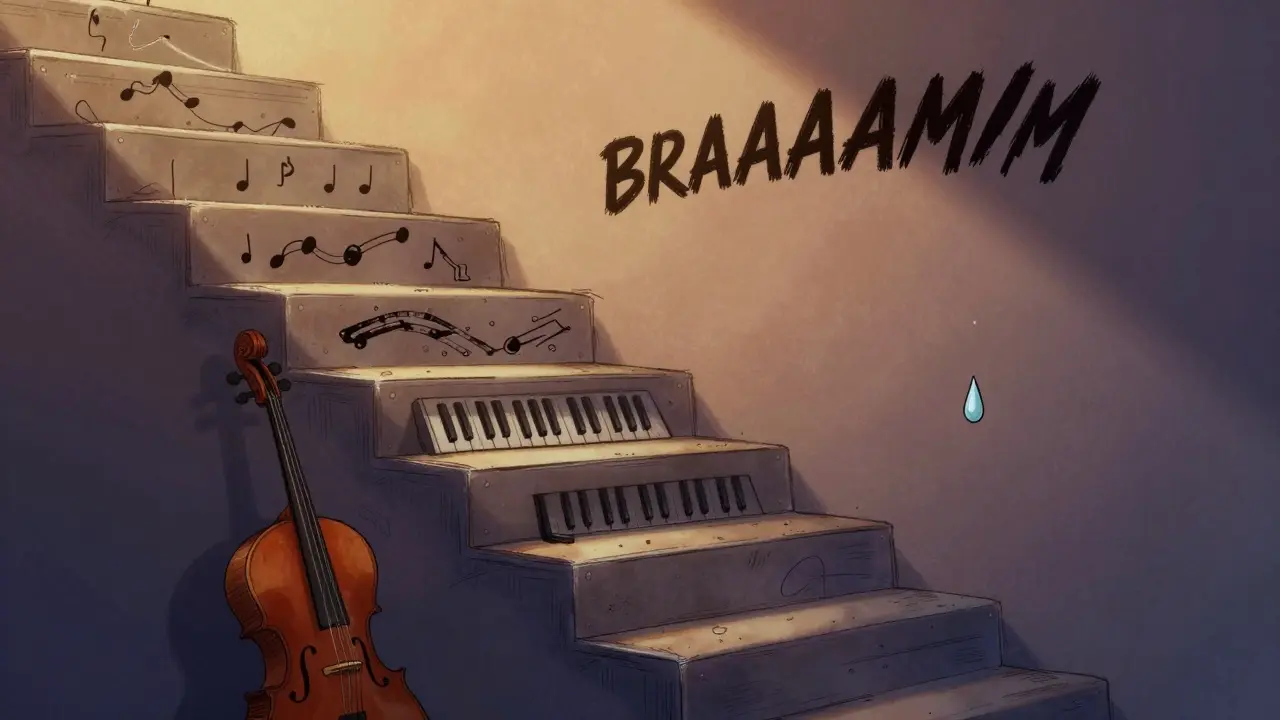
Button Endings: The Perfect Punch
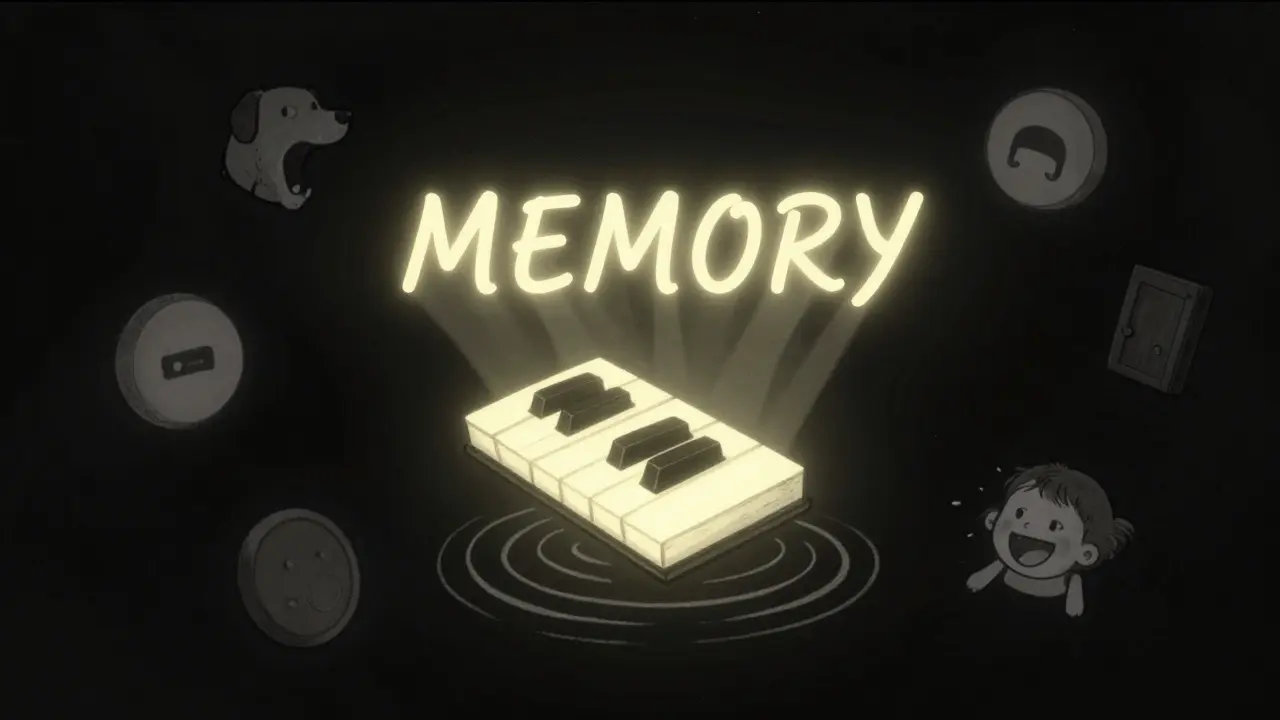
Every great trailer ends with a button. It’s the final, sharp, decisive sound that locks in the emotion. It’s not a fade-out. It’s a slam. A sting. A record scratch. A single piano note. A dog barking. A child laughing.
The button is where the trailer’s promise lands. If the build-up is tension, the button is release. But it’s not just about release-it’s about memory. The button sticks in your head. It’s the sound you replay on your phone when you can’t stop thinking about the movie.
Take Get Out (2017). The trailer ends with a single, clean piano note after a scream. No music. No drums. Just one note. It’s haunting. It’s unsettling. It says: This isn’t a horror movie. It’s a nightmare with a mirror. That’s the power of a button.
Other famous buttons: the Mad Max: Fury Road roar, the Avengers: Endgame snap, the Parasite door slam. Each one is unique. Each one is unforgettable.
Why This Formula Works
Trailer music isn’t about art. It’s about psychology. Studios don’t hire composers to make beautiful music. They hire them to manipulate emotion on a timeline.
The average trailer is 2:30 minutes long. In that time, you need to:
- Grab attention in the first 3 seconds
- Sell the genre and tone by 15 seconds
- Build anticipation by 60 seconds
- Hit the emotional peak by 1:30
- Lock in the memory with a button by 2:30
That’s why braaams, builds, and buttons are everywhere. They’re proven. They work. They’ve been tested on thousands of audiences in theaters and online. The formula is simple: low → high → silence → sting.
Even indie films use it. A quiet drama trailer might skip the braaam, but it still uses a build-up-soft piano notes getting louder, layered with ambient wind-and ends with a single child’s voice saying, "I’m not afraid." That’s still a button.
The Evolution of Trailer Music
Before the 2000s, trailers used classical music or licensed pop songs. Think of Jaws-that two-note theme was the whole trailer. Or Rocky-the song was the emotion. But as trailers became more competitive, studios needed something that couldn’t be ignored.
The shift happened with Star Wars: Episode I (1999). The trailer used a custom orchestral piece that didn’t exist in the film. It was made for the trailer alone. That was the first time a trailer had its own original score. Since then, trailer music has become its own genre.
Today, companies like Immediate Music, Two Steps From Hell, and Immediate Music specialize in trailer tracks. They have libraries of braaams, builds, and buttons. Studios buy them like stock footage. You’ll hear the same build-up in three different trailers this month. It’s not plagiarism-it’s efficiency.
What’s Next?
Is the formula breaking down? Maybe. Some trailers are experimenting. Everything Everywhere All At Once used a chaotic, glitchy soundtrack with no clear build. Oppenheimer used silence and ticking clocks as its emotional engine. But even those films still used a button-the final whisper of Oppenheimer’s voice, fading into silence.
What’s changing is the texture, not the structure. Braaams are now being made with AI-generated bass layers. Builds are using granular synthesis to create organic, evolving textures. Buttons are being replaced by ambient noise-like the sound of rain in The Quiet Girl trailer.
But the core remains: sound drives emotion. And as long as studios need to make you feel something before you see the movie, braaams, builds, and buttons will keep running.
Why do all action trailers sound the same?
They don’t all sound the same-they use the same formula. Studios rely on proven emotional triggers: braaams for impact, builds for tension, buttons for memory. These elements work. When a trailer fails to get clicks, studios don’t change the structure. They tweak the sound design. So yes, you hear the same build-up in ten trailers. That’s because it’s been tested on real audiences and keeps delivering results.
Can a trailer succeed without a braaam?
Absolutely. Braaams are common in action and sci-fi, but not required. Quiet thrillers like Manchester by the Sea or dramas like Marriage Story use slow builds with strings or piano, and end with subtle buttons-a door closing, a child crying, a phone ringing. The emotional goal is the same: make you feel something before you see the movie. The tools just change.
Are braaams and builds copyrighted?
Individual sounds like a braaam aren’t copyrighted. But the specific arrangement of layers in a trailer track is. Companies like Two Steps From Hell sell licenses for their tracks. If a studio uses their "Epic Orchestral Build-Up #7," they pay for it. But if you make your own braaam from scratch, you own it. The technique is public. The execution is proprietary.
How do composers create braaams?
It’s layering. Start with a low sine wave (around 40Hz). Add a distorted brass sample. Layer in a reversed choir. Then apply heavy reverb and compression. Some use a modified pipe organ, like Hans Zimmer did. Others sample a car engine or a metal door slamming. The goal is to create a sound that’s too low to be a note, too loud to ignore, and too weird to classify. It’s not about music-it’s about physics.
Why do some trailers end with silence?
Silence is a button too. It forces the viewer to sit with the emotion. After a loud build-up, silence feels like a punch. It makes you think. It makes you remember. That’s why Get Out and Arrival used it. The absence of sound becomes the loudest part of the trailer.