
Wong Kar-wai doesn’t make movies. He paints with light, time, and memory. If you’ve ever watched In the Mood for Love and felt like you were floating through a dream you never lived, you’re not alone. His films don’t follow traditional plots. They don’t need to. What they do is soak you in atmosphere-every frame a still life, every gesture loaded with longing. By 2026, his influence stretches from indie filmmakers in Brooklyn to advertising campaigns in Tokyo. But few truly understand how he builds his worlds. This isn’t just about camera moves or costumes. It’s about how he turns silence into sound, color into emotion, and time into something you can touch.
The Language of Color
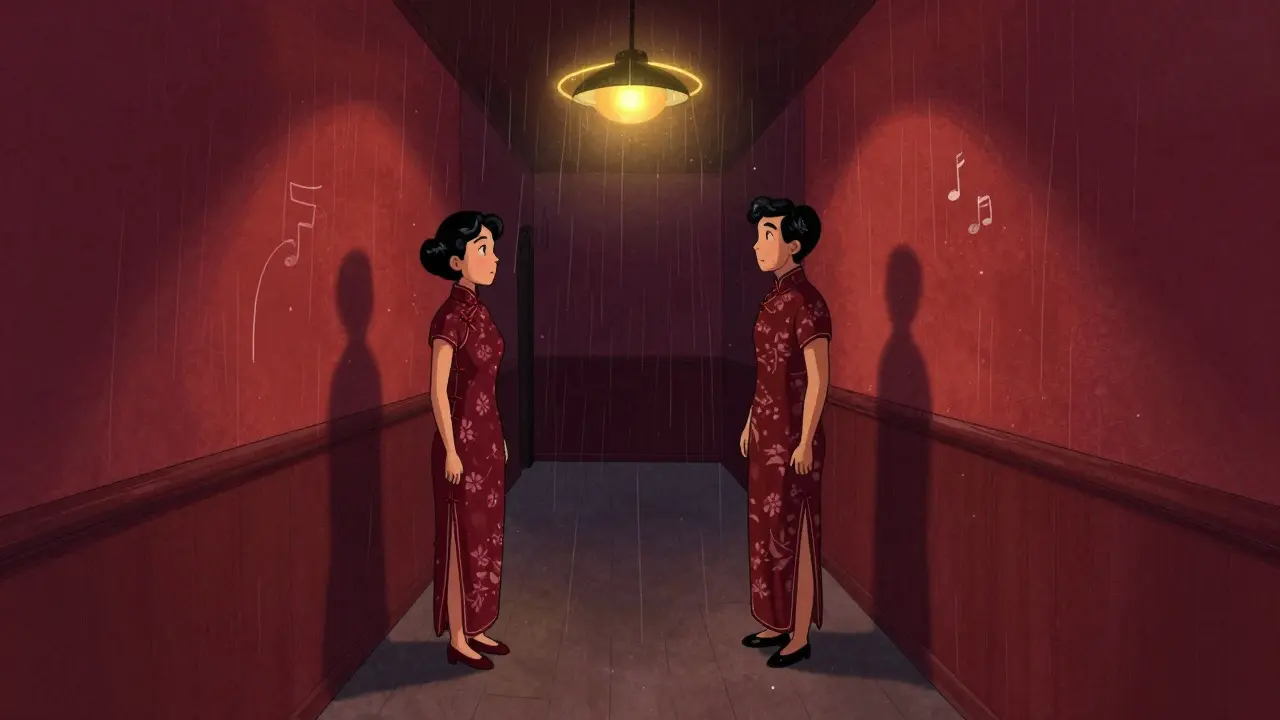
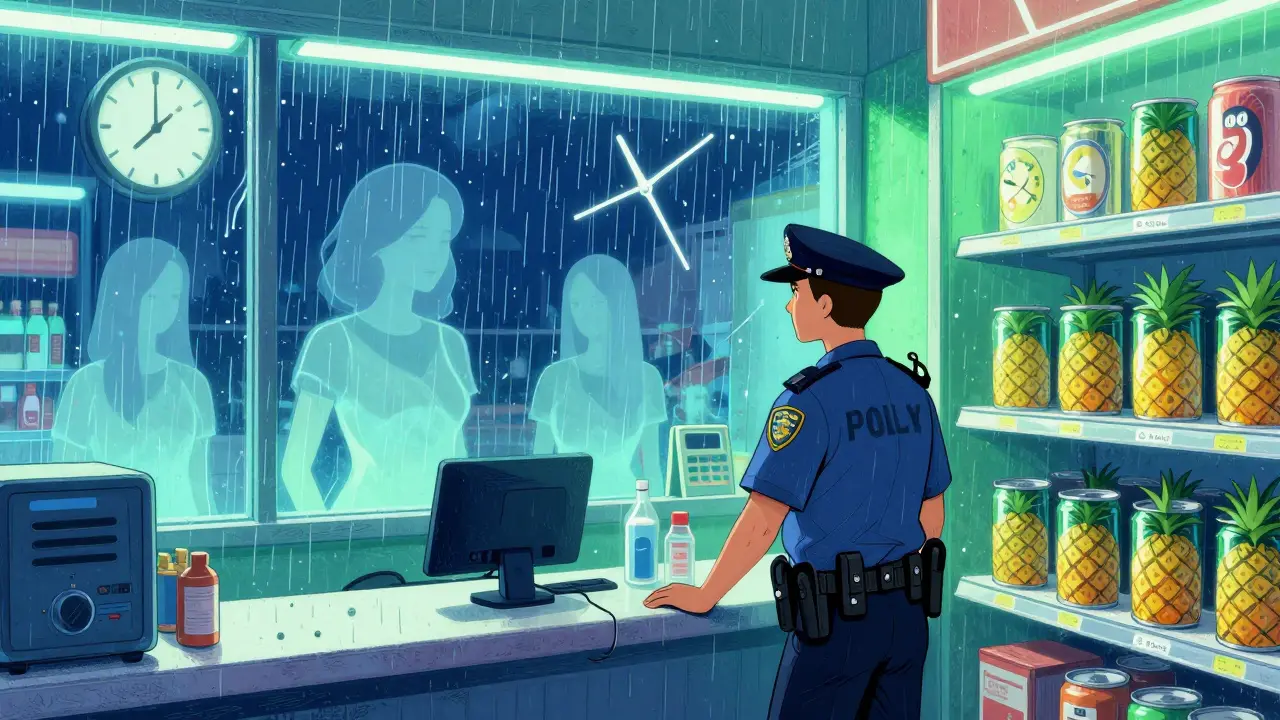
Wong Kar-wai’s use of color isn’t decorative. It’s psychological. In Chungking Express, the neon blues and greens of the convenience store where the cop waits for his ex-girlfriend aren’t just setting the scene-they’re the heartbeat of his loneliness. The same blue reappears in 2046, but now it’s colder, deeper, almost metallic. It’s not a coincidence. He uses color like a composer uses notes. Red in In the Mood for Love isn’t just the color of the qipaos. It’s the heat of suppressed desire, the flicker of what could have been. The walls in that hotel room? They’re painted a deep burgundy that changes tone under different lights. One moment it’s warm, the next it’s suffocating. That’s not production design. That’s emotional engineering.
He avoids natural lighting whenever possible. Even outdoor scenes feel staged, lit with a soft, artificial glow. In Happy Together, the Buenos Aires streets at night aren’t bathed in moonlight-they’re lit by flickering streetlamps and the glow of neon signs. The city doesn’t feel real. It feels like a memory. And that’s the point. His characters aren’t living in places. They’re trapped inside their own recollections.
Time as a Character
Wong Kar-wai doesn’t just play with time-he breaks it. His films often start in medias res. We meet characters mid-crisis, mid-obsession, mid-moment of regret. In 2046, the timeline jumps between 2001, 2046, and a fictional future that may not exist. There’s no clear chronology because memory doesn’t work in order. The past doesn’t stay buried. It sneaks into the present, reshapes it, then vanishes again.
He uses slow motion not for drama, but for intimacy. When Maggie Cheung walks down the hallway in In the Mood for Love, the camera lingers. Her footsteps echo. The sound of her dress brushing against the wall is louder than the dialogue. That moment lasts longer than it should. And that’s how he makes us feel the weight of what’s unsaid. Time stretches. Emotions swell. The audience isn’t watching a scene-they’re holding their breath inside it.
His editing is deliberate. Cuts are rare. When they happen, they’re jarring. In Fallen Angels, a character suddenly appears in a new location with no transition. No establishing shot. No fade. Just: there they are. It’s disorienting. But that’s the feeling of loneliness-suddenly realizing you’re alone in a crowd, and no one noticed you left.
The Camera as a Whisper
Christopher Doyle, his longtime cinematographer, doesn’t shoot films. He hunts them. His handheld work in Chungking Express isn’t shaky. It’s alive. The camera leans into conversations, pulls back when someone looks away, follows a character’s gaze like a shadow. It doesn’t observe. It participates.
Wong Kar-wai often shoots with wide-angle lenses, distorting space. Doorways seem to swallow people. Hallways stretch into infinity. In Happy Together, the bathroom where the couple fights is framed so tightly you can feel the walls closing in. The lens doesn’t just capture emotion-it bends it.
He avoids wide shots. Even cityscapes are cropped. Hong Kong in his films isn’t a skyline. It’s a hallway, a window, a flickering TV screen. You never see the whole picture. That’s intentional. His characters don’t see the whole picture either. They’re stuck in fragments. The camera mirrors that. It doesn’t give you context. It gives you feeling.
Sound Design That Speaks Louder Than Words
Dialogue in Wong Kar-wai’s films is sparse. Sometimes it’s barely there. But the sound design? It’s a symphony. In In the Mood for Love, the recurring waltz by Nat King Cole isn’t just background music. It’s the emotional anchor. Every time it plays, something shifts. The characters don’t move. But you feel it-their hearts breaking a little more.
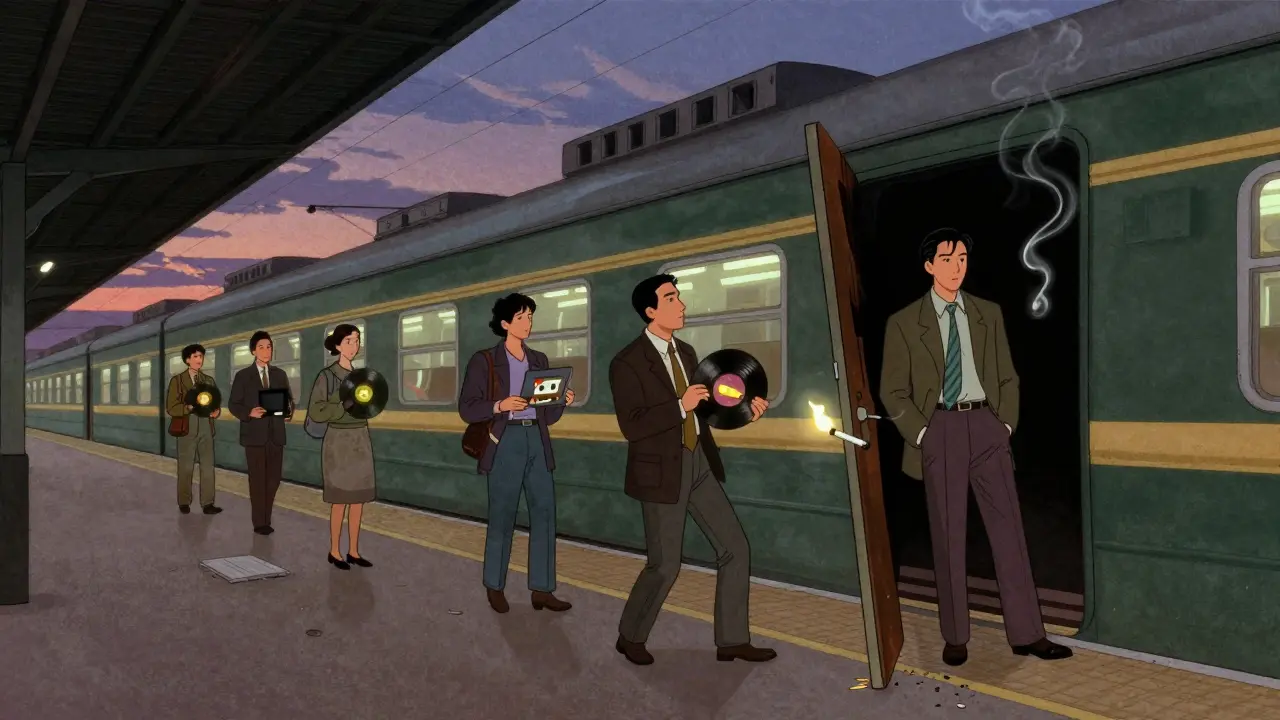
He layers ambient noise like a painter layers paint. Rain on a balcony. A fan spinning. A radio playing static. In 2046, the hum of the train station isn’t just setting-it’s the sound of waiting. The silence between words is often longer than the words themselves. And that’s where the real story lives.
He uses music to cheat time. A song from 1966 plays in a scene set in 1994. A 2000s pop track echoes in a 1980s flashback. Time doesn’t flow linearly in his films. It loops. It collapses. And the music is the thread that ties it together.
Performance as Poetry
Wong Kar-wai doesn’t direct actors. He guides them through emotional landscapes. Tony Leung’s performance in In the Mood for Love is a masterclass in restraint. He says less than 100 lines total. But every glance, every shift in posture, every time he adjusts his collar-he’s telling you everything. Maggie Cheung doesn’t cry. She doesn’t scream. She just stands still. And that stillness screams louder than any monologue.
He often shoots multiple takes, sometimes over 100 for a single scene. Not to get the ‘perfect’ take, but to capture the moment when the actor forgets they’re acting. In Chungking Express, Faye Wong’s character walks into the convenience store, picks up a can of pineapple, and says, ‘I don’t like pineapple.’ That line wasn’t scripted. She said it offhand. He kept it. Because it was real.
His actors don’t memorize lines. They memorize feelings. They learn the rhythm of the space, the weight of the silence, the texture of the light. That’s why his performances feel so intimate. They’re not performed. They’re remembered.
Why His Films Still Resonate
Wong Kar-wai’s work isn’t about plot. It’s about presence. In a world that moves faster every year, his films force you to slow down. To sit with discomfort. To sit with longing. To sit with the quiet ache of something you can’t name.
His films don’t offer solutions. They don’t tie up loose ends. The ending of 2046 doesn’t explain what happened. The ending of In the Mood for Love doesn’t give closure. And that’s the point. Life doesn’t give closure. Memory doesn’t tidy up. His films are mirrors. They reflect how we actually feel-messy, unresolved, beautiful.
By 2026, his techniques are everywhere. Apple ads use his color palettes. Spotify playlists borrow his sound design. TikTok creators replicate his slow-motion walks. But no one replicates the feeling. Because you can’t copy a mood. You can only live inside it.
What Makes Him Unique
Other directors tell stories. Wong Kar-wai makes you feel the silence between them. He doesn’t need dialogue to convey heartbreak. He doesn’t need action to show passion. He uses a flicker of light on a wet floor. The way a cigarette glows in the dark. The sound of a door closing one second too late.
He’s not a filmmaker for everyone. If you want fast cuts, clear arcs, or happy endings, his films won’t satisfy you. But if you’ve ever stood in the rain and wondered if someone else was thinking of you too-if you’ve ever held a memory so tight it hurt-then his films are the only ones that understand you.
Why is Wong Kar-wai considered a visual storyteller?
Wong Kar-wai tells stories through visuals because his films rely on color, lighting, camera movement, and sound to convey emotion rather than dialogue or plot. He uses saturated colors to represent mood-red for longing, blue for isolation-and long, lingering shots to stretch time and deepen feeling. His characters rarely speak their true emotions, so the camera becomes their voice.
What makes Wong Kar-wai’s use of color different from other directors?
Unlike most directors who use color for realism or symbolism in a literal sense, Wong Kar-wai treats color as an emotional variable. He changes the hue of a room across scenes to reflect a character’s internal shift, not the time of day. In In the Mood for Love, the same hallway looks warmer or colder depending on the characters’ emotional state, not the lighting setup. His colors are psychological, not decorative.
How does Wong Kar-wai create a sense of time in his films?
He manipulates time through editing, pacing, and music. Scenes stretch longer than they should. Flashbacks appear without warning. Songs from different decades overlap. Time doesn’t move forward-it circles. This mirrors how memory works: not linear, but fragmented and recurring. The past isn’t gone; it’s just waiting behind a door.
Are Wong Kar-wai’s films hard to understand?
They’re not hard to understand-they’re hard to ignore. His films don’t require logic. They require feeling. You don’t need to know the plot to feel the loneliness in Chungking Express. You don’t need to track timelines to sense the ache in 2046. His films work on an emotional frequency, not a narrative one. If you’re looking for answers, you’ll miss the point. If you’re open to feeling, you’ll find everything.
What should I watch first if I’m new to Wong Kar-wai?
Start with In the Mood for Love. It’s his most accessible film-visually stunning, emotionally direct, and narratively restrained. It doesn’t demand background knowledge. You’ll feel its weight immediately. After that, move to Chungking Express for energy and rhythm, then Happy Together for raw emotion. Avoid 2046 until you’ve felt the others. It’s the culmination, not the entry point.
Wong Kar-wai’s films aren’t meant to be watched once. They’re meant to be returned to-like a letter you never sent, or a song you hum when no one’s listening. They don’t change. You do. And that’s why, after 20 years, they still feel new.