
Backup Power for Live Streaming: Keep Your Broadcast Running When the Grid Fails
When you’re live on camera, a power outage isn’t just an inconvenience—it’s a broken promise to your audience. backup power for live streaming, a reliable system that keeps your equipment running during outages. Also known as emergency power for streamers, it’s not optional if you treat streaming like a real job. Whether you’re broadcasting from your basement, a coffee shop, or a remote cabin, the moment the lights go out, your stream dies. That’s why smart streamers don’t just rely on wall outlets—they plan for failure before it happens.
UPS (uninterruptible power supply), a device that gives you seconds to minutes of clean power when the electricity cuts out. Also known as battery backup for electronics, it’s the most common solution for home streamers. A good UPS doesn’t just keep your PC running—it protects your gear from voltage spikes and lets you shut down safely. But if you’re streaming on a laptop with a camera, mic, and lights, you need to know exactly how much power those devices pull. Most small UPS units handle 300 to 600 watts—enough for a basic setup. Bigger setups? You’ll need a larger unit or a portable power station. portable power station, a rechargeable battery pack designed to power multiple devices away from the grid. Also known as solar generator for streamers, it’s perfect for outdoor streams or areas with unstable electricity. Brands like Jackery, Anker, and Goal Zero offer models that can run a full streaming rig for hours. And if you’re in a place where the sun shines, pairing it with a solar panel means you can recharge while you broadcast.
Don’t forget your router and internet modem. Even if your laptop stays on, a dead router kills your stream just as fast. Plug those into your UPS too. And if you’re using a phone or tablet to stream, keep a power bank for streaming, a high-capacity portable charger that can fully recharge your device multiple times. Also known as mobile battery backup, it’s a must-have for mobile streamers. Look for ones with at least 20,000mAh and USB-C PD output. You’ll want to test your whole setup before going live—run your lights, mic, and camera for 30 minutes on battery to see how long it lasts. Real-world usage is always less than the specs say.
Some streamers skip backup power because they think it’s too expensive or complicated. But the cost of losing a live event—whether it’s a concert, a Q&A, or a charity stream—is way higher. You’re not just losing viewers. You’re losing trust. And once that’s gone, it’s hard to get back. The best backup systems are quiet, plug-and-play, and require zero setup mid-stream. You shouldn’t have to think about power when you’re live. You should just stream.
Below, you’ll find real-world guides on how to choose the right power solution for your setup, how to calculate your energy needs, and which tools actually work when the grid fails. No theory. No fluff. Just what keeps the stream alive.
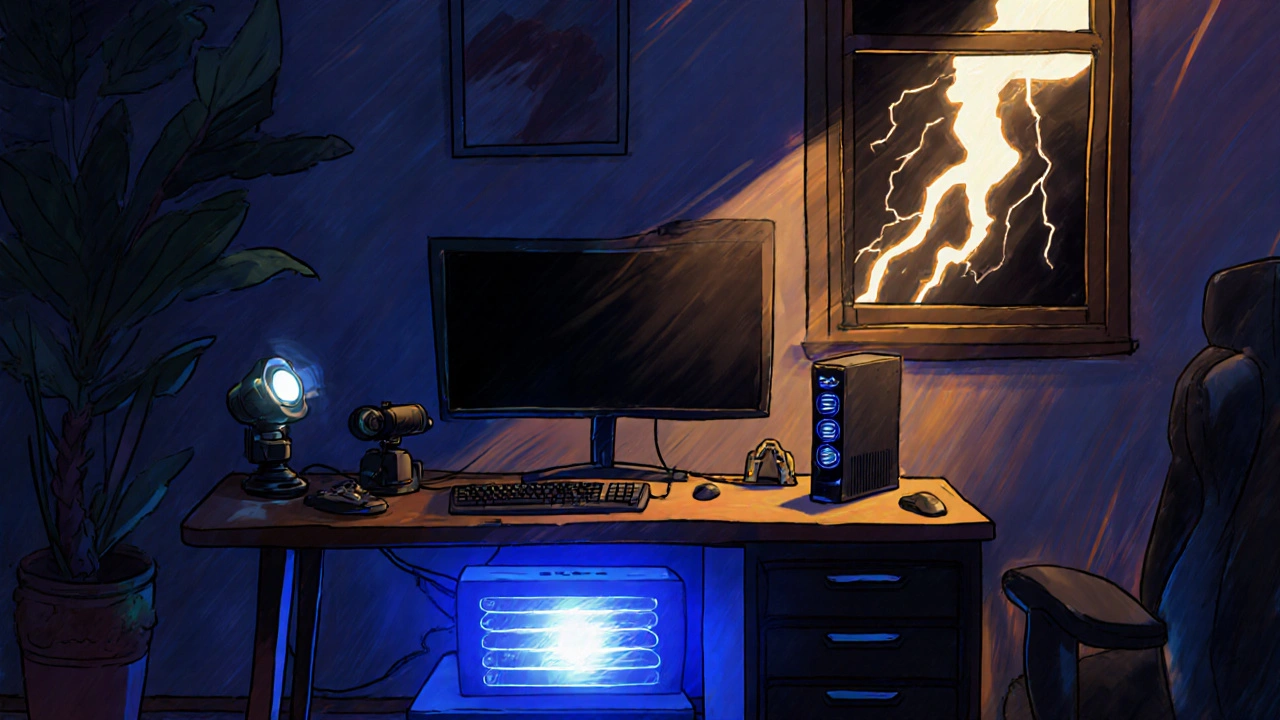
UPS and Surge Protection for Streaming Gear: Prevent Power Interruptions
Protect your streaming setup from power surges and outages with a proper UPS and surge protector. Learn what gear to prioritize, how to set it up, and why skipping protection risks your stream-and your investment.